Healthcare Access in Phoenix, AZ: Hospitals, Doctors & Medical Facilities Guide
A local, real-world breakdown of hospitals, doctors, and healthcare access in Phoenix, AZ—so you can choose the right Phoenix neighborhood with confidence

A local, real-world breakdown of hospitals, doctors, and healthcare access in Phoenix, AZ—so you can choose the right Phoenix neighborhood with confidence
Families, retirees and other workers commonly ask the same question when they talk to me about moving to Phoenix․
“How good is the healthcare access in Phoenix, AZ?”
The short answer? Very good and in many cases excellent․
Phoenix has become one of the country’s most physician-rich metros, with major hospital systems, nationally ranked specialty care, and neighborhood-level access spread across the metro, whether you have kids, have a chronic condition, or are looking long term․ When it comes to health care, Phoenix gives you real options․
Let’s break it down into plain English․
Health care is more than just hospitals․ It’s about proximity, response times, and conveniences․
Within Phoenix itself, this access varies according to zip code, making this a consideration for smart buyers․
-Distance to Level I trauma hospitals
-Availability of primary care and urgent care
-Access to specialists (cardiology, orthopedics, oncology)
-Pediatric and senior-focused networks
-Ease of transportation and parking
Real Estate Dad insight:
Two homes may be exactly the same price but drastically different if you are not close to the medical care you need at the stage of life․
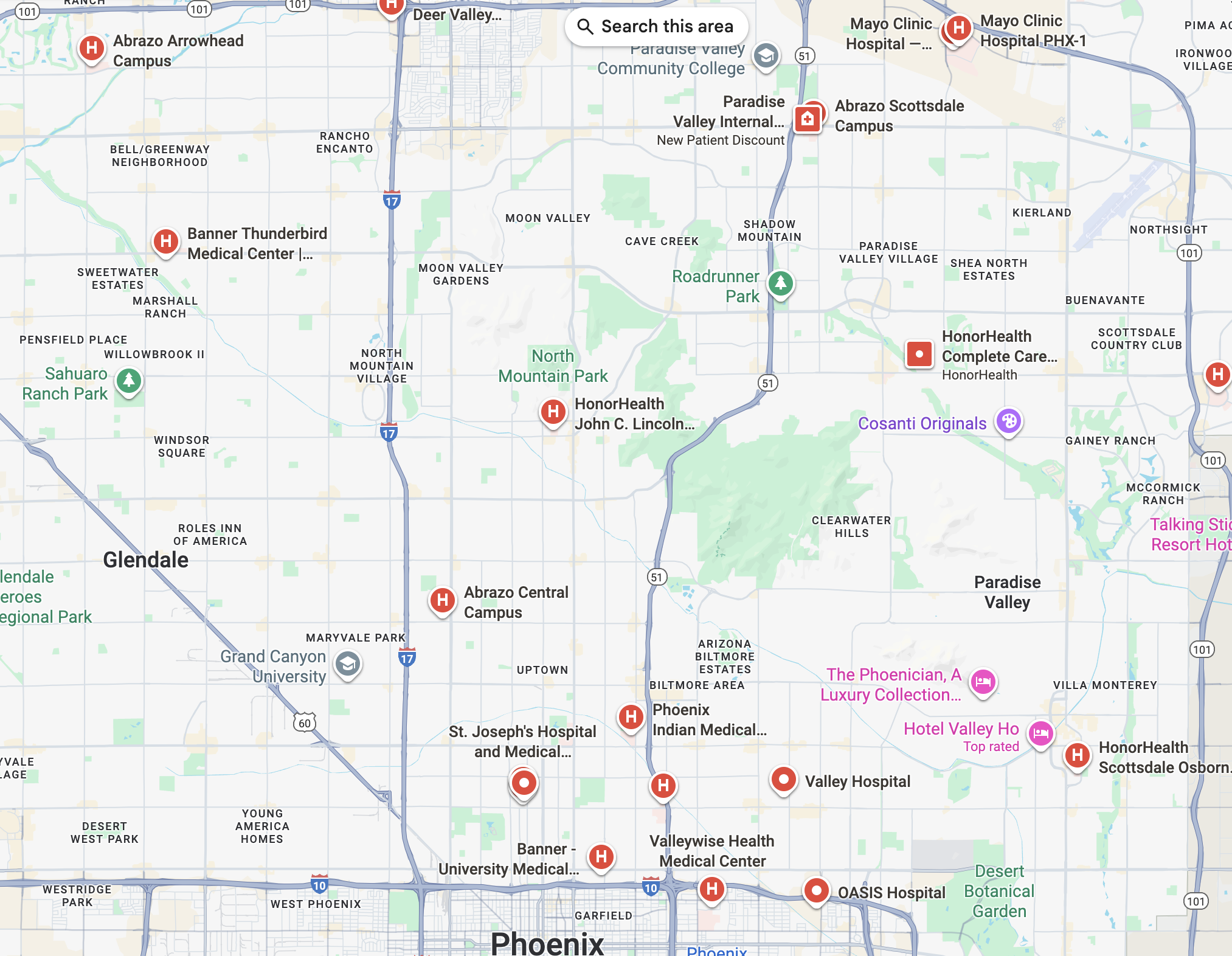
Some of the most advanced hospitals in Arizona are in Phoenix, some of which serve the entire Southwest․
Location: Downtown Phoenix (85006)
Why it matters:
-Level I Trauma Center
-600+ beds
-Teaching hospital tied to University of Arizona
-Advanced stroke, neurology, transplant, and ICU care
Best for: Downtown, Central Phoenix, Roosevelt Row residents
Location: North Phoenix / Desert Ridge (85050)
Why it matters:
-World-renowned cardiology, oncology, neurology
-Highly coordinated, patient-first care model
-Extremely high patient satisfaction
Best for: North Phoenix, Scottsdale, Desert Ridge
Location: Midtown Phoenix (85013)
Why it matters:
-Home of Barrow Neurological Institute (global leader)
-Level I Trauma & Burn Center
-High-risk OB and neonatal care
Best for: Uptown Phoenix, Encanto, North Central neighborhoods
Location: Phoenix–Scottsdale border (near 85008)
Why it matters:
-Heart and vascular excellence
-Cancer and orthopedic programs
-Easy access for East Phoenix residents
Location: Downtown Phoenix (85008)
Why it matters:
-County hospital and safety-net provider
-Behavioral health leader
-Level I Trauma for underserved communities
Best for: Citywide access, uninsured or underinsured residents

One major strength of Phoenix is how evenly its primary care is spread throughout the city․
-One Medical (CityScape) –HonorHealth Medical Group – Downtown -Walkable, evening/weekend hours, telehealth friendly
-HonorHealth Paradise Valley clinics –Mayo Clinic Primary Care -Strong senior-focused care with on-site labs
–Banner Medical Group – Shea -Desert Ridge Family Practice -Same-day appointments, freeway-adjacent
-Valleywise Community Health Centers -Adelante Healthcare -Sliding-scale, multilingual services
-Dignity Health Medical Group – South Mountain -Abrazo Health clinics -Family medicine with pediatric emphasis

Phoenix competes nationally when it comes to specialty care.
-OrthoArizona
70+ specialists, joint replacement, sports rehab
-Phoenix Heart
-HonorHealth Heart Group
-City of Hope Phoenix
-Ironwood Cancer & Research Centers
-Phoenix Children’s Hospital
Full pediatric subspecialties and Level I trauma
-Barrow Neurological Institute
International leader in brain and spine care
Phoenix has wide-ranging urgent care coverage for non-emergency situations․
| Provider | Typical Cost | Notes |
| NextCare Urgent Care | $150–$300 | 20+ locations |
| Banner Urgent Care | $150–$300 | Integrated with Banner hospitals |
| CVS MinuteClinic | $75–$150 | Minor issues & prescriptions |
Dad advice: If the problem is not life-threatening, urgent care could save you a few thousand dollars over the ER․

Phoenix does a solid job serving residents of all incomes․
-Valleywise / Maricopa Integrated Health System
-Native Health Central Phoenix
-Mobile clinics and behavioral health programs
These resources are particularly important in ZIP codes like 85008, 85009, and 85041.
-Freeways: I-10, I-17, Loop 101 & 202 connect most hospitals
-Valley Metro light rail serves Downtown hospitals
-Valet parking common at major facilities
-Senior transportation available via Dial-a-Ride
| Buyer Profile | Best Phoenix Areas |
| Young families | Northeast Phoenix, Arcadia, Biltmore |
| Professionals | Downtown, Midtown, Central Phoenix |
| Retirees | North Central Phoenix, Desert Ridge |
| Budget-focused | West Phoenix, South Phoenix |
| Chronic/specialty care | Near Mayo, Banner, St. Joseph’s |

Phoenix has one of the most thorough networks of healthcare providers in the Southwest:
-Academic medical centers
-World-class specialty care
-Neighborhood-level primary care
-Strong urgent care coverage
-Safety-net and community health options
Whether you’re comparing Phoenix to Scottsdale, Mesa, or Chandler, Phoenix stands out for depth, access, and choice.
When considering where to live in Phoenix, access to healthcare should be weighed alongside schools, work commute times, and home prices․
That’s why finding the right neighborhood is vital․
It is about peace of mind․

Yes․ Phoenix is one of the most well-served areas of the Southwest for medical care, with multiple Level I trauma centers, nationally ranked specialty care, and neighborhood access to primary and urgent care facilities․
Phoenix’s top hospitals are Banner – University Medical Center Phoenix, Mayo Clinic Hospital, St․ Joseph’s Hospital and Medical Center, HonorHealth Scottsdale Osborn, and Valleywise Health Medical Center, serving different areas and specializations․
North Central, Northeast Phoenix, Downtown Phoenix, Arcadia and Desert Ridge have been noted as areas with some of the best access to quality health care owing to the presence of hospitals, specialty clinics and freeway access․
Yes․ Phoenix ranks well for cardiology, oncology, orthopedics, neurology, and geriatric services, so it is a good choice if you’re dealing with a chronic or specialty condition․
Many neighborhoods have access to a major hospital in under 20 minutes and urgent care or primary care in under 15, although ZIP codes vary widely in travel time․
Of course․ Phoenix has a solid infrastructure of senior care: primary care, specialty care, rehabilitation, and hospital systems that partner with independent living and retirement communities․
In addition to Phoenix Children’s Hospital, which provides thorough pediatric care, there are also family medicine physicians, pediatric specialists, and urgent care centers in the Phoenix metropolitan area․
The concentration and availability of advanced medical care, including academic hospitals and some of the top specialty hospitals, gives Phoenix a competitive advantage, as many outlying cities have to travel to Phoenix for advanced care․
Yes․ Phoenix has community health centers, safety-net hospitals, and sliding scale clinics for uninsured and underinsured people in several ZIP code areas․
Healthcare access should be evaluated as seriously as education, transportation times to work, or cost of living, as access to the right hospital or specialist could mean the difference between convenience and long wait times․
Bob Hertzog is the owner of The Bob Hertzog Home Selling Team at The Brokery and a top 1% Metro Phoenix REALTOR®, according to local MLS production.
Licensed since 1999, Bob brings more than 25 years of experience, 500+ closed transactions, and $300+ million in total career sales volume to buyers and sellers across Central and Northeast Phoenix.
A third-generation real estate agent who grew up in North Central Phoenix (85021) and has lived in 85028 (The Sheaborhood) for over 25 years, Bob is known locally as “Bob Hertzog – Your Real Estate Dad” for his honest guidance, deep neighborhood knowledge, and no-pressure approach.
Bob takes a consultative, trust-first approach focused on education, clarity, and long-term decision-making. He averages 18 transactions per year and is widely respected for his hyper-local insight, data-driven advice, and steady communication throughout the process.
Specializing in downsizing and retirees, relocation, luxury homes, move-up buyers, and condos/townhomes, Bob helps clients confidently navigate major life transitions — always prioritizing what he would recommend for his own family.
Office: 9845 N 22nd Pl. Phoenix, AZ 85028
Text: 602-957-1583
Request Call Back: Pick a time that works best for you
YouTube: Phoenix market insights, neighborhood guides, downsizing advice
Bob shares real-world Phoenix real estate advice through market insights, neighborhood breakdowns, and practical guidance — helping buyers and sellers make confident, informed decisions in today’s evolving housing market.