
Best long-term investment neighborhoods in Phoenix, AZ (a 5 to 15-year view)

When people ask me about the best long-term investment neighborhoods in Phoenix AZ, I slow the conversation down on purpose. This isn’t a quick flip guide. It’s a 5 to 15-year view, the kind that rewards patience and good daily-life choices.
This is for three groups I talk to every week, people moving in the next 60 to 180 days, seniors downsizing, and adult kids helping a parent land somewhere that’ll still work years from now. I focus on stability, resale demand, and the basics that don’t go out of style, jobs, schools, safety, access to healthcare, and easy driving.
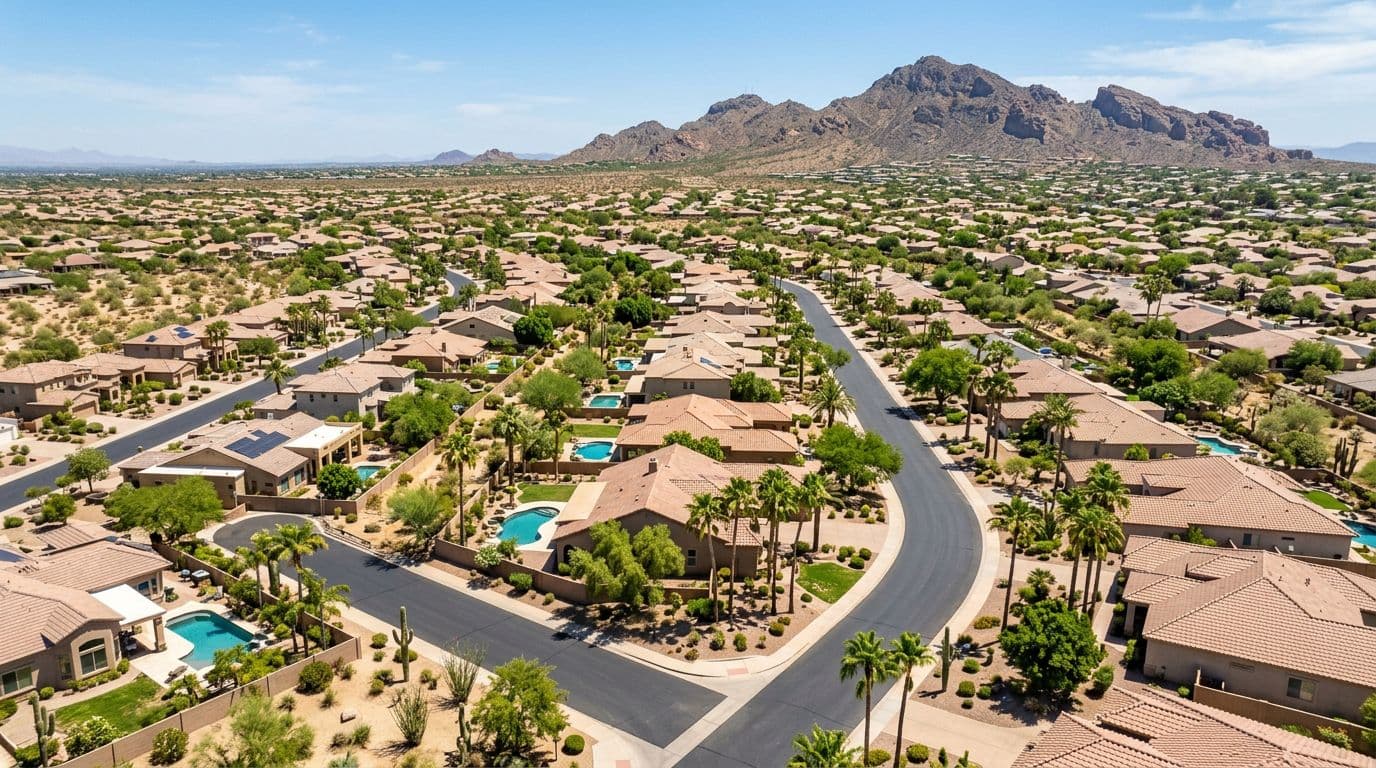
Typical Phoenix housing patterns matter long term, lot size, trees, and how close you are to daily needs (created with AI).
How I pick the best long-term investment neighborhoods in Phoenix that hold value
I think about neighborhoods the way I think about a solid pickup truck. Flashy is fine, but I’m buying for reliability. The goal is to own something a wide range of buyers will still want later, even if the market has a few moody years in the middle.
First, I start with who will buy it after you. Families, professionals, and downsizers each have different deal-breakers. A home that can serve more than one group usually holds value better.
Next, I look at friction. Friction is the stuff that makes daily life harder, long drives for groceries, awkward freeway access, limited medical options, or a layout that feels “fine for now” but rough later. Less friction usually means stronger resale demand.
I also pay attention to the current market mood. As of early 2026, Phoenix feels more balanced than the frenzy years, with more inventory and more negotiation room. That’s helpful for long-term buyers because you can be picky about the street, the floor plan, and the HOA.
Finally, I keep it humble. Neighborhood trends can change. So before you commit, check recent sold comps in the same micro-area, and read HOA rules the boring way, line by line. It’s not fun, but it prevents regrets.
If you’re building a move budget, my cost of living in Phoenix AZ breakdown helps you sanity-check housing, utilities, and the everyday stuff that adds up.
The long-term drivers that matter most in Phoenix
In my experience, long-term value in Phoenix ties back to a few repeatable drivers.
Job access comes first. Homes near major employment areas tend to have a deeper buyer pool, even when rates jump. That’s one reason North Phoenix keeps getting attention with the ongoing TSMC expansion, the first factory started producing in 2024, and more phases are scheduled into 2026 and 2027.
Commute options matter more than people admit. Easy access to SR 51, Loop 101, and I-17 gives buyers choices when traffic patterns shift.
School reputation affects resale, even for buyers without kids. Strong districts pull demand forward, and they help protect value in slower years.
Heat and lot realities matter here. Mature trees, shade, and smart lot orientation can make a home feel more comfortable, and lower utility pain tends to widen demand.
Housing supply shapes long-term pressure. Areas with limited land and established streets often see steadier pricing than places with endless new phases.
Everyday convenience seals the deal: groceries, parks, medical networks, and simple errands without a 30-minute drive.
A quick self-check before you buy, especially if you are downsizing
Give me 10 minutes and I can usually spot the “later problem.” Here’s what I check fast:
- Single-story options (or at least a main-floor primary suite)
- HOA costs and rules, rentals, pets, parking, exterior changes
- Property tax expectations for that ZIP and price point (this Phoenix property taxes guide helps)
- Insurance factors, roof age, claims history, nearby brush and slope
- Noise, freeways, busy cut-through streets, and flight paths
- Driving backup plan, can you still live well if you drive less?
If you’re the adult child helping, I’d add one more, how close is it to the medical network your family actually uses, plus easy errands that don’t feel like a mission.
If the house only works on your best day, it won’t feel good on your hard day.
My shortlist of the best long-term investment neighborhoods in Phoenix (and why each one works)
Below is my practical shortlist for buyers who want a long hold, not a roller coaster. I’ll keep each one tight, who it fits, why demand sticks, and one watch-out.
Arcadia and the Biltmore area for staying power and resale demand
Arcadia (85018) and the Biltmore (85016) tend to pull demand because they’re central, established, and hard to “duplicate” with new supply. Families like the schools and close-in feel, professionals like the commute options, and downsizers like being near major hospitals and services. Watch-out: higher entry price, plus older homes can need real updates, and some pockets sit near busy roads.
If you want the deeper dive on 85016, here’s my guide to Living in the Biltmore Phoenix 85016.
North Central Phoenix for stable neighborhoods and easy daily living
North Central Phoenix (85021) is steady because buyers understand it. You get mature streets, a close-in location, and a mix of home types that keeps the buyer pool wide. It’s also a sneaky-good downsizing target because errands and medical care are usually a simpler drive than far-out suburbs. Watch-out: it changes block to block, so I always drive it at different times of day.
Downtown Phoenix and Roosevelt Row for long-term rental demand and future growth
Downtown and Roosevelt Row can work long term for buyers who want walkability, and for owners who expect renter demand tied to jobs and the ASU Downtown area. Condos and townhomes can also mean less yard work. Watch-out: parking, noise, and HOA fees can change the monthly math fast. I treat this as a lifestyle pick, not my default “safe” play.
The Sheaborhood 85028 for a quieter feel and consistent family demand
When people tell me they want a quieter, tucked-away in the mountains feel, I often look first in The Sheaborhood (85028). You get a “I can breathe” vibe, plus strong day-to-day convenience along Shea and nearby corridors. Watch-out: HOAs can be strict in a few pockets, and some streets feel very different a half-mile apart.
North Phoenix near the TSMC job corridor for a jobs-led long-term bet
North Phoenix (including 85024 and nearby) has a jobs-led story that’s hard to ignore. Big employers bring workers, suppliers, and secondary businesses, and housing demand often rises over time as a result. Newer homes can also mean fewer early repairs, which matters for seniors and busy families. Watch-out: construction and road changes can be disruptive, and not every nearby pocket performs the same, so micro-location matters.
How I would choose the right neighborhood for my plan, timeline, and budget
If I were moving soon, I’d keep the decision simple. First, I’d pick my non-negotiables, single-level living, medical access, commute ceiling, or school priority. Then I’d choose two to three neighborhoods from the shortlist and tour them like a normal person, morning, afternoon, and early evening.
After that, I’d compare homes side by side using the self-check. That’s where the right choice usually becomes obvious. One house feels calm, easy, and repeatable. Another feels exciting, but it adds friction you’ll pay for later.
On timing, I don’t try to guess next month. I focus on buying the right street and the right layout, at a price that works for your life.
If I want the safest, most predictable choice
I’d lean toward established areas like Arcadia, Biltmore, and North Central, and I’d pick homes that appeal to the widest range of buyers. Layout matters here. Single-level, fewer stairs, and simple yards age well.
If I want growth potential and can handle a little more change
I’d consider downtown lifestyle zones or North Phoenix job-corridor areas, but I’d get serious about details. HOA rules, parking, and planned construction can swing the experience.
My quick next steps look like this:
- Tour at different times
- Review HOA docs before you fall in love
- Compare recent sold comps in the same micro-area
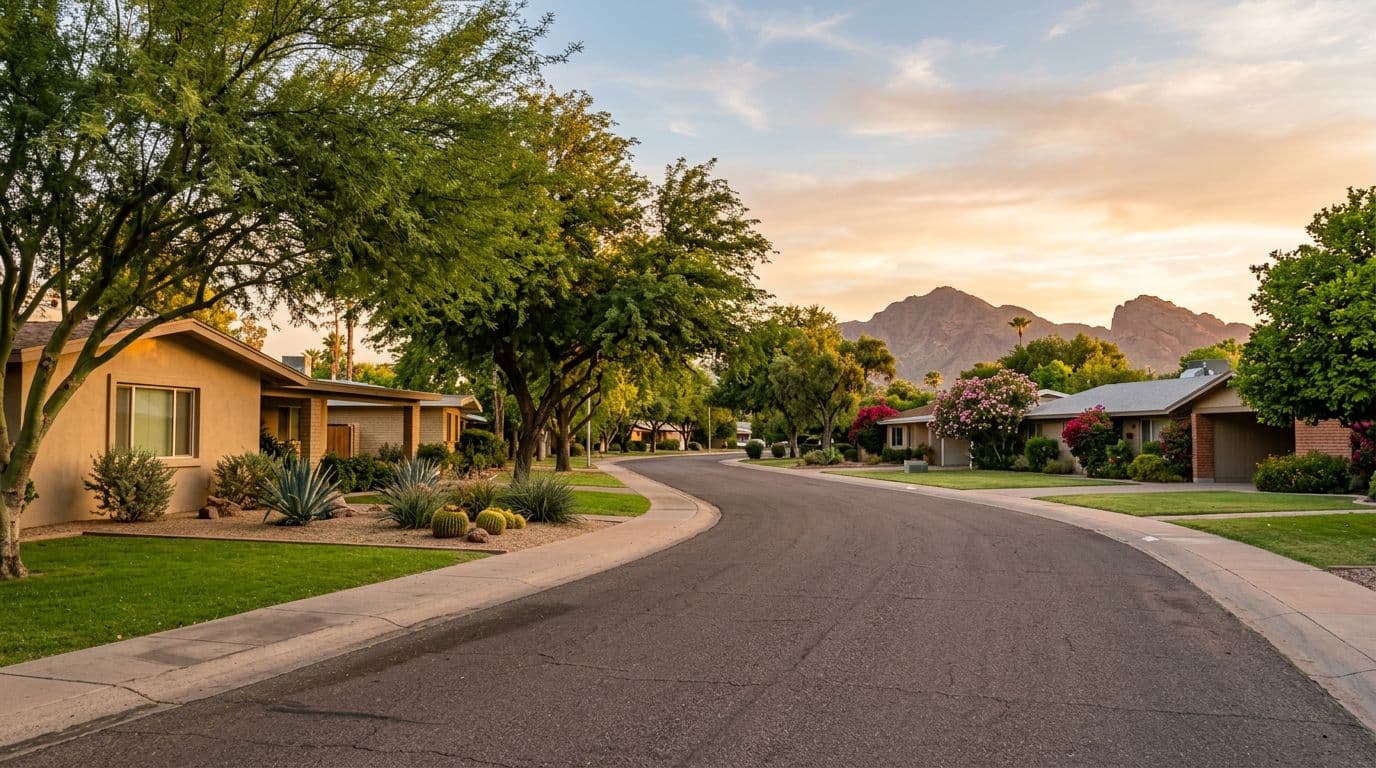
Long-term value often follows simple things, a stable street, pride of ownership, and easy daily living (created with AI).
Conclusion

Long-term wins in Phoenix usually come from boring, dependable demand drivers, strong job access, school reputation, healthcare proximity, and daily convenience. Then you stack the odds further by buying a home that a lot of people will want later, not just one that fits you today.
If you’re moving or helping a parent downsize, pick two to three areas from my shortlist, then compare homes side by side using the self-check. That’s how you turn a big decision into a calm one. You don’t have to rush this.