
Why First-Time Homebuyers in Phoenix Have an Edge Right Now

If you’re a buyer in Phoenix, the headlines can make it feel like the door is closing. Rates dipped near 5.99%, then jumped back above 6.5%, and now a lot of people are frozen, waiting for things to “settle down.”
The problem is that real estate rarely waits for perfect calm. In many cases, First-Time Homebuyers In Phoenix have more room to negotiate when rates are higher, not less.
Rates jumped fast, but the full story matters more than the headline
A big part of the anxiety right now is speed. Mortgage rates were moving in a better direction, then global events changed the mood almost overnight. Lizy Hoeffer explained that rates have climbed by more than half a point over roughly 45 days, which feels dramatic, especially if you were watching them flirt with 5.99%.
That kind of move matters because small rate changes can create real budget stress. On a loan in the $400,000 to $500,000 range, a half-point increase can add a little under $200 a month. For some buyers, that is manageable. For others, that is the difference between qualifying and getting sidelined.
This quick snapshot helps put the recent move in context:
| Rate point | What it means |
|---|---|
| 5.99% | A level that got many buyers excited and brought hope that affordability was improving |
| 6.5%+ | A higher payment, tighter qualification, and more buyers pausing |
| About 0.5% change | Roughly $200 more per month on many average Phoenix-area loan amounts |
The payment impact is real, but context matters too. Lizy made a point that many buyers miss: rates are still lower than they have been for much of the last three years, and they are improved from where things stood at this time last year.
That doesn’t erase the pressure. It does mean the market isn’t as simple as “rates went up, so everything is worse.”

In my experience, this is where people get stuck. They treat the rate itself as the whole story. It isn’t. The better question is how the rate changes your buying power, your competition, and your leverage with sellers.
How the Iran conflict reaches mortgage rates
War does not directly set mortgage rates. That’s the first thing to clear up.
Lizy’s point was that the conflict affects rates through the economy, especially through oil, inflation fears, and where investors decide to put their money. That chain reaction is what buyers feel when they open a loan estimate.
Oil prices, inflation fears, and the 10-year Treasury
When conflict pushes oil prices up, the cost of moving goods tends to rise too. That can feed inflation because transportation touches almost everything. If inflation looks like it may heat up, markets start thinking the Fed may stay tougher for longer, or even raise short-term rates.
At first, that fear can push mortgage rates higher.
Then the story can flip. If oil stays high long enough, people often spend less. A slowdown in spending can cool inflation and raise recession fears. When investors get nervous, many shift money into the 10-year Treasury, which is seen as a safer place to park it.
Mortgage-backed securities do not move in lockstep with the 10-year Treasury, but they are close cousins. That is why Treasury moves often show up in mortgage pricing.
Ask how this affects your leverage as a buyer or seller, not whether one headline means you should stop your plans.
Lizy also noted that markets trade on anticipation. They react to what investors think is coming, not only to what has already happened. That is why rates can move sharply even when the full economic impact is still unclear.
Why rates could settle down, but not overnight
If tensions ease, Lizy estimated it could take six to eight weeks for the market to feel more normal again. Even then, there is a lag. The economy still has to work through the effect on oil, consumer spending, and inflation.
If conflict drags on, the picture changes again. Higher energy costs can squeeze household budgets enough to slow spending more broadly. If inflation cools too much and falls below the Fed’s target, policymakers can shift toward buying mortgage-backed securities, which tends to support lower mortgage rates.
That is part of how the market once got back to the 3% to 4% range. No one is rooting for economic pain to get there, but that is the mechanism.
Another detail worth knowing is the spread between the 10-year Treasury and the 30-year mortgage rate. Lizy said that a more normal spread is around 1.6% to 1.8%. Right now, it is still over 2%. In other words, mortgage rates are not fully “normal” relative to Treasuries yet.
So yes, the Iran conflict matters. It matters because it changes inflation expectations, recession fears, and investor behavior. It does not work like a light switch.
Higher rates can give first-time homebuyers in Phoenix more power
This is the part many buyers miss.
A higher mortgage rate can make your monthly payment worse, but it can also reduce the number of people competing with you for the same house. In real estate, that matters a lot.
Lizy explained that supply and demand in housing moves slowly. New listings started declining around June of last year. Then rates fell, more buyers came back, and after enough time passed, bidding wars started showing up around February. That lag is important because housing does not react overnight.
When rates move up to the mid-6% range, some buyers simply cannot qualify. Others qualify but decide the payment does not fit their lives. That shrinks the demand pool.
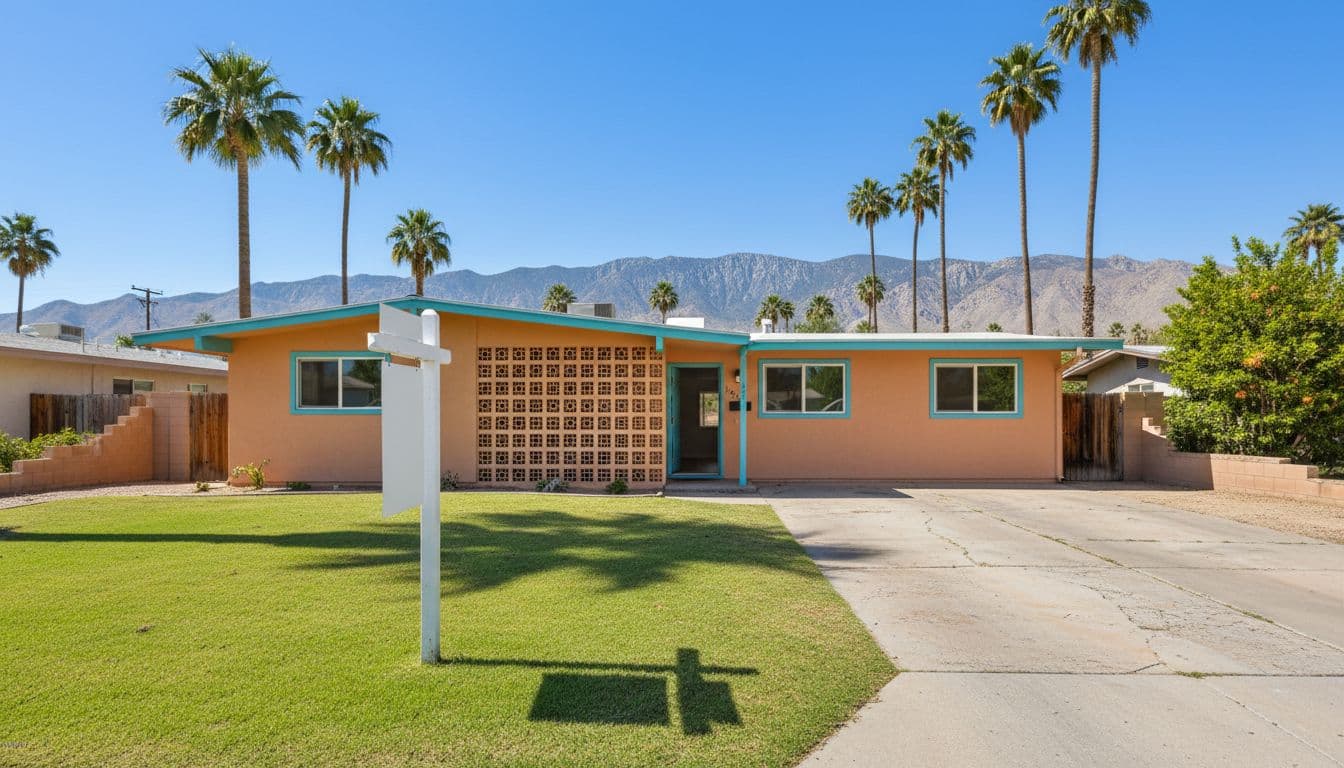
As demand cools, buyers often gain negotiating room. Sellers may become more open to covering closing costs, paying for repairs, or helping fund a temporary rate buydown. In neighborhoods such as The Sheaborhood (85028), North Central Phoenix (85021), and parts of Biltmore (85016), that difference can be meaningful because even a good house can sit a bit longer when fewer buyers are chasing it.
That is why Bob’s framing is useful. He is not telling people to ignore rates. He is saying the smarter question is whether the current market gives you more leverage.
This also helps explain why a major crash is not the base case here. The Great Recession was driven by bad loans and heavy speculation. People were buying homes they did not plan to occupy and using risky financing to stack properties. Lizy made the point that today’s lending environment is different. Even with non-QM loans in the market, many borrowers are buying homes they live in, and owner-occupants usually fight hard to keep the roof over their heads.
If you’re both buying and selling, that balance matters. You can get a rough feel for the seller side with Bob’s Phoenix home value tool, then measure that against what your next payment would look like.
Why today’s buyer may get a better overall deal than the 3% buyer did
A low rate always looks great on paper. Still, the full cost of buying includes more than the interest rate.
Buyers in 2021 often walked into a rough setup. Many paid over asking. Some paid above appraised value. Most covered all of their own closing costs. Many skipped repair requests because they were competing with a pile of offers. Bob mentioned seeing open houses with 50 or 60 people lined up outside, and one house that drew 44 offers in a weekend. That wears people down in a hurry.
A buyer in a higher-rate market may pay more per month, but that same buyer can often negotiate a better deal at the front end. That could include seller-paid closing costs, repair credits, or a temporary buydown that lowers payments for the first year or two.
Lizy pointed out another piece people overlook. Some buyers who purchased in 2023 later refinanced into the mid-5% range. Others used seller-funded buydowns to soften the early years. So while those buyers did not get a 3% note, they also did not have to go through the same financial beating that many 2021 buyers accepted.
That trade-off matters. A lower rate is great. A lower rate plus overpaying, waiving repairs, and draining your savings is a different story.
For many First-Time Homebuyers In Phoenix, the cleaner path is the one with fewer competitors and more room to negotiate. The payment may not be perfect, but the overall deal can be much healthier.
Programs that can help first-time homebuyers in Phoenix
There are more paths into homeownership than many people realize. A lot of buyers still picture 20% down as the only serious option, and that simply is not how most first-time purchases work.
Low-down-payment loans, grants, and assistance
Lizy said there are more first-time buyer options now than there used to be, including a 3% down conventional loan. That program has become more common over the last several years. For some income-qualified buyers, there may also be discounted rates and lower mortgage insurance.
She also mentioned a $4,000 grant through her company for first-time buyers. A grant matters because it does not have to be paid back. Depending on the lender and program, funds like that may be used toward closing costs, buyer-agent compensation, down payment costs, or some mix of those items.
Down payment assistance can help too, although it usually comes with a higher rate. In other words, the money is not free. You are paying for easier entry. Even so, many buyers decide it is worth it because owning a home gives them access to appreciation on the full value of the property, not only on the cash they put in.
A $15,000 investment into a $500,000 asset works differently than saving that same money in a basic account for years.

If you want to see what entry-level and move-up options look like in the current market, Bob’s Phoenix home search site is a practical place to start.
A longer-term strategy some couples use
Lizy also talked through a strategy that surprised Bob, and it is one a lot of younger buyers have never heard. In some cases, couples buy with one spouse on the loan first, then preserve the other spouse’s first-time buyer status for a later purchase.
She explained it this way: one partner could buy a starter home with 3% down. A couple of years later, the other partner might still qualify as a first-time buyer for the next purchase, which can keep the down payment lower again. She also noted that if title planning is part of the strategy, a trust may come into the conversation.
That is more advanced than a basic pre-approval, and the details matter. Still, it shows how flexible the system can be when a lender is looking for solutions instead of dead ends.
Family help can also play a role. Lizy said gifts from family members and gifts of equity are still common. She also noted that some buyers purchase homes for their parents, which is allowed in certain situations under primary residence guidelines.
What’s stopping buyers right now is often not credit
A lot of people assume they do not qualify because they read one bad headline, hear one horror story, or watch too much housing talk on social media. That fear is understandable, but it often is not accurate.
Lizy said the biggest issue she sees is mindset. Many people can qualify, but they do not feel ready because the payment misses their comfort zone by a small amount. That caution is healthy up to a point. No one should buy a home that makes them house poor.
Still, she also said that most of the people who contact her do qualify. She estimated that it is well over 50%. The bigger hurdle is whether they feel emotionally ready to act.
The second problem is cash. Buyers may have enough for a down payment but not enough for closing costs, or the reverse. That is where grants, seller concessions, and down payment assistance can change the picture.
The third problem is noise. Friends and family often mean well, but their advice is not always grounded in today’s market. Someone who bought 20 years ago, or someone who has never owned at all, may be speaking from fear rather than from facts.
Bob and Lizy both made a fair point here. People get dragged away from homeownership all the time by voices that are not active in the market.
Pre-qualification also takes less time than many people think. Lizy said a buyer can often complete an online application in 15 to 20 minutes, and many pre-approvals come back in about 24 hours. That does not commit you to buy. It simply gives you real numbers instead of guesses.
A home is not only a monthly payment. For many households, it is the main source of long-term wealth and retirement security.
Bob put this in plain language with a line that rings true for a lot of longtime owners: a house can feel like forced savings. You make the payment, time passes, and equity builds in a way many people struggle to duplicate with ordinary saving habits.
The better question to ask right now
The smartest question is not “Where will rates be next month?” There are too many moving parts for anyone to answer that with confidence.
A better question is, “How does this market affect my leverage?” If rates stay higher, buyers may get more concessions and face less competition. If rates fall, more buyers usually come back, and that can make the shopping process harder, not easier.
That is the trade-off. You do not have to rush it. You also do not need a perfect headline before you take the next step.
For First-Time Homebuyers In Phoenix, this market may feel uncomfortable, but uncomfortable is not the same as bad. In many cases, it is where the better deals live.