Biltmore vs Uptown Phoenix for Families
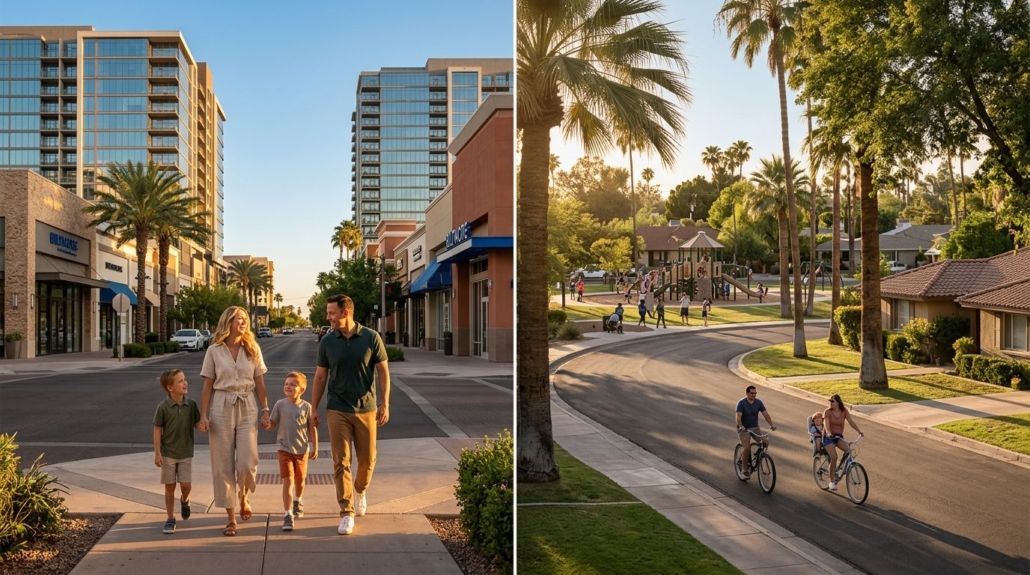
If you’re weighing Biltmore vs Uptown Phoenix, you’re probably not looking for an elevator pitch about the general Biltmore Area. You want to know where daily life feels easier, where the trade-offs are manageable, and where your family won’t feel like it made an expensive mistake.
I’ve helped a lot of families relocating to Phoenix through this exact decision, and I can tell you this: both areas, which are popular parts of the Central Phoenix landscape, work well, but they work well for different kinds of households. That includes families with kids, couples planning ahead, and adult children helping a parent downsize.
Let’s walk through this together.
Key Takeaways
- Biltmore is known for convenience: Polished streets, diverse housing (condos to estates), easy access to shopping, dining, healthcare, and Downtown- ideal for busy families, professionals, and downsizers who want low-maintenance central living.
- Uptown delivers neighborhood warmth: Mature trees, ranch homes, yards, and a true residential vibe perfect for families looking for neighbor chats, dog walks, and routines over urban polish.
- Cost and trade-offs differ: Biltmore commands higher prices for its flexibility and upkeep ease, while Uptown offers value but potential older-home repairs- pick based on your tolerance for maintenance vs. premium location.
- Daily life decides it: Biltmore makes errands and access easier; Uptown is known for community feel. Both have strong schools and parks, but verify boundaries and match to your typical weekday routine for no-regrets happiness.
The short answer…
When families ask me to compare Biltmore and Uptown, I usually start with one question: “Do you want convenience with proximity to Downtown Phoenix, or do you want more of a neighborhood feel with local charm?”
Biltmore usually wins on convenience and walkability. You’re close to restaurants, shopping, major streets, medical care, and a wider mix of housing types in Central Phoenix. Uptown usually wins on residential character. It feels more traditional, more local, and a little less like your errands are happening in the middle of everyone else’s.
Here’s the quick side-by-side view:
| What matters most | Biltmore | Uptown Phoenix |
|---|---|---|
| Daily feel | More polished, more convenience-driven | More residential, more neighborhood-driven |
| Housing mix | More condos, townhomes, patio homes, upscale single-family homes | More ranch homes, more traditional single-family streets |
| Best fit | Busy professionals, downsizers, families who want central access | Families who want yard space, routine, and a quieter block |
| Trade-off | Higher cost, more traffic pockets, less of a “small neighborhood” feel | Older homes, more upkeep, less lock-and-leave convenience |
The takeaway is simple. Biltmore often feels easier. Uptown often feels warmer.
If your family wants life to feel smoother, Biltmore usually rises to the top. If you want life to feel more rooted, Uptown often does.
That doesn’t make one better. It means the wrong choice for your lifestyle will bother you every day, and the right one will feel obvious the day you move in.
Why some families choose Biltmore first
The Biltmore Area has a polished, central feel that a lot of relocating families love right away. You can see the appeal quickly. The streets are attractive, the landscaping is cleaner, and the area feels well-kept. Home to the iconic Arizona Biltmore Resort and its Frank Lloyd Wright architecture, this slice of the Camelback Corridor in Camelback East Village sets a refined tone.

This part matters more than people think.
When you’re moving to Phoenix, convenience is key. In the Biltmore Area, getting to shopping and upscale retail at Biltmore Fashion Park, dining, healthcare, and major roads is pretty straightforward. For seniors, or for adult children helping a parent make a move, that can carry a lot of weight. I see that over and over.
Housing choice is another big reason families decide to move here. The Biltmore Area gives you more flexibility than people expect. You can look at condos, patio homes, townhomes, luxury estates, and larger single-family homes offering resort-style living without leaving the general area. If you want a deeper feel for the area, my guide on living in the Biltmore Phoenix 85016 gets into that day-to-day mix.
Recent 2026 comparisons still put Biltmore well above Uptown on price in many cases, often with single-family homes around or above the low seven figures. That’s the catch. You’re paying for location, upscale area, and easier access to things.
So who usually likes Biltmore most? Families who don’t want to spend every weekend maintaining a house, parents juggling busy schedules, and downsizers who still want to stay central.
Click here to see a list of homes currently for sale in the Biltmore area, to get an idea of the pricing.
Why Uptown often feels more like “home”
Uptown Phoenix has a different personality. It’s less polished, but more personal. For a lot of families, that ends up mattering more.
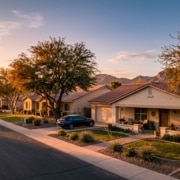
When I drive Uptown Phoenix with buyers, the reaction is usually about the streets themselves. Mature trees. Brick mid-century ranch homes. More yards. Less of that “am I living near a shopping district?” feeling that some people get in parts of Biltmore. The area’s proximity to several historic districts adds to that timeless residential charm.
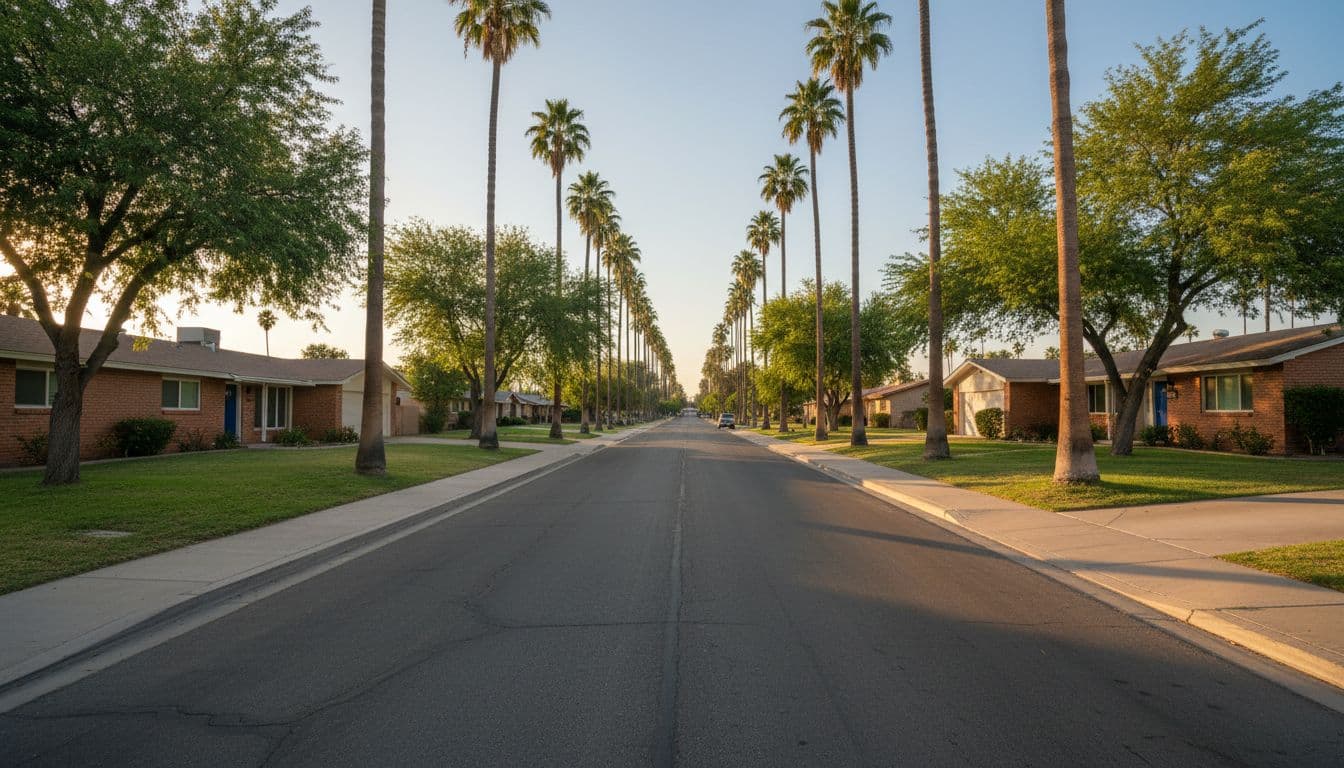
Uptown also tends to feel a little slower. I’m not saying it’s boring, but perhaps more livable.
If your version of a good week includes walking the dog, pushing a stroller, chatting with neighbors, or biking near the Murphy Bridle Path or Arizona Canal Path, Uptown often scratches that itch better. Light rail access in this part of Central Phoenix makes it easy to get to Downtown Phoenix without the financial district feel. You also get more of the classic Central Phoenix house stock, which many families love. Of course, older homes come with older-home issues. Roofs, plumbing, windows, and floor plans don’t always cooperate.
I also find that Uptown works well for buyers who want character but don’t want to jump all the way into Arcadia pricing or Arcadia competition. And for some families who like Uptown’s rhythm but want a slightly different setting, the Sheaborhood becomes part of the conversation too. Not because it’s “better,” but because it offers another version of family-friendly Phoenix with its own unique features.
The main caution with Uptown is that “charming” can get expensive if the house needs work. People sometimes fall in love with the block and forget to budget for the house itself.
To get an idea of current pricing, click here to see a current list of homes for sale in Uptown Phoenix (85014).
Schools, parks, and the stuff that shapes ordinary life
For many families, this is the section that decides it.
Both Biltmore and Uptown have great school options, and both are part of the broader conversation around the Madison district. If school boundaries are a major factor, I always tell people to verify the exact address before they get emotionally attached. A good starting point is this guide to neighborhoods in the Madison School District.
Beyond schools, I look at what I call “Thursday afternoon living.” How easy is pickup? Can you get groceries without turning it into an all-day affair? Is there a good walking route? How long will you be in the car for when driving to medical appointments?
Biltmore usually wins the convenience test. Uptown usually wins the neighborhood routine test.
Biltmore is good for families who want close-in access to services and a little more insulation from home maintenance. Uptown is good for families who want to feel the neighborhood around them when they walk outside. That sounds simple, but it changes how a place feels after you’ve lived there awhile.
If parks and walkability matter, the Biltmore Area and Uptown Phoenix both offer access to the Phoenix Mountains Preserve, with Biltmore’s proximity to Piestewa Peak and Uptown’s views of Camelback Mountain standing out as must-haves for active families. Walkability to neighborhood parks varies significantly between the two. My roundup of best Phoenix neighborhoods for families with parks gives useful context for how Biltmore compares with other parts of town.
One thing most people don’t realize is that family-friendly doesn’t always mean playground-first. Sometimes it means easier doctor’s visits, less driving stress, or a house where grandparents can visit without climbing stairs. In that version of the Biltmore vs Uptown Phoenix decision, Biltmore often gains ground.
Cost, housing style, and where people tend to get stuck
This is where people can get stuck.
They compare Biltmore and Uptown as if they’re choosing between two labels, when they’re really choosing between two ways of living. My 85014 vs 85016 comparison breaks down those trade-offs street by street. Price matters, but how the home fits your life matters just as much.
In the current real estate market, Biltmore is the more expensive bet, with a higher median home price due to its centrality, appearance, and flexibility in housing type. Uptown usually gives you a more traditional neighborhood feel, and often more yard, for less money than Biltmore. But that doesn’t always mean lower true cost. An older Uptown house can cost you more after closing, and some buyers prefer the lack of a homeowner association often found in older Uptown blocks compared to Biltmore developments.
For downsizers, Biltmore often makes the shortlist first, especially in the Biltmore Area with its gated communities and lock-and-leave convenience, more one-level choices, and easier access to daily needs. If I’m talking with an adult child helping a parent move, Biltmore is often the safer first conversation.
For families with younger kids, Uptown can be the better long-term emotional fit. You may get more neighborhood street life, more yard space, and more of that classic neighborhood rhythm people picture when they say they want to “feel settled.” Think “Leave It To Beaver” neighborhood.
Neither choice is wrong. The wrong move is picking based on the name alone.
Who usually ends up happiest in each area
The happiest Biltmore buyers usually want life to be simpler. They often work in the nearby financial district and/or downtown Phoenix or enjoy the urban appeal, and they don’t mind paying more if it buys convenience, lower-maintenance options, and quick access to the parts of Phoenix they use all week, including popular landmarks like the Wrigley Mansion or The Arizona Biltmore Resort.
The happiest Uptown buyers usually care more about block feel than polish. They want a house with personality, a neighborhood they can walk, and a setting that feels calmer.
If you want my honest read, Biltmore is often the easier decision on paper, thanks to draws like the Arizona Biltmore Resort and Biltmore Fashion Park. Both areas are just a short commute from Downtown Phoenix, but Uptown is often the one people think “This just feels right”.
And when paper and gut disagree, that’s where a lot of regret starts.
Frequently Asked Questions
Which neighborhood is better for families with young kids?
Uptown often feels more like home with its yards, tree-lined streets, and neighborhood rhythm for stroller walks and play. Biltmore suits active families better with quicker access to services and less yard work. Ultimately, Uptown wins for emotional fit, Biltmore for practical ease- check school boundaries in Madison District.
How do home prices and housing types compare?
Biltmore is pricier (often low seven figures) with condos, townhomes, and upscale singles for lock-and-leave convenience. Uptown provides more affordable ranch homes and yards but watch for upkeep costs on older properties. Biltmore offers flexibility; Uptown delivers traditional space.
Is Biltmore or Uptown more walkable for daily errands?
Biltmore edges out with proximity to Biltmore Fashion Park, restaurants, and major roads, making groceries and medical visits pretty straightforward. Uptown prioritizes residential walks like canal paths but may require driving for some shopping. Both have light rail to Downtown, but Biltmore feels more convenience-driven.
What about schools and parks in these areas?
Both fall under Madison School District with solid options (verify addresses as boundaries matter). Biltmore is near Piestewa Peak; Uptown offers Camelback views and bridle paths for active families. Family-friendly means more than playgrounds: think easy pickups and low-stress routines.
Which is best for downsizing or seniors?
Biltmore usually tops the list with single-level homes, gated options, and central services minimizing drives for healthcare or shopping. Uptown’s charm appeals if character trumps polish, but older layouts may need updates. For adult kids helping parents, Biltmore’s simplicity often seals it.
Final thoughts

If I were helping you choose between Biltmore vs Uptown Phoenix, I wouldn’t start with square footage or status. I’d start with your routine. Daily life is what you’re buying.
The Biltmore Area fits families who want central convenience and more flexible housing. Uptown Phoenix fits families who want a stronger neighborhood feel and can live with a little more house upkeep.
In Central Phoenix, the best choice is the one that makes ordinary weekdays easier, calmer, and more manageable. That’s usually the choice that still feels right after the moving boxes are gone.