
How to Talk to Your Aging Parent About Selling the Home
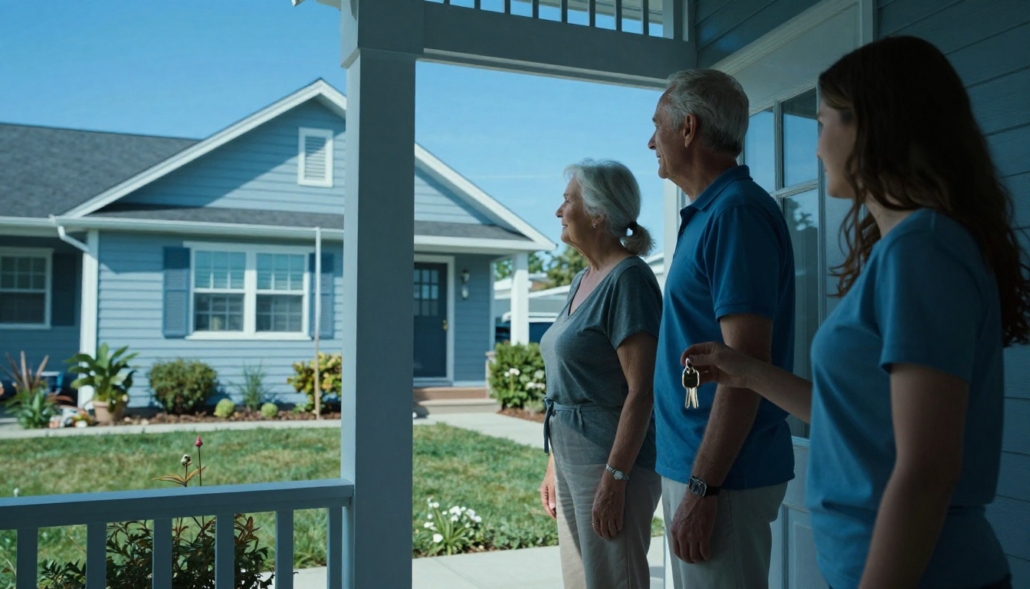
You can already see it. The house is too big, the yard is wearing them out, and the stairs aren’t getting any easier. But every time you bring up moving, the whole thing goes sideways, and you walk away feeling frustrated, guilty, or both.
I’ve sat with a lot of families in this exact spot. When you’re selling a home with aging parents, the hard part usually isn’t the real estate. It’s getting to an honest conversation without making your parent feel cornered.
Why your parent isn’t really saying no to the house
When a parent resists selling, I almost never think, “This is about square footage.” It usually isn’t. It’s about independence, identity, routine, pride, and a lifetime tied to one address.
That house is where they hosted holidays. It’s where the grandkids ran through the backyard. It’s the kitchen they know in the dark, the neighbors they know by name, the street they’ve driven a thousand times without thinking. So when an adult child says, “Maybe it’s time to move,” what a parent often hears is, “You think I can’t handle my life anymore.”

That’s why logic alone doesn’t get you very far when it comes to selling a home with aging parents. You can point to the stairs, the yard, the repairs, the cost, all of it. If the conversation touches a nerve around dignity or control, the facts bounce right off.
There’s another piece people miss. A lot of parents are resisting a picture in their head, not the actual options in front of them. They may be imagining a bleak apartment, a loss of freedom, or a place that feels like giving up. They haven’t seen how good a smaller home can be, or how much easier life can feel in a single-level place with less upkeep.
So before you try to solve the problem, name it correctly. This isn’t “the house issue.” It’s a life transition. If you treat it like a sales pitch, they’ll push back. If you treat it like a conversation about how they want to live over the next few years, you have a chance.
Selling a home with aging parents: How I open this conversation so it doesn’t become a fight
The families who handle this best don’t come in swinging. They don’t lead with facts, fear, or pressure. They lower the temperature first.
I start with their comfort, not my convenience
If the first thing out of your mouth sounds like it would make your life easier, the conversation is probably over before it starts.
Parents are quick to pick up on that. If it sounds like, “I need you to simplify this for me,” they’ll hear control, not care. I always tell adult children to center the conversation on the parent’s day-to-day life. What feels hard now? What would feel easier? What do they want the next few years to look like?
That shift matters. “I want you to be more comfortable” lands differently than “This house is too much for you.”
I ask questions, not verdicts
A good question leaves room. A hard statement backs people into a corner.
Here’s the difference I mean:
| Instead of saying | Try saying |
|---|---|
| “This house is too much for you.” | “Have you thought about what it would look like to have a little less to maintain?” |
| “You can’t keep up with this yard anymore.” | “Would it feel better to have less outdoor work?” |
| “You need to move.” | “What would make life easier at home over the next few years?” |
Questions work because they invite your parent into the conversation. They don’t force them to defend themselves. You’re not delivering a verdict. You’re opening a door.
And once they start talking, listen longer than feels natural. Most adult children jump in too fast because they’re nervous. I get it. But if your parent gives you even a small opening, stay there. Let them finish the thought.
I keep the focus on what they’re moving toward
This is one of the biggest shifts I make in these conversations. I don’t focus on what they’re losing. I focus on what they could gain.
Maybe that’s a smaller place in a neighborhood they already like. Maybe it’s less maintenance, fewer repairs, and no stairs. Maybe it’s more cash in the bank, or more time and energy for the parts of life they still enjoy.
If you frame the move as a list of losses, the answer will be no. If you paint a clear picture of relief, simplicity, and comfort, it starts to feel different. That’s true whether you’re helping downsizing parents move to a patio home, a condo, or assisted living.
I bring in a neutral voice when family emotion is too loud
Sometimes the message is right, but the source is wrong.
A parent can hear the exact same idea from a Realtor, a financial advisor, or a doctor, and take it in without the same defensiveness. That’s not because they trust you less. It’s because family history is loud. A neutral third party brings information without all the emotional baggage.
I’ve seen this over and over. Once the conversation stops sounding like “my kids are telling me what to do,” it gets easier to hear. That’s one reason families look for how a Senior Real Estate Specialist helps families during a move like this. The role isn’t only about listing a house. It’s also about helping everyone have a calmer, more informed conversation.
I don’t need an article to tell me timing and control matter, but CMSA makes the same point in its guide to talking about downsizing with aging parents. Parents do better when they feel included, respected, and in charge of their own decisions.
What backfires, even when it comes from love
I’ve seen plenty of adult children blow up a conversation they meant to handle gently. Not because they were selfish, but because they were scared.
The first mistake is leading with danger. “Dad, you could fall on those stairs.” It may be true. It still isn’t a great opener. Starting with fear puts a parent on defense fast. Safety matters, but if that’s your first move, it can sound like you’ve already decided they can’t manage.
The second mistake is leading with money. The value of the house matters. Of course it does. But if your first point is what the home is worth, your parent may hear, “You’re trying to cash me out.” Once that suspicion shows up, good luck getting back to trust.
Then there’s the sibling pile-on. This one is common. Four adult children get on the same page, walk into the room, and think they’re showing unity. To the parent, it feels like an ambush.
If everybody shows up to push in one direction at the same time, it doesn’t feel like support. It feels like pressure.
If siblings need to be involved, decide ahead of time who is leading the conversation and what that one conversation is supposed to accomplish. Is the goal to ask a question? Plant an idea? Set up a follow-up? Keep it small.
And don’t expect a decision in one sitting. You’re not trying to “close” anything at the kitchen table. You’re trying to open a conversation that your parent can keep thinking about after you leave.
Selling a home with aging parents: Timing matters more than most families think
The worst time to have this talk is in the middle of a crisis.
A fall, a hospital stay, a health scare, those moments compress everything. People are tired. They’re emotional. They’re scared. The choices feel forced because, a lot of the time, they are. Families who wait until there is no choice usually end up with more stress, less time, and fewer good options.
The better time is when life gives you a natural opening. Those moments come and go, and they matter.
A few examples:
- They mention the yard is getting harder to keep up with.
- They bring up a friend who recently moved.
- They ask what the house might be worth.
- They complain about stairs, cleaning, or repairs.
That’s the moment to plant a seed, not push for a decision. Ask a question. Make one observation. Then leave room.
I tell families this all the time, let the idea breathe. The parents who move most peacefully are often the ones who feel like the decision became theirs, even if you helped start the conversation. That’s not manipulation. That’s respect.
If you’re already past the first talk and into the practical side of sorting, downsizing, and getting unstuck, these downsizing tips for a senior parent’s home are a useful next step. One task worth adding to that list: register your parent’s property with Arizona’s new deed fraud alert system, since homes owned by elderly or part-time residents are exactly the targets it was built to protect.
Talk to someone before you talk to your parent
If you’re in the middle of this right now, you don’t have to figure it out alone. A lot of families call me before they ever bring the parent into the conversation, and that’s often the smartest first move. We can talk through the personalities, the timing, the sibling dynamics, and what the next step should be.
If the move is getting closer and you need the bigger picture, I also put together a guide on selling a family home in Phoenix that speaks directly to adult children in this spot. And once the conversation is moving, my guide on whether to sell first or buy first when downsizing helps with the practical next step, and my step-by-step guide to downsizing a home in Phoenix walks through the whole process from start to finish.
The goal isn’t to win an argument. The goal is to help your parent feel heard, respected, and safe enough to consider a change. If that’s where you are, call me at (602) 957-1583. I’m happy to talk it through with you first, no pressure, before anyone talks to your parent.