Should You Sell First or Buy First When Downsizing in Phoenix?

If you’ve lived in the same house for 30 years, it can feel impossible to know where to start. I hear that all the time from seniors and from adult children trying to help their parents make a smart next move.
I’m Bob Hertzog, a third-generation Phoenix real estate broker, and this is one of the biggest questions I get when families start thinking about downsizing in Phoenix. My short answer is this, start earlier than you think, because the more time you give yourself, the more options you have.
Before I talk about selling or buying, I ask one question first
Most people think the first question is, “Should I sell first or buy first?” It isn’t. The first question is, “Is it time to move at all?”
That’s where every good plan starts. Are you trying to age in place? Are you thinking about a smaller home, a 55-plus community, a patio home, a townhome, or assisted living? Are you still doing fine in the house, but tired of the upkeep? Or are your adult kids seeing things you may not want to admit yet, like mobility issues, missed medication, weight loss, or a home that has gotten harder to maintain?
I hear this a lot: “I’m going to die in this house.” I get it. If you’ve built a life there, raised kids there, hosted holidays there, and paid that mortgage for decades, of course that house means something. Nobody should brush that off.
But I also believe in being honest. If the cost of maintaining the home is getting to be too much, or the physical work of living there is wearing you down, something probably needs to change. That doesn’t mean you have to move next week. It means you should start the conversation now.

If you think a move might happen in the next year, two years, or even three years, that’s not too early. That’s the right time to start. I can come over, give you a ballpark of what the home is worth, show you a net sheet so you know what you might walk away with after costs, and point out what repairs matter and what repairs don’t. If you’d rather start with numbers first, you can get a free Phoenix home value estimate.
And if staying put is the right call, that’s okay too. Then the conversation shifts to making the home safer so you can stay there longer. Either way, the first step is not pressure. It’s clarity.
When Downsizing In Phoenix, should I sell first or buy first? Here’s how I think about it
There isn’t one right answer for every family. In my business, I see both paths work. The better choice depends on your finances, the Phoenix market, your stress level, and whether you’re buying another home at all.
Here’s the simplest way I frame it for people:
| Approach | Biggest upside | Biggest challenge |
|---|---|---|
| Sell first | You know exactly how much money you have | You may feel pressure to find the next place fast |
| Buy first | You can move first, then deal with selling | You may need financing or enough cash to carry both sides |
| Contingent offer | Lets you try to buy before your sale closes | Hard to win in a competitive Phoenix market |
What matters most is not only price. Terms matter too. Timing matters. Flexibility matters. The right agent knows how to put those pieces together.
When selling first makes more sense
A lot of my clients like to sell first because it removes guesswork. Once your home closes, you know exactly what your proceeds are. That’s a big deal. Asking price is one thing, closed price is another.
Selling first also means you don’t have to worry about carrying two mortgages, if you still have a mortgage. And when you go out to buy the next property, you’re in a stronger negotiating position if you have cash in the bank and you’re ready to move.
That matters in Phoenix. If a home is in good shape and priced right, it may get multiple offers. A seller looking at clean offers is usually going to pick the one with fewer strings attached.
The downside is obvious. Pressure. If your house is set to close on June 1 and you still haven’t found the next place by mid-May, that can make people panic.
This is where experience matters. I say this all the time, amateur hour is over when you’re dealing with senior downsizing. This is not the time to hire your niece, nephew, or buddy who got licensed last month. You need someone who knows how to negotiate price, yes, but also timing.
In many of my sell-first deals, I’m not only looking at the number. I’m asking what the buyer is willing to do to make my clients’ lives easier. Will they extend closing to 45 or 60 days? Will they allow post-possession? Will they do a lease-back so my seller can stay in the home after closing for a few weeks or a couple of months while we line up the next move?
A lot of buyers are more flexible than people think.
When buying first makes life easier
If my client can afford it, buying first is often the lower-stress path.
We go out, find the next home, get them moved in, and then we take our time getting the old home ready. That means no living through showings. No scrambling to keep the house perfect every day. No getting a call that a buyer wants to see the house in an hour while you’re trying to nap, host family, or make dinner.
Once the seller is out, we can clean, declutter, paint, replace old carpet if needed, and show the home at its best. That takes a lot of pressure off everybody, including me.
It also gives me a stronger hand on the purchase side. If I can tell the other side, “My client can close in two weeks” or “We’re ready in 30 days,” that usually gets better traction than, “We need to sell first and then we’ll see.”
So why doesn’t everybody buy first? Money. That’s usually the reason.
Why contingent offers are tough in Phoenix
A contingent offer means you’re trying to buy a home, but the deal depends on your current home closing first. Those deals can work. I’ve closed plenty of them. But in today’s Phoenix market, they can be hard to win.
If a seller has a solid house in good condition and it’s priced well, they’re often going to choose the buyer who can close cleanly in 30 days without waiting on another sale. That’s the reality.
When I have a client who insists on buying first with a contingency, I usually look for homes that have been sitting on the market a while. If the seller hasn’t had other good options, they may be more open to it. But that’s not where the best homes usually sit.
That’s why I bring lenders into the conversation early. Before we even look at homes, I want to know whether a bridge loan, HELOC, reverse mortgage, or another financing tool could solve the gap. If you need financing to buy first, get that lined up before we start shopping. When the right house shows up, you need to be ready to write fast.
Timing problems usually have a fix, if you plan ahead
One of the biggest fears people have is this: “What if my house sells faster than expected and I’m not ready?”
That can happen. It doesn’t mean you’re stuck.
If your home gets an offer before we’ve found the next place, I can work that into the contract. Maybe we push closing to 45 or 60 days instead of 30. Maybe we close in 30 days but add post-possession so you stay in the home a little longer. If it needs to go longer, then we may do a lease-back arrangement.
Most timing problems in a move can be solved. The mistake is waiting until the last minute to look for the solution.
In many cases, buyers don’t need immediate possession. I’ve found that a large percentage of them can be flexible if the situation is explained clearly and the terms make sense.
I’ve also done simultaneous closings, where we close your sale and your purchase on the same day. In that case, we may still need a few extra days after closing to get everything moved out, but it can be done.
As for timeline, I try to set expectations early. Home prep might take four to eight weeks, sometimes less, sometimes more. The market time can vary wildly. I’ve seen homes sell in 24 hours. I’ve seen others take months. In Phoenix, average market time can hover around 70 days, but averages don’t sell houses. Price and condition do.
Phoenix doesn’t have huge seasonal swings the way some parts of the country do, but there are patterns. The holiday season slows people down. Summer can bring urgency from buyers with kids who want to close before school starts. And if you’re doing your own move in Phoenix, I’d rather not have you carrying boxes in July when it’s 120 degrees outside.
As for escrow, 30 days is standard in a lot of deals. But everything is negotiable.
Get the house ready for buyers, not for a remodel show
When I walk through a home with a downsizing client, I’m looking for one thing first: return on effort. Not return on fantasy.
I rarely tell someone to redo a kitchen or gut a bathroom before selling. In most cases, that’s money you won’t get back. Buyers who want a full remodel usually want to pick their own finishes anyway.
What I do recommend is the stuff that helps the home show clean, well-maintained, and move-in ready enough for the next buyer to feel good about it. Fresh paint can help. New carpet can help. Minor repairs can help. Cleaning helps every single time.
What buyers want, especially in older homes, is good bones. If the house has been maintained well, that matters. A buyer can live with dated finishes a lot easier than they can live with the feeling that the house wasn’t cared for.
Decluttering matters too, but I try to keep it realistic. If someone has lived in the home for decades, of course there is stuff. Buyers understand that. Neatly boxed items in the garage usually don’t scare people off. Mountains of clutter inside the living space can.
And then there is the issue people underestimate all the time, smell.
A home’s smell can turn a buyer off the second they walk in. Smoke smell is a problem. Pet odor is a problem. Carpet that has been soaked by pets is a problem. Buyers smell something strong, and their minds go straight to worst-case cost. That hurts you on both interest and negotiation.
If decluttering feels overwhelming, I often bring in a Certified Senior Move Manager. These folks are worth their weight in gold. They can help sort, label, donate, consign, discard, and pack. They also help families figure out what goes to the kids and what needs to go. Some even move the furnishings into the new place, hang pictures, and set things up so the new home feels familiar from day one.
Build your team before the move gets urgent
A good downsizing plan is never only about the house.
You may need your financial advisor, your CPA, your trust attorney, your lender, a senior move manager, and maybe a senior placement coordinator, depending on where you’re headed next. The earlier those people are in the conversation, the better.
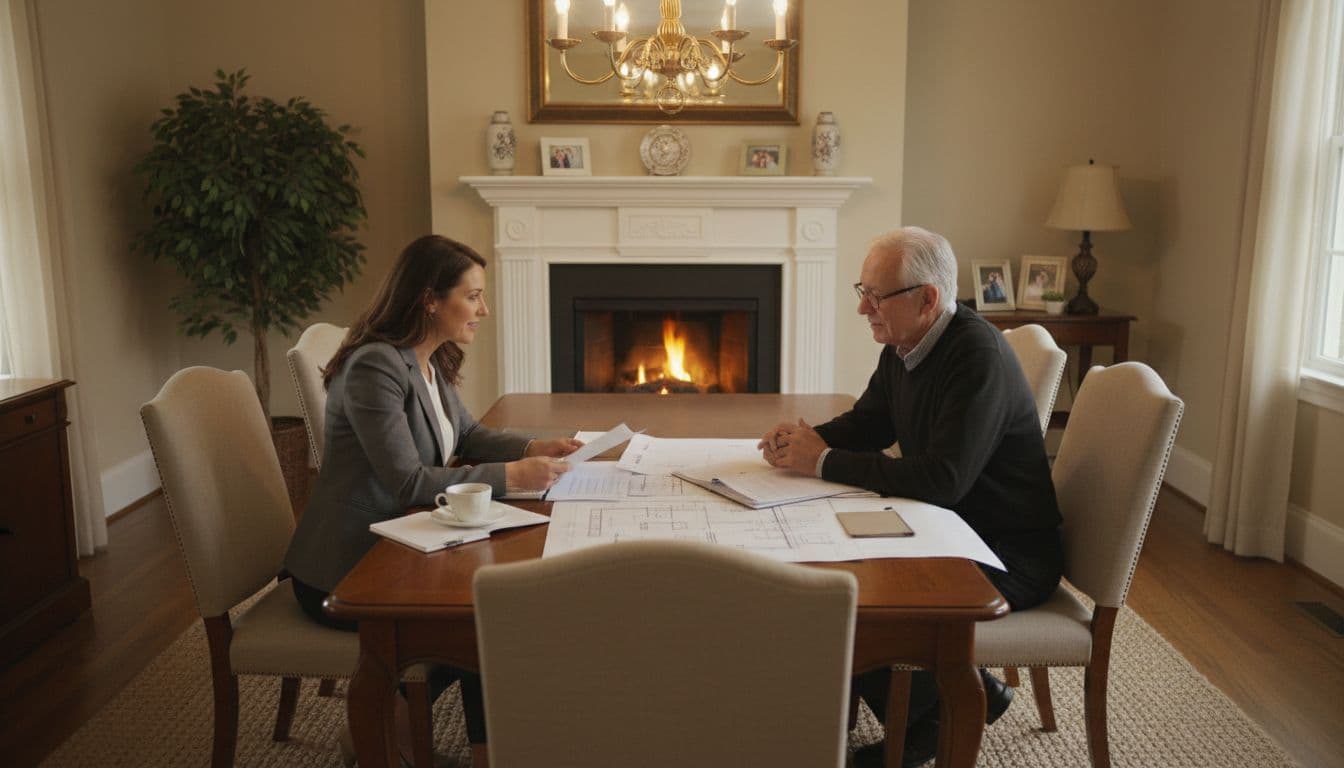
If you have a trust or a will, talk to your trust attorney early. If a home sale will affect taxes, loop in your CPA. If the move changes your long-term financial picture, talk to your financial planner before you’re under pressure.
And when you’re choosing an agent, I would strongly suggest looking for someone with the SRES designation, which stands for Senior Real Estate Specialist. That training matters. Senior moves are different. They take more time, more patience, and a different kind of planning.
A lot of agents want to get in, get a signature, put the home on the market, and move on. That’s not how I work with seniors that are downsizing in Phoenix. Sometimes I talk with a family for years before they move. That’s fine with me. I don’t charge for consultations. I don’t get paid until a house sells. So if you want to talk through your situation early, that’s what I want you to do. If you’re in Phoenix and want that kind of conversation, you can book a no-pressure call with me.
If you’re not buying another home, pick the next stop before downsizing in Phoenix
Not everybody is selling to buy another house. A lot of people are selling to rent, move into independent living or assisted living, or move in with family.
That decision should come before the home hits the market.
If you’re going to rent, I usually like to find the rental first. It takes pressure off the whole process. You don’t need a big down payment for another purchase, and once you know where you’re going, the sale becomes much easier to time.
If assisted living or independent living is on the table, there can be another issue, waiting lists. The apartment or care level you want may not be available yet. That’s why I like bringing in a certified senior placement coordinator early. These professionals help families figure out what level of care makes sense, what communities fit the person’s personality and needs, and what openings are available.
A good placement coordinator saves families a ton of time. They know which communities feel social and active, which ones are quieter, which ones are more medical, and which ones feel more like home than a hospital. And in most cases, the family doesn’t pay them. The facility pays them if a placement is made.
Moving in with family is often the least expensive option. It can also be the most stressful. Sometimes it’s a great fit. Sometimes it isn’t. But if that’s the path, it’s still better to make the plan first and sell second.
The emotional side of downsizing in Phoenix is the part nobody should rush past
This is the part people try to skip because it’s uncomfortable. I don’t think you should skip it.
When someone leaves a house after 30 or 40 years, they’re not only leaving a property. They’re leaving routines, memories, and a sense of identity. The adult children feel that too. So do the grandkids. A lot of family history lives inside those walls.
But the memories don’t stay in the walls.
The memories go with you. The photo albums go with you. The stories go with you. The people matter more than the house.
I also think families need to be honest about risk. I saw a stat not long ago that 1 in 4 people over 65 has a fall each year. Some falls are minor. Some change everything. And falling is only part of the story. Cognitive decline changes daily life too. Missed medication, skipped meals, piles of laundry, a home that used to be neat and now isn’t, all of those are signs that more support may be needed.
That’s why I tell families this: you can make the move on your terms now, or life may make it for you later.
What if one spouse is ready and the other isn’t?
This comes up more than people think.
I stay in my lane here. I’m a real estate agent, not a marriage counselor. But I have seen a few different versions of this. Sometimes one spouse moves first into independent living or assisted living, and the other follows later. More often, the couple needs help talking it through.
If that’s your situation, start with the family conversation. Bring in adult children if that makes sense. A placement coordinator can help too, because they ask good questions and often lower the temperature in the room. In some cases, a counselor is the right call.
What I would not do is force a fake agreement. This is too big for that.
I also try to remind people that downsizing is not the end of life. It’s a new chapter. Less house can mean less stress. It can mean more travel, more time with family, more social life, more safety, and fewer things on your plate. If you’ve worked hard for decades, there is nothing wrong with wanting life to get simpler.
A better move starts earlier than you think
If there is one thing I want people to remember, it’s this: the sooner you start talking about the move, the more control you keep. That goes for timing, finances, repairs, housing options, and family decisions.
I don’t mind if you’re six months away from moving. I don’t mind if you’re five years away. I’ve had those conversations plenty of times, and they matter. If you want to keep thinking through your options, you can start with a free estimate of your home’s value in Phoenix or set up a call with me.
The best downsizing move is usually not the fastest one. It’s the one made with a clear head, a good plan, and enough time to do it on your terms.