
Phoenix scorpion entry points: A pre-closing checklist
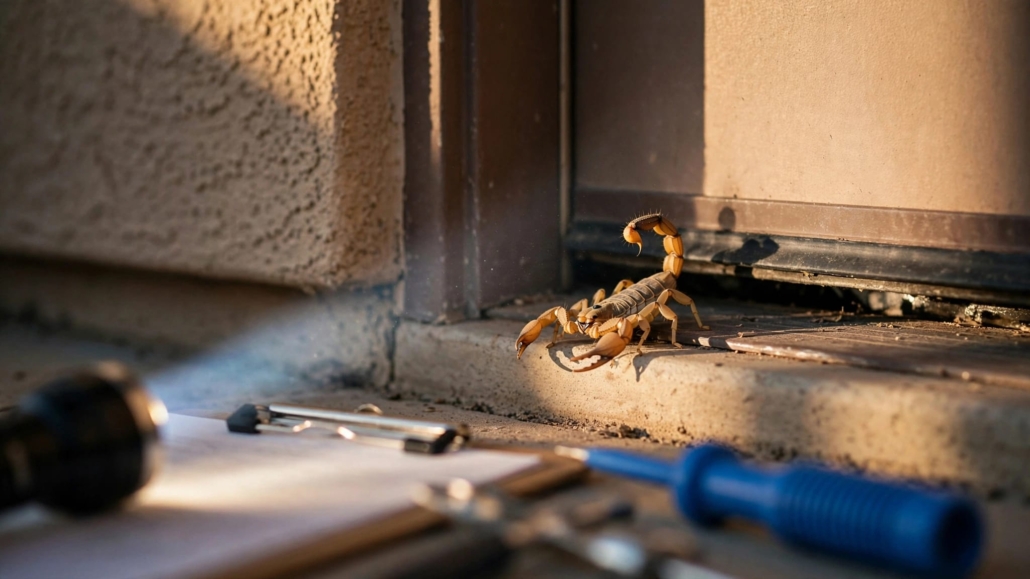
Scorpion entry points deserve a place on your Phoenix home inspection list, right alongside the roof and air conditioner. I wouldn’t let scorpions scare you away from a home, but I wouldn’t accept “we spray every month” as the whole answer, either.
The goal is a clear repair plan before you commit, especially if you’re relocating or helping an older parent downsize. You don’t need to become a pest-control expert.
Let’s walk through what to inspect, what to document, and what to resolve before closing.
Key takeaways
- Schedule a separate pest inspection during your inspection period, rather than waiting for the final walkthrough.
- Start outside, then examine doorways, windows, wall penetrations, and attic openings.
- Review the seller’s disclosures and pest-service records alongside the physical inspection.
- Get exclusion work and ongoing treatment priced separately so you understand both the immediate repairs and future maintenance.
Start with disclosures and the inspection deadline
I want the paperwork and the physical inspection telling the same story.
Ask about sightings and previous work
Review the seller disclosure statement for pest problems, treatments, and related repairs. Ask where scorpions have appeared, how often, and whether sightings were indoors or outside.
Request available pest-service invoices and exclusion-work receipts. A treatment receipt tells you someone applied a product. It doesn’t tell you whether openings were repaired.
Location matters, too. Repeated sightings in a bathroom call for a different inspection path than activity near a patio door.
Give specialists time to respond
Many Arizona resale contracts provide a 10-day inspection period unless the parties change it. Your signed agreement controls the deadline.
Arrange the pest inspection early enough to receive findings and repair estimates before that window closes. A general home inspection remains necessary for the roof, HVAC, electrical system, plumbing, and other major components.
If you’re buying remotely, my guidance on buying a Phoenix home sight unseen explains how to organize that broader due diligence. Listing photos won’t show you everything you need.
Walk the exterior for scorpion entry points
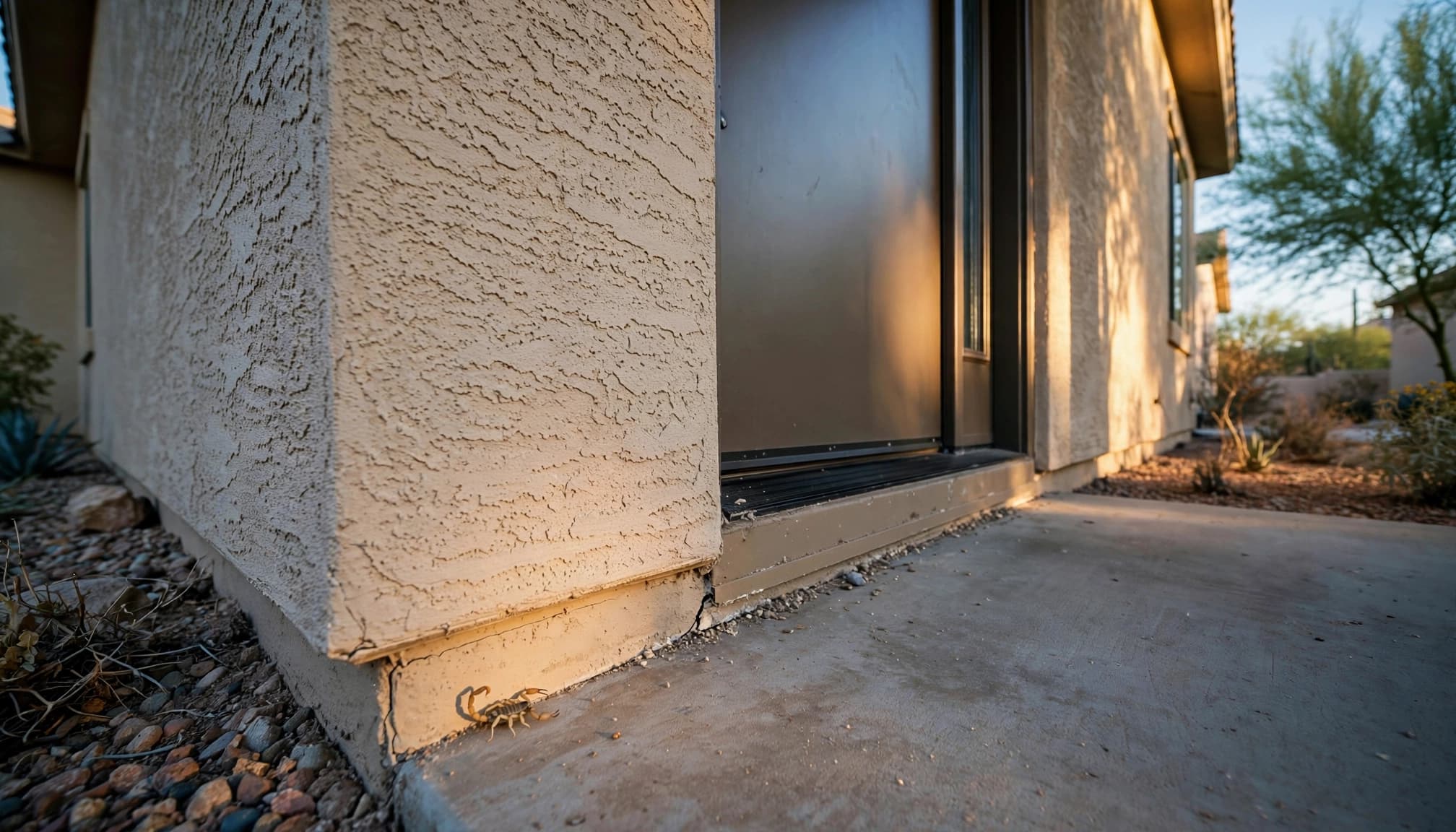
Start at the front entry and work around the entire house. Include side yards and any detached casita.
Examine the foundation and wall junctions
Check where stucco meets the foundation, around exterior doors, and where building materials change. Photograph open joints, separated sealant, and visible cracks.
Don’t assume every opening should be filled. Weep holes and weep screeds help wall assemblies drain. Blocking drainage can create a moisture problem.
The University of Arizona’s scorpion guidance identifies door gaps and wall weep holes as entry routes. It also explains how a bark scorpion can move through wall voids and emerge around interior openings.
Those areas need appropriate exclusion, not an enthusiastic afternoon with a caulk gun.
Look at shelter, landscaping, and water
Check stored lumber, stacked pavers, debris, and dense vegetation beside the house. These can provide sheltered spaces.
Trim branches hanging over the home. Look for vegetation touching walls or obscuring the roofline, too.
For firewood, Truly Nolen recommends 20 feet between the pile and foundation. On a smaller lot, prioritize distance and avoid storing it against the house.
In The Sheaborhood, 85028, I would evaluate the actual yard and building condition rather than draw conclusions from the neighborhood name.
Inspect doors, the garage, and windows
These are accessible areas where a buyer can spot maintenance problems without climbing a ladder.
Test exterior doors and inspect the garage
Close each exterior door and check the door sweeps and weatherstripping. Look for daylight along the threshold and around the frame.
A flashlight directed along the closed threshold can help reveal openings. To test weatherstripping, close the door on a strip of paper. Little resistance when you pull it out can indicate weak contact, though it isn’t a complete inspection.
Check the door connecting the garage to the house as carefully as the front door.
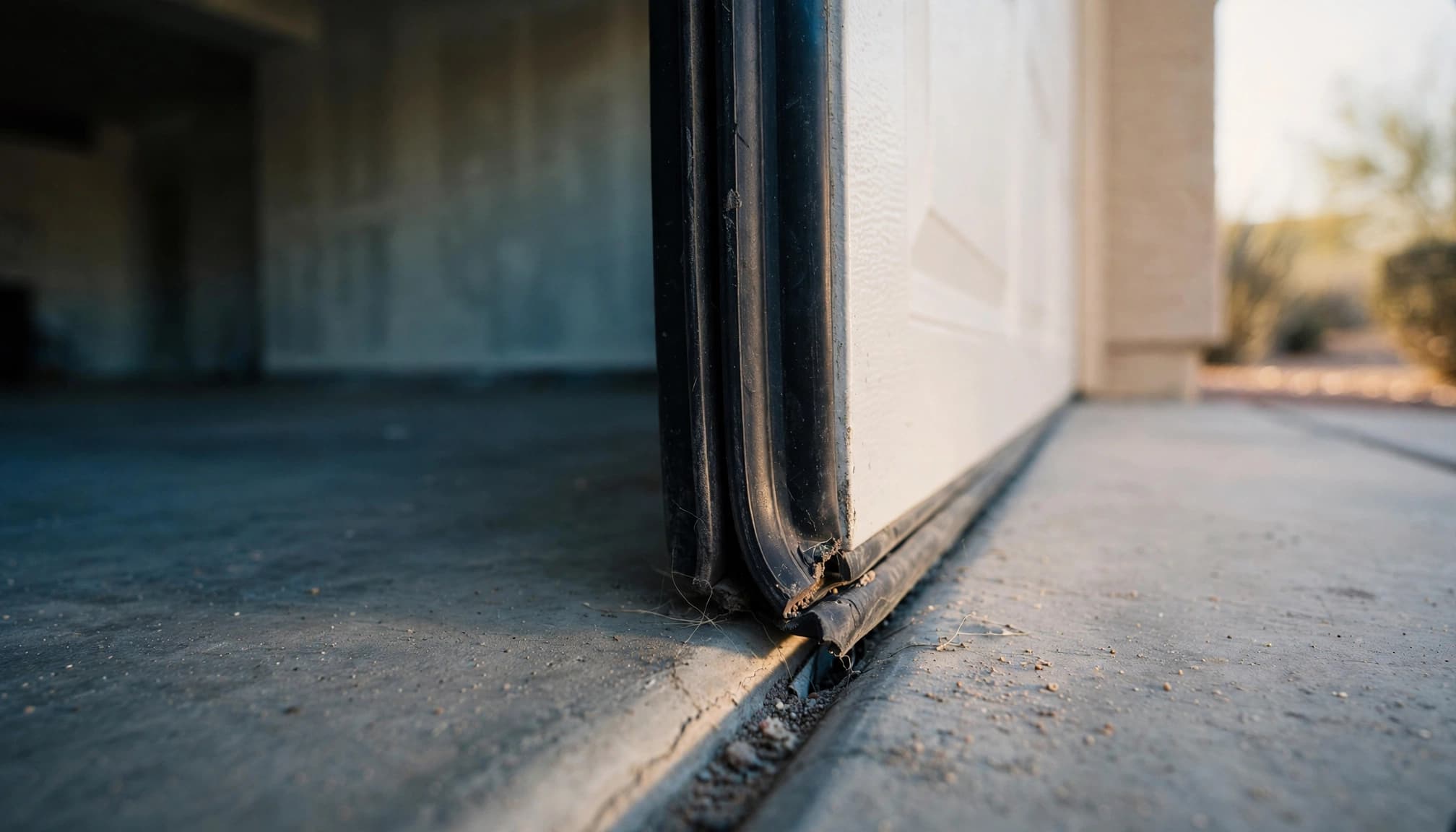
With the garage door closed, examine the rubber bottom seal and both corners. Note brittle rubber, uneven contact, and visible openings. Leave spring and track adjustments to a qualified technician.
Inspect windows as complete assemblies
Look beyond torn screens. Examine screen-frame fit, weatherstripping, sliding-window tracks, and gaps around the window frame.
A screen can look intact while its frame leaves an opening at one corner. Replacement screens should fit snugly, and damaged seals need attention.
Texas A&M’s bark scorpion action plan includes door-sweep and building-exterior inspections as part of pest management.
I wouldn’t accept “the windows stay closed” as proof that the surrounding assembly is sealed.
Follow pipes, cables, and openings above eye level
A house has plenty of holes that were intentionally made for equipment. The question is whether the space around that equipment was properly finished.
Trace utility penetrations inside and outside
Examine cable lines, plumbing, AC line sets, and other wall penetrations. Under sinks, look where supply and drain pipes disappear into the wall.
Decorative pipe covers can hide larger openings. Have the inspector examine the surrounding area without damaging finishes.
For repairs, specify exterior-rated sealant compatible with the adjoining materials. Larger openings may need backing or a fitted physical barrier rather than a thick surface bead.
Dryer vents must remain functional. Don’t add fine mesh that can collect lint or obstruct airflow.
While you’re looking, note dripping faucets, pipe leaks, irrigation overspray, and standing water. Moisture and insect prey can support scorpion activity. Those water problems also belong in your Phoenix utility-cost review, since wasted water becomes an ongoing expense.
Leave roof and attic access to the inspector
Ask for photographs of eaves, soffits, vent screens, and accessible attic openings. Have deteriorated screens and gaps around penetrations documented.
Roof access and attic inspection are jobs for someone equipped to do them safely. If you’re downsizing, or helping a parent buy, there’s no reason to turn this into a ladder assignment.
A repair should preserve ventilation and drainage. Closing an opening incorrectly can leave you with a different problem.
Add a nighttime UV inspection
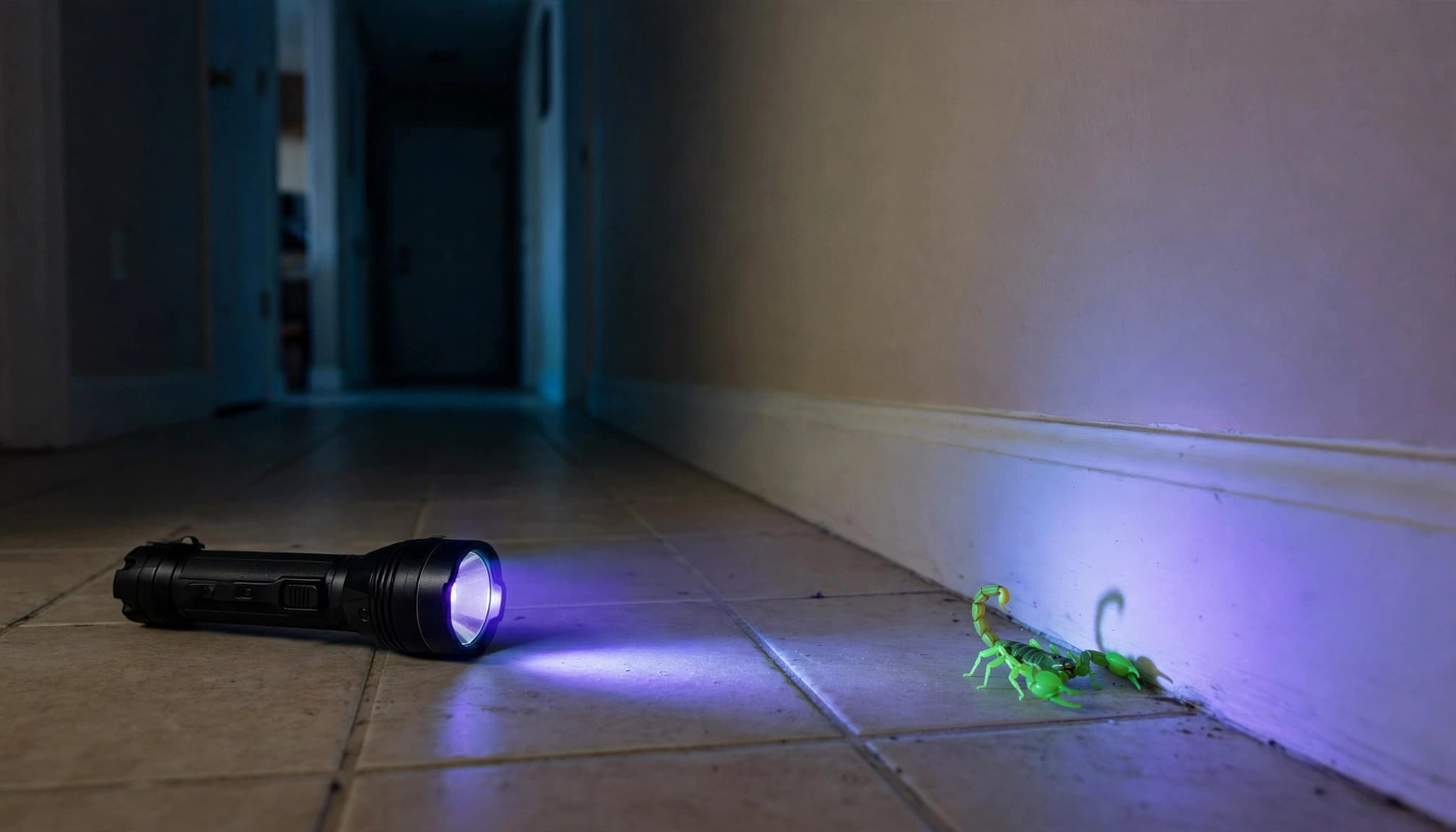
With the seller’s permission, arrange an after-dark visit or have the pest professional perform one. Scorpions fluoresce blue-green under UV light; a handheld UV flashlight around 365 nm can help reveal them.
Wear closed-toe shoes. Inspect thresholds, wall edges, sheltered exterior crevices, and accessible interior baseboards. Don’t reach into hidden spaces or move heavy debris by hand.
Photograph sightings from a safe distance and record the location. That gives the pest professional useful information without requiring you to handle anything.
A quiet nighttime visit doesn’t establish that a property is scorpion-free. University of Arizona guidance says the low-desert bark scorpion is active when nighttime temperatures exceed 70°F and less active during the coolest months.
A cool-weather inspection can reveal repair needs even when it doesn’t reveal a single scorpion.
Reducing crickets, cockroaches, and other small arthropods also belongs in the plan. Sealing alone doesn’t address the food sources and shelter around the property.
Turn the findings into a pre-closing repair plan
This is where I want specifics. “Treatment completed” leaves too much unanswered.
If scorpions appear after you seal entry points
Continued sightings don’t automatically mean every repair failed. Scorpions may already be sheltering in wall voids, or an overlooked opening may remain.
Have the professional revisit the locations where activity occurs. Interior pipe openings and wall penetrations deserve attention alongside the exterior.
A bark scorpion can live for years. University of Arizona guidance gives an adult lifespan of five to seven years, so waiting for the problem to disappear isn’t a reliable plan.
A professional pest control approach shouldn’t rely on pesticides alone; habitat changes, exclusion, and appropriate treatment need to work together.
Request an itemized scope before negotiating
Ask for each repair location, the proposed material, and the party responsible for the work. Separate the exclusion estimate from treatment and follow-up costs.
For openings around equipment or drainage features, the scope should explain how the repair preserves normal operation. A vague promise to “seal the house” isn’t enough.
A seller repair may be useful when the scope is clear. A negotiated credit can give you control over the contractor and timing. Either approach needs an agreed amount and a workable schedule.
Don’t leave this until the final walkthrough. That visit is better used to inspect agreed repairs than to discover the problem for the first time.
Frequently asked questions
Can scorpions enter with doors and windows closed?
Yes. Gaps around frames, worn sweeps, wall penetrations, and openings connected to wall voids can remain even when everything is closed. The inspection should follow those routes rather than focus only on how often a door is opened.
Does a general home inspection replace a pest inspection?
I wouldn’t treat them as interchangeable. The home inspector evaluates building systems and may flag visible pest concerns. A pest professional can assess scorpion activity and propose exclusion and treatment. Keep the broader inspection in place, especially for older homes with roof, sewer, or electrical questions.
What should condo or patio-home buyers ask?
Determine which repairs belong to the owner and which involve association-maintained exterior components. Review the governing documents before negotiating work on shared walls, roofs, or landscaping. A smaller home can reduce maintenance, but it doesn’t automatically eliminate these questions.
Should a scorpion sighting stop the purchase?
I wouldn’t make that decision from one sighting alone. Consider indoor activity, accessible repair needs, service history, and the ongoing cost and effort. The right question is whether the property has a manageable plan that fits your household’s comfort level.
Conclusion: Buy with a clear plan

A Phoenix home doesn’t need a promise of zero scorpions to deserve consideration. It needs a careful inspection and an understandable repair plan.
I want you to know what needs fixing before you take on the responsibility. Keep the inspection deadline in view, get the work described in writing, and leave room for professional follow-up.
If you want help weighing repairs against the rest of the purchase, I’m happy to talk it through. No pressure, just a clearer decision.