Phoenix airport noise neighborhoods for families
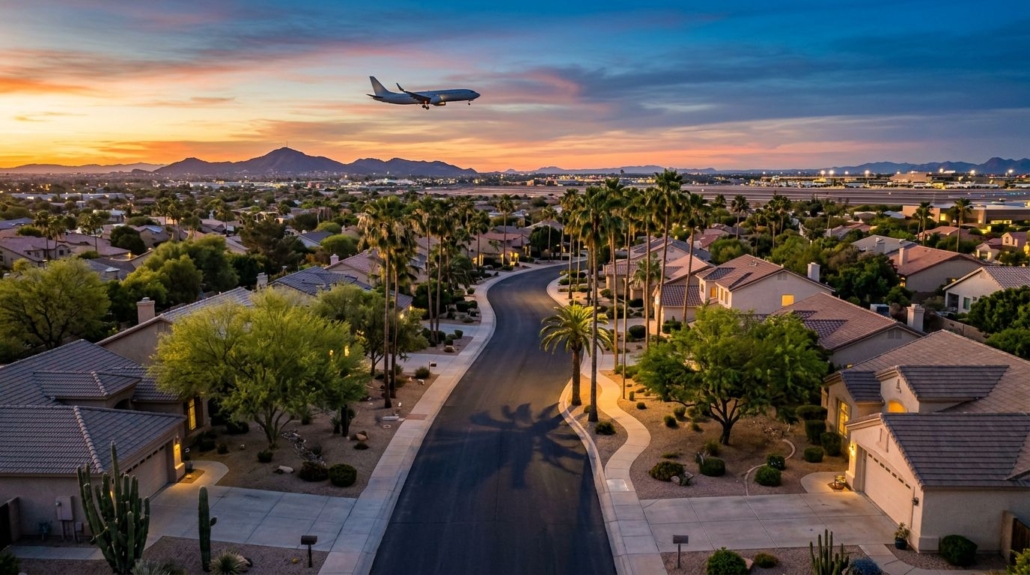
A house can feel perfectly peaceful at 2:00 p.m. and sound different at 6:15 the next morning. That’s why Phoenix airport noise neighborhoods deserve more than a glance at a map before you choose a home. In these Phoenix airport noise neighborhoods, understanding sound patterns is essential.
After 26 years helping Phoenix families and downsizers, I know this one catches people off guard. The right answer isn’t “live as far from Phoenix Sky Harbor International Airport as possible.” It’s finding a street that fits your daily life, then listening for what the listing photos can’t show.
When exploring Phoenix airport noise neighborhoods, consider visiting during peak flight times to better gauge noise levels.
Let’s walk through the areas I’d check first, the trade-offs I’d accept, and the simple homework that keeps a surprise flight path from becoming a daily irritation.
Key Takeaways
- Airport noise in Phoenix varies by runway use, flight paths, weather, and the specific block—not just distance from Sky Harbor.
- Start your search in areas such as 85028, 85032, 85020, 85021, 85253, and 85254, while remembering that Deer Valley and Scottsdale airports may affect some pockets.
- Arcadia, Biltmore, and Uptown can still be excellent choices, but buyers should listen carefully for aircraft and roadway noise before making an offer.
- Visit a property on different days and at different times, check current Sky Harbor noise and flight-path information, and ask sellers how aircraft noise affects daily life.
- The FAA controls flight procedures, while Phoenix collects local data and manages Sky Harbor; noise complaints document concerns but do not immediately change flight paths.
Phoenix airport noise neighborhoods: start with the map
Understanding Phoenix airport noise neighborhoods can save you from unexpected disturbances.
Distance matters, but urban sprawl makes straight-line mileage an unreliable shortcut, and Valley airports create different sound patterns. A home 10 miles from Phoenix Sky Harbor can sit under a busy departure route. A closer home may hear fewer flights outside a concentrated corridor.
The mapping of Phoenix airport noise neighborhoods is crucial for potential homebuyers.
Planes generally use runways that fit the wind for takeoff and landing. Changing wind can alter runway use and air traffic patterns. Heat, wind, and cloud cover can affect how sound travels, which is why one quiet showing proves almost nothing.
The dynamics of Phoenix airport noise neighborhoods change with different weather patterns.
The history explains why locals pay close attention. In 2014, the Federal Aviation Administration’s satellite-based navigation flight procedures concentrated some Sky Harbor departures over central Phoenix homes. Phoenix and neighborhood associations sued, and a 2017 federal appeals court ruling sent the routes back for rework. The FAA put replacement westbound departures in place between 2018 and 2020, intended to approximate pre-2014 paths.
That wasn’t ancient history. The Phoenix Area FAA Modernization Project has prompted concerns that route changes could shift or concentrate noise over residential areas. A June 2026 City comment letter estimated that decibel levels would increase above 45 decibels for 86,384 people in North Phoenix, Scottsdale, and Chandler. Before relying on an old screenshot of flight paths, review Sky Harbor’s updates and monthly noise reports for current noise abatement information.
Understanding regulations affecting Phoenix airport noise neighborhoods can help mitigate noise levels.
That’s the rule I use: treat an airport map as a starting point, not a verdict.
Where Phoenix feels less tied to Sky Harbor
Families looking to escape Phoenix airport noise neighborhoods may explore alternative areas further from flight paths.
None of these ZIP codes comes with a promise of silence. Phoenix is a major metro with several Valley airports, including Sky Harbor, Deer Valley, Scottsdale, and general aviation activity overhead. Still, when a family asks me for a calmer starting point, I look north and northeast before downtown.
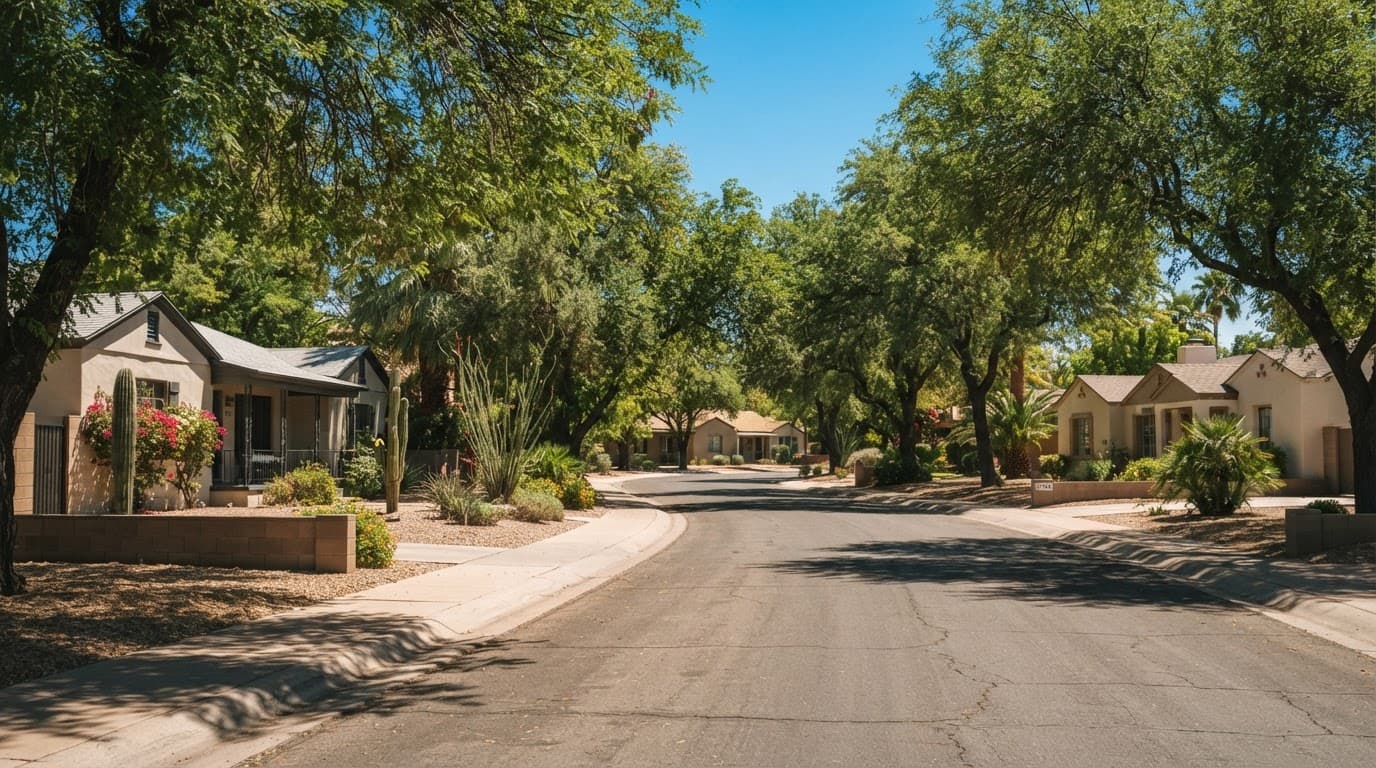
In quieter Phoenix airport noise neighborhoods, families can enjoy more peaceful outdoor spaces.
The Sheaborhood and North Paradise Valley Village
This is where I live, so I won’t pretend every block is the same. The Sheaborhood, or 85028, has established streets south and east of the Phoenix Mountains. It also offers practical access to groceries, medical offices, and State Route 51.
Residents in Phoenix airport noise neighborhoods often adapt to their environment over time.
It is far enough north of Sky Harbor that commercial aircraft traffic is often less of a daily issue than in central and east-central ZIP codes. That said, potential route changes still deserve attention. You don’t get a free pass simply because a home is north of Camelback.
North Paradise Valley Village, 85032, offers a similar starting point, especially on interior streets away from the 51 and Loop 101. The trade-off is Deer Valley Airport to the northwest and Scottsdale Airport to the east. Smaller planes can still make their presence known.
That usually sounds different from living beneath a steady Sky Harbor corridor. Still, don’t brush it off if you’re noise-sensitive. For family parks, schools, and lifestyle comparisons, my Phoenix neighborhood guide gives you a good side-by-side look.
Northeast Foothills and North Central Phoenix
Northeast Foothills Phoenix, 85020, and North Central Phoenix, 85021, are also worth a close look. Both sit north of Sky Harbor’s core influence. Some pockets feel like historic neighborhoods, with mature trees, older homes, and a settled character.
Being aware of the nuances in Phoenix airport noise neighborhoods can lead to better home-buying choices.
In 85020, nearby mountain preserves can add a sense of separation. They can also carry sound in unexpected ways, especially on elevated lots. In 85021, listen for freeway noise as carefully as aircraft noise. Planes aren’t the only sound that can change a backyard.
Families and downsizers often like these areas because errands aren’t a half-day project. That matters. A quieter home that puts every doctor visit, grocery trip, and grandkid pickup across town may not feel like a win.
Homeowners in Phoenix airport noise neighborhoods often develop strategies to minimize disturbances.
Paradise Valley and the Magic ZIP Code
Paradise Valley, 85253, and the Magic ZIP Code, 85254, are farther from Sky Harbor. They often feel removed from regular commercial arrival and departure patterns.
Exploring the quieter parts of Phoenix airport noise neighborhoods can enhance your living experience.
But they aren’t blanket quiet zones. Parts of 85254 can hear Scottsdale Airport activity, and major roads may be the bigger issue. My advice is simple: shop the house, not the ZIP code.
Good locations that need a closer listen
Arcadia, Biltmore, and Uptown Phoenix deserve a fair read, not a warning label. Access to restaurants, hospitals, work centers, and family may outweigh intermittent aircraft noise. I’ve seen families choose these areas happily.
Those in Phoenix airport noise neighborhoods often share tips on noise management.
Still, these aren’t places where I’d tell a noise-sensitive buyer to rely on a Saturday open house. Arcadia, 85018, and Biltmore, 85016, may experience Sky Harbor traffic overhead. Uptown, 85014, sits closer to central flight activity. Individual blocks and route changes matter.
Here is the honest shorthand I give clients:
Understanding how Phoenix airport noise neighborhoods operate is crucial for new residents.
| Area | Airport-noise read | Everyday trade-off |
|---|---|---|
| Arcadia, 85018 | Check for Sky Harbor traffic overhead | Mature streets and easier cross-town drives |
| Biltmore, 85016 | Possible arrival or departure exposure | Hospitals, dining, and central access |
| Uptown, 85014 | Closer to central route changes | Walkability and old Phoenix character |
If a house checks every other box, don’t cross it off. Price, condition, commute, and proximity to people you love all count. Spend real-world listening time there before deciding.
How to check aircraft noise before a contract
This is where people get stuck. They find a home they love, then feel awkward asking whether the planes are loud. Ask anyway. A good decision doesn’t need to be rushed.
-
- Visit when normal life is happening. Go once on a weekday morning and again in the evening. Stand in the yard, sit on the patio, and listen from the primary bedroom with the windows closed.
Researching Phoenix airport noise neighborhoods can provide valuable insights into flight patterns.
-
- Use Sky Harbor’s flight-path and noise information to review flight paths and the airport’s noise abatement information. Check monitoring, noise data, and the complaint process, too. A live tracker shows aircraft activity during your visit, but it can’t predict every future operation.
- Use the National Transportation Noise Map as a noise mapping tool for the broad picture. It won’t replace a property visit, but it can reveal airport and roadway patterns before you spend a weekend touring homes.
- Ask the seller direct questions. How often do they notice aircraft? Are evenings different? Do they sleep with windows open? Has the noise changed since they bought the house?
Utilizing local resources can help those interested in Phoenix airport noise neighborhoods stay informed.
- Check the home’s outdoor spaces. A shaded patio facing a busy sky corridor may matter more than a quiet front room. For many Arizona buyers, the yard is part of the house.
A flight tracker tells you where planes flew. Two visits tell you whether the home works for you.
Don’t treat aircraft noise complaints as a community census. A noisy week can trigger a burst of reports, while neighbors who have adjusted may never file one.
Navigating life in Phoenix airport noise neighborhoods can be a unique experience.
What the city can change, and what it can’t
The Federal Aviation Administration controls airspace and flight procedures. Phoenix operates Sky Harbor and collects local data, but the city can’t redraw flight paths on its own. Aircraft noise complaints support community engagement and go into the airport’s record. They can document an issue, but they won’t move a plane the next day.
Sky Harbor operates 24 hours a day and has no night curfew. Preferred nighttime noise abatement practices exist, yet weather, safety, demand, and air traffic control affect actual operations. Downtown Phoenix height restrictions address building and land-use considerations, not property-level noise forecasts.
Phoenix has dealt with airport impacts more directly near the airport. The former Voluntary Acquisition and Relocation Services program, known as VARS, acquired 782 high-noise properties south of downtown between 1999 and 2016.
Those blocks are a separate situation from the family ZIP codes above, but the lesson is plain. Airport noise can affect land use, resale conversations, and everyday comfort.
Understanding the impact of airport operations on Phoenix airport noise neighborhoods is vital for community planning.
Frequently Asked Questions
Which Phoenix neighborhoods are generally less affected by Sky Harbor noise?
North and northeast areas such as the Sheaborhood, North Paradise Valley Village, Northeast Foothills, and North Central Phoenix can be calmer starting points. Paradise Valley and the Magic ZIP Code may also feel more removed from regular Sky Harbor traffic, but no ZIP code guarantees quiet.
In Phoenix airport noise neighborhoods, the sense of community can help alleviate noise frustrations.
Are 85028 and 85032 good ZIP codes for avoiding airport noise?
They are worth considering because they sit north of Sky Harbor’s core influence and offer established residential streets. However, 85032 may still experience activity from Deer Valley Airport or Scottsdale Airport, so buyers should listen at the specific property.
How can I check aircraft noise before buying a Phoenix home?
Visit the property on a weekday morning and evening, and listen indoors, in the yard, and on the patio. Review Sky Harbor’s current flight-path and noise information, use a live tracker during visits, and ask the seller whether aircraft noise has changed or affects sleep and outdoor time.
Families often gather to share experiences in Phoenix airport noise neighborhoods, fostering a supportive environment.
Does Phoenix have a nighttime curfew at Sky Harbor?
Sky Harbor operates 24 hours a day and does not have a night curfew. Preferred nighttime noise abatement practices exist, but weather, safety, demand, and air traffic control can affect actual flight activity.
Can filing an aircraft noise complaint change a flight path?
Complaints help Phoenix document community concerns and support public engagement. The FAA controls airspace and flight procedures, so a complaint will not move a plane or change a route immediately.
Community feedback in Phoenix airport noise neighborhoods is essential for future developments.
A quieter choice starts with the block
Airport noise is one of those home-buying issues that can’t be solved by a ZIP code ranking. The calmer choice is a specific house on a specific block, checked during the hours your family will actually use it.
I’d start in 85028, 85032, 85020, 85021, 85253, and 85254, then do the homework. A few extra visits now can protect years of sleep, patio dinners, and peace of mind.
Overall, the right choice in Phoenix airport noise neighborhoods can lead to a fulfilling life.