Phoenix neighborhoods with RV gates for families: where to look
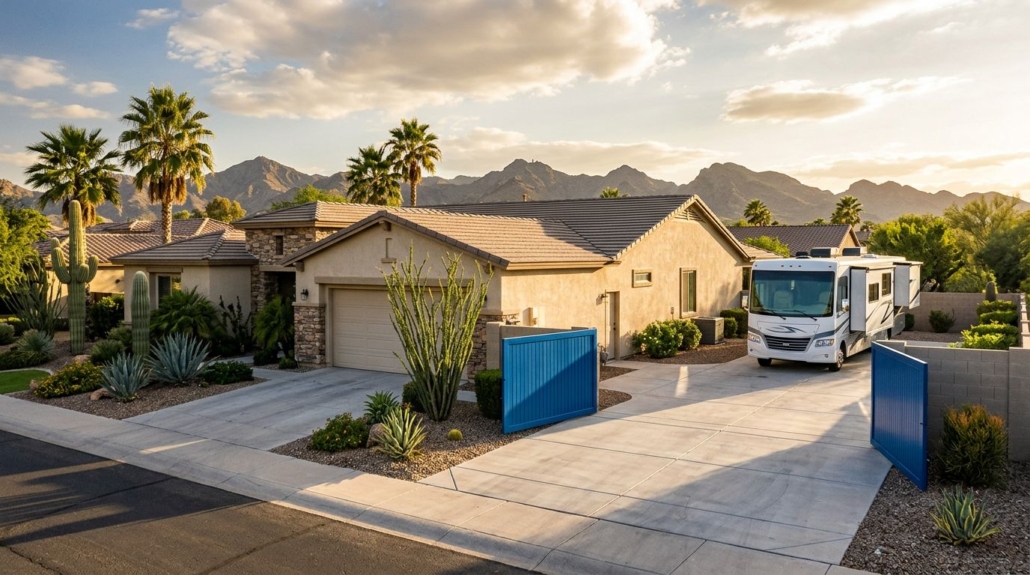
An RV gate can make a home feel like it finally fits your family. It can also become an expensive surprise if the trailer does not fit, the HOA says no, or the street is your only workable access.
Families searching for Phoenix neighborhoods with RV gates usually want a simpler life. They want a place where the motorhome, boat, trailer, or work vehicle isn’t a daily argument. I always start with the lot, the rules, and the turning radius, in that order.
Here’s where I would look, and what I would verify before writing an offer.
Key Takeaways
- Start with the lot, turning radius, and usable side-yard route—not just a listing’s “RV gate” label.
- North Central Phoenix, The Sheaborhood, Arcadia, selected northeast Phoenix areas, and parts of Paradise Valley are worth screening for wider lots and practical layouts.
- Review HOA documents and Phoenix regulations separately, since approval from one does not replace approval from the other.
- Measure the actual RV and access path before making an offer, and compare side-yard storage with an enclosed RV garage when appropriate.
- Gate width, materials, access control, safety equipment, and installation timing all depend on the property and the existing gate structure.
Exploring Phoenix neighborhoods with RV gates
Here’s what most people don’t realize: side yard gates only help when the usable route runs from the street to the parking spot.
A listing can say “RV gate” and still leave out the details that matter. Is the opening wide enough? Does the driveway angle force a tight turn? Is there hardscape, an AC unit, or a pool blocking the path? Can the RV sit behind the front plane of the house without hanging into a neighbor’s view or yard?
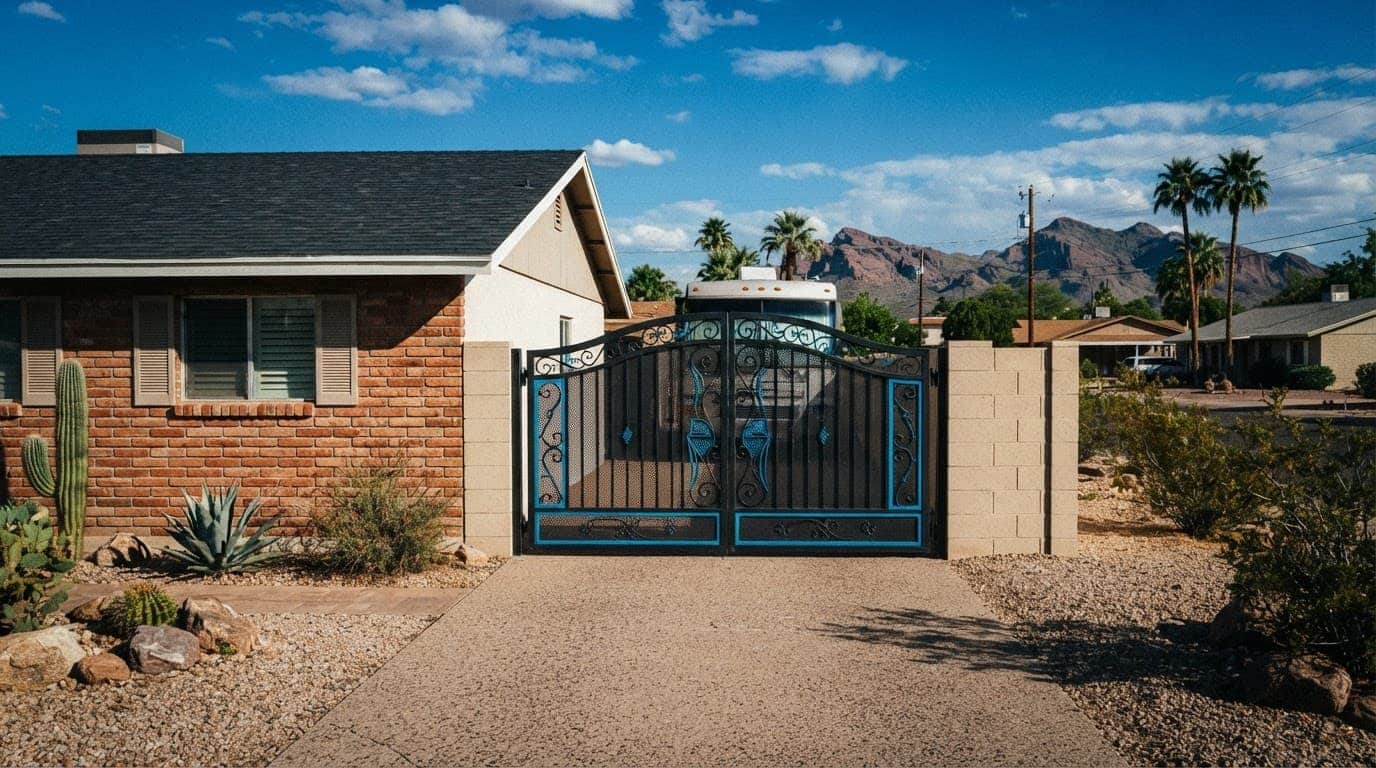
The gate itself may be straightforward. The lot is where people get stuck. If the side yard cannot accommodate a trailer, an RV garage may be a better property option.
Phoenix, AZ, has restrictions on residential street parking that matter here. City Code 36-140 restricts trailers on local, collector, and arterial streets in residential zones, except during loading or unloading. That makes off-street storage more than a convenience for many households.
A gate provides access control for storage, but it does not make an RV legal to live in on a residential lot.
Phoenix zoning generally requires occupied recreational vehicles to be in an RV park, with narrow exceptions for situations such as permitted temporary living during construction. Read Phoenix Zoning Ordinance Section 701 before assuming an RV can become a guest suite for visiting family.
The family-friendly areas I would check first
There is no single neighborhood where every house has easy RV parking. Phoenix is block by block, and sometimes lot by lot. Still, a few areas offer a better starting point because older homes often have wider lots and side yards.
| Area | Why it is worth a look | The trade-off |
|---|---|---|
| North Central Phoenix, 85021 | Older ranch homes, larger irrigated lots, and some no-HOA pockets | Conditions vary sharply between streets |
| The Sheaborhood, 85028 | Established single-story homes, family streets, and more practical lot layouts than newer subdivisions | Many side yards are narrower than photos suggest |
| Arcadia, 85018 | Some larger properties and older home sites with room to rework access | Price, redevelopment, and HOA rules can limit options |
| North Paradise Valley Village, 85032 | A mix of established homes and practical northeast Phoenix access | HOA status needs a property-by-property review |
| Northeast Foothills Phoenix, 85020 | Larger parcels exist, with close access to the preserve | Slopes, walls, and unusual drive approaches can complicate storage |
| Paradise Valley, 85253 | Larger lots may offer space for screened storage | Design review and town rules deserve close attention |
Desert Ridge is another area to screen, but lot dimensions, HOA status, and trailer access vary by property.
North Central is one of my first places to look for a buyer who needs land and wants to stay central. The site’s Phoenix neighborhoods FAQs call out 85021 for mid-century ranch homes, irrigated lots, and no-HOA pockets. That doesn’t mean every property works. It means you have a better chance of finding a workable canvas.
The Sheaborhood gets my attention for the same reason. You can find established homes, quiet streets, and a practical family feel without moving far from the things you use every week. For the broader picture, the Phoenix family neighborhoods guide is a good place to compare the everyday trade-offs.
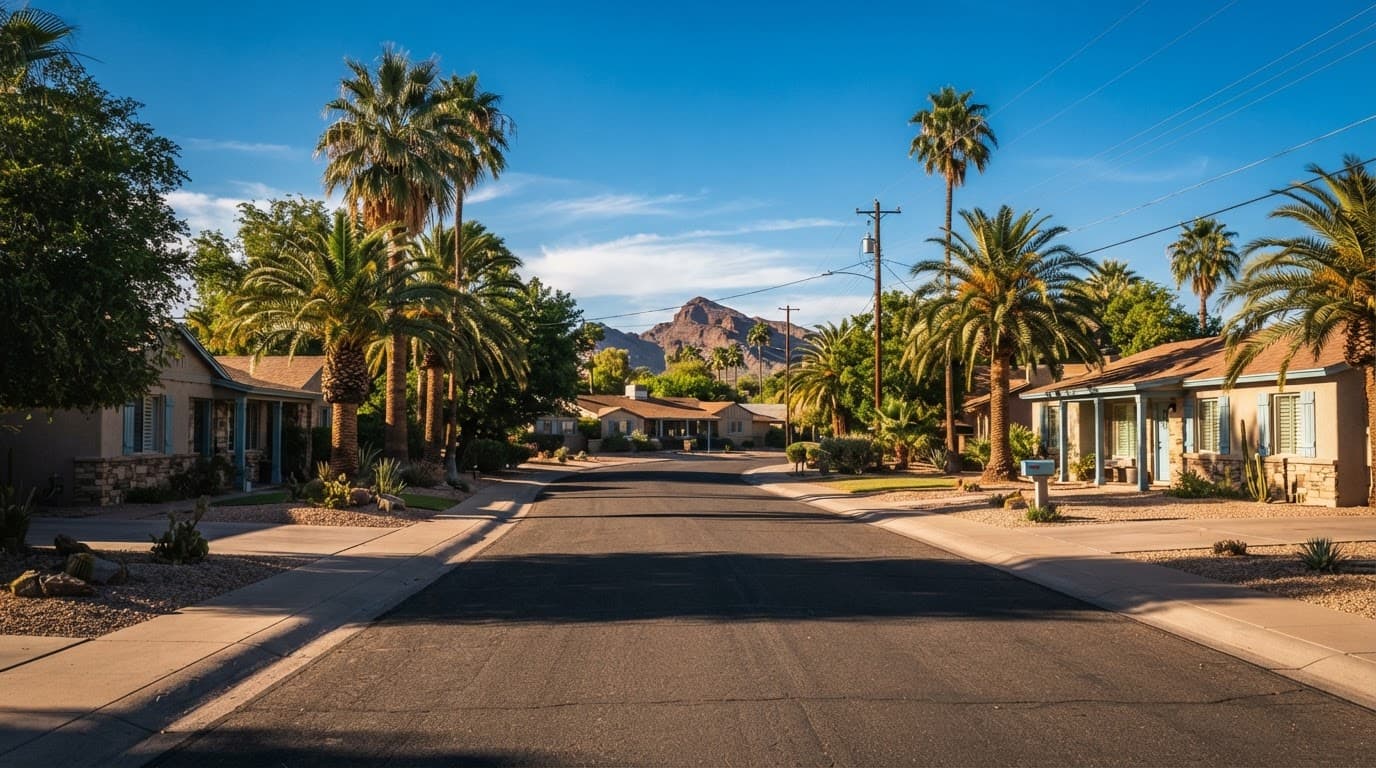
Arcadia can work if the budget supports it and the lot layout cooperates. I would not buy there solely because a listing has a gate. Mature landscaping, additions, walls, or tight drives can limit trailer access. Usable, compliant storage may support property value, but price and redevelopment still shape the trade-off.
Compare side-yard storage with an enclosed RV garage when both options appear on the shortlist.
Uptown Phoenix, 85014, and the Biltmore area, 85016, are more selective searches. They can make sense if you need a central address and the RV is small, but they are not where I would begin if a full-size motorhome is non-negotiable.
HOA rules and city rules are two separate conversations
An HOA can approve a gate that the city still requires you to review. The city can allow an improvement that an HOA still rejects. These are separate approval processes, so you need both answers.
Before choosing a house, request the CC&Rs, architectural standards, and RV-parking policy in writing to verify HOA requirements. Look for rules covering vehicle screening, driveway gates, gate height, approved materials, paint colors, and visibility. Designs such as custom iron gates may require separate approval. Check whether the RV must sit behind the home’s front plane.
Some associations allow secure storage behind a solid gate but prohibit anything visible above a wall. Others prohibit recreational vehicles entirely, even behind a gate. They may also regulate access control features such as keypads, remotes, or entry hardware. A casual comment from a neighbor doesn’t override the written rules.
For the gate itself, Phoenix has a residential fences and walls review page. Confirm both approvals for your address before ordering materials, removing an existing wall, or scheduling RV gate installation. Association approval may cover the system’s appearance and operation, including access control.
The Magic Zip Code, 85254, needs extra homework. A ZIP code doesn’t give you one clean rulebook. HOA documents, property lines, municipal requirements, and the layout of that particular lot all matter.
I have helped plenty of families through this exact situation. The smooth transactions happen when we review the documents during the inspection period. The frustrating ones happen when someone assumes “RV gate” means “anything goes.”
Gate sizing, materials, and access that hold up in Phoenix
Most RV gates fall in the 10-to-16-foot range. Ten feet may work for a small trailer. A larger motorhome or wide trailer often needs 14 to 16 feet, plus room to turn without clipping a post or block wall. Measure the actual vehicle, including its mirrors, then check clearance at the posts, walls, and turning path.
This isn’t a citywide rule for gate width. It is practical planning. Look at the approach from the street, too. A 16-foot opening won’t help much if the driveway requires a sharp 90-degree turn. The same turning issue affects wide driveway gates.
Powder-coated steel is usually my practical choice for Phoenix. It is strong, can match the look of custom iron gates, and handles sun better than a cheaply painted gate. Traditional wrought iron suits many homes, but prep work, coating quality, hinges, and hardware matter more than the sales pitch. Those choices support curb appeal and property value on a well-maintained property, but cannot fix a poor lot layout.
For a closer look at common designs, this overview of RV gate options shows why side-yard layout should drive the choice.
| Gate type | Usually works best when | Watch for |
|---|---|---|
| Swing gates | There is clear space inside the yard for the panels | Wind load, slope, and swing clearance |
| Sliding RV gates | The lot is tight or parking must stay clear | Fence-line space, track alignment, and maintenance |
Automatic gate operators can often be added to an existing gate, but I would not assume a simple bolt-on job. If that gate is sagging, misaligned, or corroded, gate repair services should come before access control work. LiftMaster operators are common, but brand matters less than posts, hinges, gate weight, electrical access, and safety equipment. Remote controls and keypads shape daily access control, while smartphone access is optional. LiftMaster operators still need compatible safety devices, including photo eyes and reversal functions, for safe access control.
RV gate installation and gate fabrication usually take several weeks, not one Saturday afternoon. Final measurements, HOA approval, powder coating, electrical work, and installer schedules all affect the timeline.
What to verify before making an offer
A seller saying “there’s an RV gate” isn’t the end of the conversation. It’s the beginning.
- Walk the route with a tape measure, and account for the vehicle’s turning path from the street.
- Review the survey, lot lines, walls, easements, drainage, and vehicle route before deciding whether the opening can be widened legally.
- Get HOA rules in writing, including vehicle storage and architectural approval requirements.
- Ask whether the gate, access control, remotes, keypads, safety devices, and electrical work will stay with the home. If the existing system includes LiftMaster operators, document the model and condition rather than assuming the brand or features.
- Compare gate repair services, replacement, and custom iron gates if the current setup is too narrow, damaged, old, or unapproved. Before making an offer, ask a licensed contractor for a written scope and free estimate.
If you are downsizing, this matters even more. A single-story home with a manageable yard may be the right move. Compare its side-yard storage with an RV garage before deciding. You don’t want to lose the storage for the RV that gives you freedom to visit grandkids or take off for a week.
Frequently Asked Questions
Which Phoenix neighborhoods are best for homes with RV gates?
North Central Phoenix, The Sheaborhood, Arcadia, selected areas near Paradise Valley Village, and northeast Phoenix are good places to begin. No neighborhood guarantees usable RV access, so review each lot, street approach, and HOA individually.
How wide should an RV gate be?
Many RV gates fall between 10 and 16 feet, but the right width depends on the vehicle, mirrors, posts, walls, and turning path. A wide opening will not solve the problem if the driveway requires a sharp turn from the street.
Can I park or live in an RV behind a Phoenix residential gate?
A gate can provide secure off-street storage, but it does not automatically make residential RV parking or occupancy legal. Phoenix rules restrict certain street parking and generally require occupied recreational vehicles to be in an RV park, subject to limited exceptions.
Do I need both HOA and city approval for an RV gate?
You may need to satisfy both, because HOA rules and city requirements are separate. Review the CC&Rs, architectural standards, vehicle-storage policy, and Phoenix fence and wall requirements before ordering materials or changing the property.
Is an RV garage better than a side-yard gate?
An RV garage may be the better option when the side yard is too narrow, the turning path is difficult, or screening requirements make outdoor storage impractical. Compare the garage’s dimensions, access, cost, and rules with the usable route provided by a side-yard gate.
A good RV gate starts with a good property choice
The best Phoenix areas for RV gates aren’t defined by a gate company or listing headline. They’re defined by usable lots, clear rules, and a setup that fits your life. That may mean a side-yard route or an RV garage.
North Central, The Sheaborhood, Arcadia, and selected northeast Phoenix pockets are all worth a close look. Start with the property’s layout and rules, then consider access control and custom iron gates that fit the site. The right side yard can save you years of hassle.