
Phoenix utility costs to check before buying

A Phoenix house can fit the payment and still punch you in the gut with its first July bill. The electricity cost can spike hard in summer. When I help families compare homes, Phoenix utility costs are part of the buying decision, not an afterthought after closing. Understanding Phoenix utility costs upfront can prevent surprises later.
The good news is that you can get a pretty clear picture before you commit. You don’t need perfect predictions. You need the right questions, 12 months of history, and a little healthy skepticism, especially when comparing homes with solar panels.
Exploring Phoenix utility costs will provide you with valuable insights on how to budget for your new home.
Key Takeaways
- Phoenix utility costs should be part of your pre-offer budget, not an expense you estimate after closing. Ignoring Phoenix utility costs can lead to unexpected financial strain.
- Request 12 months of electricity, water, sewer, gas, trash, and solar records, paying special attention to July, August, and September.
- Understanding Phoenix utility costs can help you make informed decisions about your home’s energy efficiency.
- Verify whether the property is served by APS or SRP, then compare the rate structure, service charges, cooling equipment, and household usage patterns.
- Inspect the air conditioner, insulation, windows, pool, irrigation, and landscaping because the house itself can drive future bills.
- Treat solar panels as a contract and performance question: confirm ownership, financing or lease terms, production history, warranties, and transfer requirements.
Utility bills belong in the pre-offer math
By factoring in Phoenix utility costs, you can better manage your overall housing expenses.
The mortgage payment gets all the attention because it is fixed and sitting right on the loan estimate. The monthly utility bill is quieter, but it shows up every month you own the home.
The impact of Phoenix utility costs on your overall budget cannot be understated, particularly during peak summer months.
For an apartment, a reasonable starter budget is often $200 to $240 per month for electricity, water, sewer, and gas where it applies. The electricity cost can be the most volatile portion, so confirm whether that estimate includes a monthly sewer charge. Internet service can add around $75, and variable charges make this a planning range, not a promise. Compare the all-in monthly number with local average rent, not rent alone; top-floor, west-facing units differ from shaded first-floor units.
Be sure to include Phoenix utility costs in your long-term financial planning.

Ask for 12 months of actual bills
Before you write an offer, ask for the last 12 months of electricity, water, sewer, gas, and trash bills. If the home has solar panels, verify whether the system creates a separate payment, and request those records too. A seller can remove account numbers and personal information. I only need to see usage, service dates, and what the household paid.
One mild February bill tells you almost nothing about a Phoenix home. July, August, and September are where the story usually gets interesting.
I also ask whether the household had people home all day, charged an electric vehicle, or kept the thermostat unusually low. Those details don’t make the bills useless. They help you read them honestly.
Build a normal-month budget and a peak-month budget
Take the highest electric bill and the highest city-services bill, then keep those numbers in a separate peak-summer column. Your regular monthly budget can use an average. Your savings plan should leave room for the hotter months.
Remember the smaller line items too. Internet, gas, equipment rentals, connection fees, and pool service can all land after move-in. Pool service is not a utility, but your bank account does not care what category it falls into.
Putting recurring housing expenses next to your mortgage, insurance, taxes, and HOA dues gives you a more honest ownership number. For the bigger picture, my Phoenix cost of living guide can help you put those recurring bills in context.
The summer electricity bill starts with the address
You cannot choose between APS and SRP the way you choose a phone carrier. The electric provider is tied to the property’s service territory. This is where people get stuck when they compare a friend’s bill to the house they want to buy.
Verify the provider before comparing rate plans
The listing may mention the utility company, but verify the utility provider yourself with the address. Arizona Public Service, or APS, and Salt River Project, or SRP, have different electricity rates and rate structures.
APS offers a fixed-energy option and other rate options, including a weekday peak period from 4 p.m. to 7 p.m. For current electricity rates and plan details, review Arizona Public Service’s residential service plan comparison and Salt River Project’s residential price plan comparison rather than relying on somebody’s Facebook post from three years ago.
Don’t assume SRP is always cheaper or APS is always more expensive. Compare the per-kWh price with the monthly service charge and any fixed charges. Your projected electricity cost depends on the rate, equipment, and household behavior.
Air-conditioning habits can make or break a time-of-use plan
A time-of-use plan can work well if your energy usage follows the schedule, with pre-cooling, later laundry, and fewer heavy appliances during peak hours. It can be a tougher fit if someone is home every afternoon, uses medical equipment, or needs the house cool at 5 p.m. No judgment there. Comfort matters.
Ask about the age of the air conditioner, service records, ductwork, attic insulation, and air conditioning settings. A large west-facing window can make an average-sized house feel like it is working overtime.
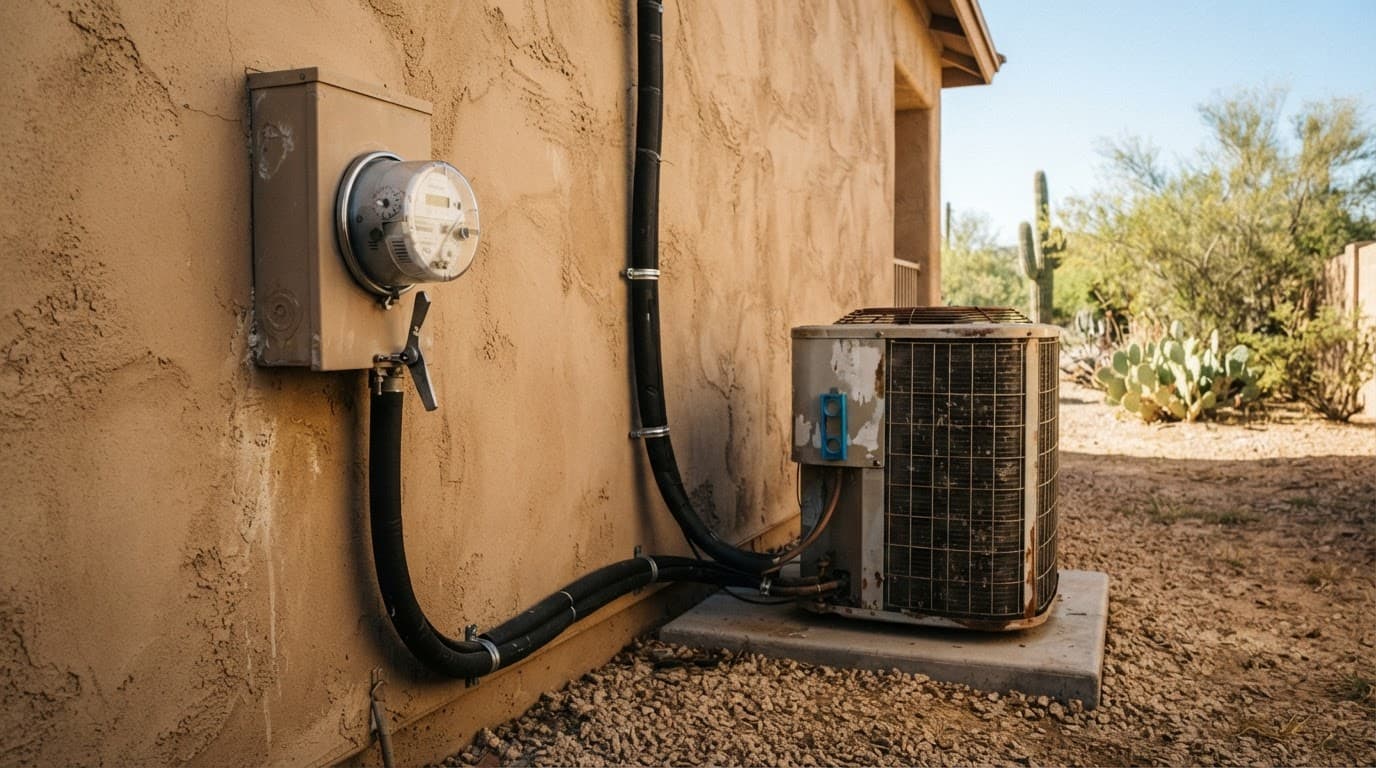
A rate plan cannot make tired cooling equipment use less electricity.
Cooling often drives the largest share of electric use, especially in older homes with original windows or weak attic insulation. A thorough inspection is helpful, but an HVAC technician can give you a clearer answer when the system looks near the end of its useful life.
Water, sewer, and trash need a closer look
Water bills in Phoenix are not one flat number. Meter size, location inside or outside city limits, seasonal use, and total consumption all affect what you pay.
For a 5/8-inch meter inside Phoenix city limits, the water base fee is $4.64 per month, a monthly service charge. The city’s water and sewer rate schedule also shows seasonal allowances, water volume charges, and a monthly sewer charge. Those variable charges depend on consumption, so the base fee is only the starting point, not the whole bill.
Summer water use comes from more than the shower
The city’s water allowance is higher from June through September, but that does not mean summer water is free. Once usage climbs, the bill changes with it.
Increased summer use can significantly raise your Phoenix utility costs.
A big lawn, thirsty citrus trees, a pool, and older irrigation controls can add up fast. I have seen a slow irrigation leak turn into an expensive surprise while a house sits vacant. Ask for water history, then walk the yard. Look at the irrigation controller, outdoor faucets, drip lines, and pool equipment.
Check which municipality provides the services
A City of Phoenix services bill can include water, trash and sewer, with solid-waste charges listed separately. The City approved a $5 monthly solid-waste adjustment that began July 1, 2026, according to its 2026 solid-waste rate notice, a reminder to check for a possible annual increase.
Do not apply a City of Phoenix number to every home in the metro area. Nearby communities may structure the monthly sewer charge differently because each municipal utility follows its own billing rules. Paradise Valley, for example, has different municipal services, so a Phoenix mailing address doesn’t automatically mean the same water, sewer, or trash setup as the house down the road.
The house itself tells you plenty about future bills
Square footage is a lousy shortcut for estimating utilities. Energy efficiency reflects insulation, windows, equipment, and shading. A well-insulated 1,900-square-foot home can cost less to cool than a smaller home with old equipment, unshaded glass, and a struggling attic.
Here is the short version of what I ask about before buyers get too attached:
| Look at | Ask for | Why it matters |
|---|---|---|
| Air conditioner | Installation date and service records | Cooling is often the largest summer cost |
| Roof and attic | Roof age, insulation, and ventilation details | Heat gain starts above the ceiling |
| Windows | Which walls get afternoon sun | West-facing glass can raise cooling demand |
| Pool and irrigation | Pump schedule and water history | Both affect electric and water use |
| Solar panels | Ownership status, installation records, production history, and transfer obligations | Paperwork can affect upkeep and future performance |
Older homes deserve system-by-system questions
I’ve walked through plenty of beautiful 1950s and 1960s homes in Arcadia, North Central Phoenix, and 85028. Their charm does not tell you what is sitting above the ceiling or behind the return grille.
A remodeled kitchen is great. It is not proof that the electrical panel, ducts, insulation, or air conditioner have been updated. Ask for permits and invoices where available. Then let your inspector do the boring work. Boring is good when you are buying a house.
If 85028 is on your list, my Sheaborhood neighborhood guide can help with the housing mix and day-to-day feel. Still, recurring bills and energy performance need to be evaluated one house at a time.
Pools and landscaping are lifestyle choices with monthly costs
A pool is not a deal-breaker. Neither is a larger yard. But both should be a conscious choice.
Pool pumps use electricity. Evaporation and refilling use water. Mature landscaping can provide welcome shade, but it also needs an irrigation plan. The right house is the one whose upkeep fits your life and your monthly budget.
HOA and apartment fees can hide in plain sight
Some families rent first while they learn Phoenix. Others downsize into a condo or patio home. In both cases, the advertised monthly number may exclude apartment utilities and other recurring charges. Compare the all-in total with the average rent, not rent alone.
Apartment communities may bill water, sewer, trash, pest control, or valet trash separately. Some use an allocation method instead of individual meters. These charges may not technically be rent, but they still reduce your monthly budget.
Get recurring fees in writing
Before you pay a holding fee or sign a lease, ask these questions in writing:
- Is water, sewer, and trash individually metered or allocated among residents?
- Is internet separate, optional, or part of a required package?
- Which community fees recur every month?
- Are there account setup or billing fees, a monthly service charge, parking costs, or move-in charges?
For condo and townhome buyers, read the HOA resale documents and verify whether the HOA or municipality includes a monthly sewer charge. Some communities include water, trash, or exterior maintenance in the dues. Others do not. Never assume that higher HOA dues cover more utilities.
Downsizing does not automatically mean lower costs
A smaller home often costs less to cool and maintain, but not always. A townhome with shared walls may be efficient, while a larger one-level patio home with a heated pool may not be.
I’ve helped a lot of families through this exact situation. The goal is not to buy the smallest place possible. It is to find a home that supports the life you want without becoming another project. My Phoenix downsizing guide goes deeper on how that choice affects your cost of living.
Solar panels need paperwork, not assumptions
Solar panels can lower a home’s electricity cost, but panels are not a magic sticker on the listing. I want to know who owns the system and what renewable energy it produces. I also want the financing terms and transfer requirements if the home changes hands.
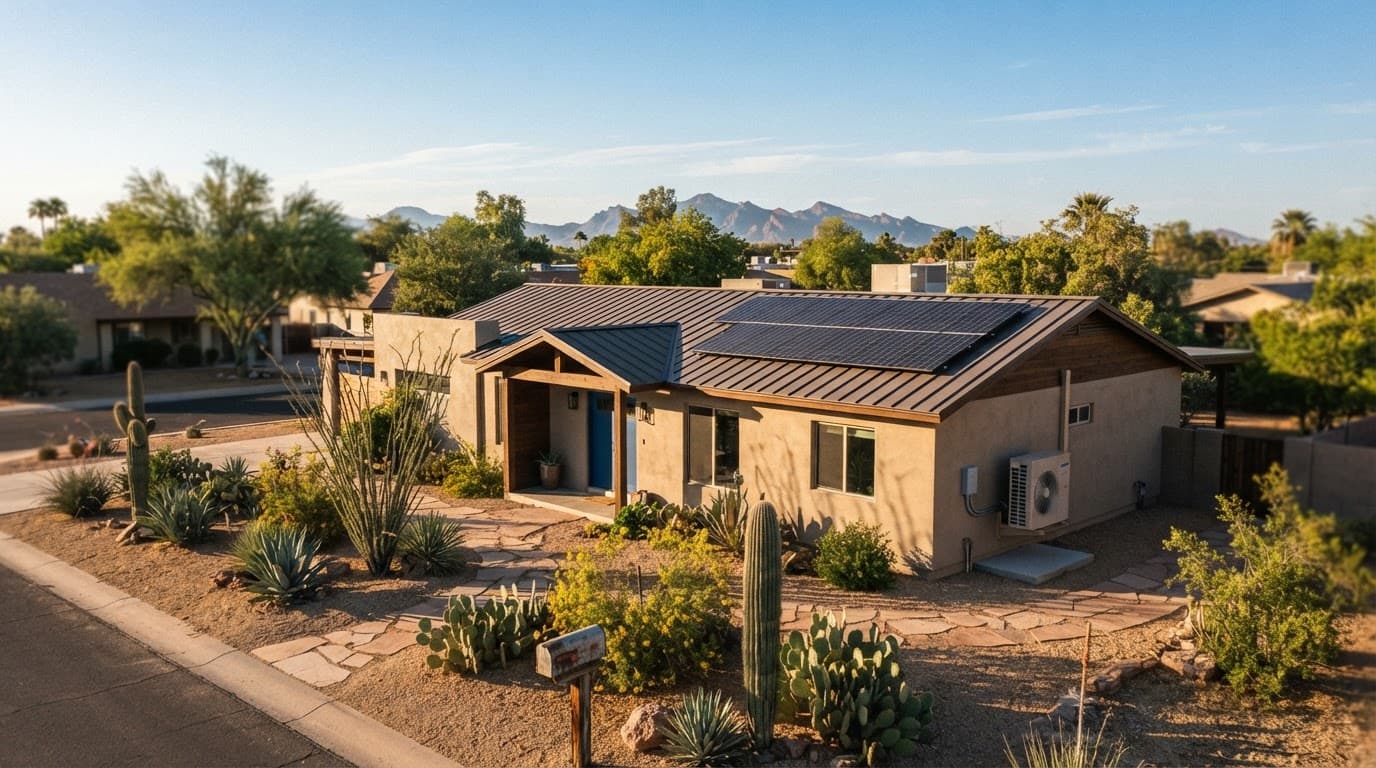
Find out whether the solar panels are owned, financed, or leased
Ask for the original agreement covering the solar panels, payoff information, warranty documents, installation date, and roof details. Solar panels that are owned differ from financed ones. A leased system or power-purchase agreement may require transfer approval.
Do not accept “the solar payment is about this much” as the answer. You need the actual contract. A low utility bill paired with a large solar payment is still a large monthly housing expense.
Use production and bill history to test solar savings
Ask for 12 months of electric bills and 12 months of production from the solar panels. These records can support or challenge the seller’s claimed solar savings. Compare them with the seller’s rate plan, separating the electric account’s monthly service charge from usage charges. A retired couple home all afternoon will have different energy usage than a family gone until 5 p.m.
Export credits and net billing rules also matter. DSIRE’s Arizona net-metering information lists APS export compensation at 6.171 cents per kWh through September 1, 2026. That is why a generic solar payback estimate is not enough.
Solar equipment without production records is a feature, not a savings calculation.
Frequently Asked Questions
In your budgeting process, always consider potential fluctuations in Phoenix utility costs.
How much should I budget for Phoenix utilities?
For an apartment, a reasonable starter range is often $200 to $240 per month for electricity, water, sewer, and gas where applicable. Internet may add around $75, but a home’s actual cost can vary significantly during the hottest months.
Which electric provider serves a Phoenix home?
The property’s location determines whether it is served by Arizona Public Service (APS) or Salt River Project (SRP). Verify the provider with the address before comparing rate plans, because the two utilities use different rates and structures.
What utility records should I request before buying?
Ask for 12 months of electricity, water, sewer, gas, trash, and solar records when applicable. Also ask whether the prior household used an electric vehicle, kept the thermostat unusually low, or had people home all day so you can interpret the history fairly.
Can solar panels guarantee lower electricity costs?
No. Confirm whether the system is owned, financed, or leased, and review the contract, payment, transfer requirements, production history, and electric bills. A low utility bill paired with a significant solar payment may not reduce the home’s total monthly cost.
What parts of a Phoenix home can raise utility bills?
Air-conditioning equipment, attic insulation, windows, west-facing exposure, pools, irrigation, and mature landscaping can all affect recurring costs. Square footage alone is not a reliable way to estimate what the home will cost to operate.
Final thoughts on Phoenix utility costs
Being proactive about understanding Phoenix utility costs will help you avoid future surprises.
The bill that matters is the bill for the house you are considering, with your household living in it. Ask for a full year of records, inspect the cooling and irrigation systems, and leave room for the hottest months.
By incorporating Phoenix utility costs into your calculations, you’ll gain a clearer financial picture.
Those recurring bills are part of the home’s broader cost of living. You are not trying to predict every dollar, only avoid buying a home that feels affordable in April and uncomfortable by July.
A thorough understanding of Phoenix utility costs will lead to more confident home buying decisions.
If you are comparing homes in Phoenix and want to talk through the trade-offs, I’m happy to help.
With accurate knowledge of Phoenix utility costs, you’ll be prepared for your new home’s true expenses.