
Phoenix Closing Costs Buyers Should Budget Before Moving Day

Your initial cash gets all the attention. Then you get close to the finish line and find a second pile of money called Phoenix closing costs, separate from the down payment. Planning for Phoenix closing costs is essential for any buyer.
Most buyers should plan for closing costs of roughly 2% to 5% of the purchase price. The upfront cash for a home purchase includes more than that initial contribution. Your loan, insurance, tax timing, title work, HOA, and negotiations can change the final number.
Understanding Phoenix closing costs can help you budget effectively for your home purchase.
Let’s walk through the real costs, so moving day doesn’t come with an unpleasant surprise.
Key Takeaways
-
- Plan for Phoenix buyer closing costs of roughly 2% to 5% of the purchase price, separate from your down payment. A $500,000 home could mean approximately $10,000 to $25,000 in buyer closing costs before the lender provides a final estimate.
One crucial aspect to remember is that Phoenix closing costs can vary widely.
- Common costs include loan charges, appraisal and inspection fees, title and escrow charges, recording fees, prepaid interest, homeowners insurance, property tax reserves, HOA fees, and possible termite-related expenses.
- The purchase contract determines who pays many items. Seller credits can help with eligible closing costs or a rate buydown, but they are different from lender credits, buyer-agent compensation, and a lower purchase price.
- Review your Loan Estimate and Closing Disclosure carefully, and keep money available for moving, repairs, utility deposits, and a reserve after closing. Your Closing Disclosure should arrive at least three business days before closing.
Phoenix closing costs: start with a realistic number
If you’re buying a $500,000 home, a preliminary estimate for buyer closing costs is $10,000 to $25,000. That’s a planning range, not a quote. Don’t plan your whole move around the lowest figure.
In Arizona, it’s vital to factor in Phoenix closing costs when estimating your overall budget.
Closing costs in Arizona can vary with local customs, loan type, insurance, taxes, and contract terms. A closing cost calculator can multiply the purchase price by 2% to 5% for a first-pass range. The lender’s estimate controls the final number.
Some common components of Phoenix closing costs include loan fees and title insurance.
Home prices change, so check the latest dated ARMLS market report for the Phoenix metro area. At 2% to 5%, a $760,000 purchase produces a preliminary range of $15,200 to $38,000.
Knowing how to calculate Phoenix closing costs can save you from budget surprises.
That figure still does not include your down payment.
Remember, Phoenix closing costs do not include your down payment.
A quick cash-to-close example
Here is how a $600,000 home purchase might look with 20% down. Your loan amount isn’t the same as the home’s total price, so this is only a planning frame.
| Item | Planning amount |
|---|---|
| 20% down payment | $120,000 |
| Buyer closing costs at 2% | $12,000 |
| Closing costs at 5% | $30,000 |
| Estimated cash to close | $132,000 to $150,000 |
The lender’s final estimate matters more than this table. Still, knowing the range early keeps you from falling in love with a house that stretches the whole plan too far.
Your cash to close is only part of the move-in budget. Keep moving costs and enough breathing room after you get the keys.
Where the buyer’s money usually goes
When reviewing your costs, always include Phoenix closing costs as a key component.
A closing statement can look like somebody emptied a drawer full of fee names onto the page. Most buyer closing costs fit into a few plain-English buckets.
The specifics of Phoenix closing costs can differ based on various factors.
Lender charges and loan-related costs
Understanding these costs beforehand can ease the stress of the buying process.
If you’re financing, expect a loan origination fee, underwriting, processing, a credit report fee, flood certification, and other loan charges. You may also see prepaid interest, mortgage points, and an appraisal fee.
An appraisal isn’t a home inspection. The appraiser gives the lender an opinion of value. Your inspector is looking for condition issues, repair risks, and things that can turn expensive later.
Get loan estimates early from more than one lender, then compare the interest rate and total upfront cost before choosing a mortgage loan. Lender credits can reduce upfront costs, but they may come with a higher interest rate. Points and lender pricing can change costs based on the loan amount. A lower rate may cost more upfront, so keep the loan long enough for the math to work.
Title, escrow, and recording charges
The lender’s fees are part of the overall Phoenix closing costs.
Title insurance helps protect against old ownership claims, recording errors, and other title problems. Escrow is the neutral service that holds money and documents while everyone does their part.
In many Arizona resale transactions, the seller customarily pays for the owner’s title insurance policy, but customs aren’t laws. The buyer often pays for the lender’s policy and may share or pay escrow fees. The purchase contract tells you who pays what in this real estate transaction.
Arizona doesn’t have a statewide real estate transfer tax, so buyers generally avoid state-level transfer taxes. There are still recording fees and documents to file. The Arizona Department of Revenue property tax FAQ explains that an Affidavit of Property Value generally accompanies a real property transfer unless an exemption applies.
Prepaids can make the final number jump
Surprises in Phoenix closing costs can happen if you’re not prepared.
Prepaid expenses aren’t junk fees. They are real bills collected in advance because your lender wants taxes and insurance handled from day one.
Knowing how much to expect for Phoenix closing costs can alleviate financial stress.
Homeowners insurance and property tax reserves
You may pay the first year of homeowners insurance at closing. If your loan has an escrow account, the lender may also collect several months of reserves for property taxes and homeowners insurance.
These factors influence the total of Phoenix closing costs, which can be significant.
The amount changes based on your closing date. Close near the point when a tax bill or policy renewal is due, and that line item can be larger than you expected.
When budgeting, always include estimated Phoenix closing costs to avoid shortfalls.
Arizona property taxes can vary significantly by county and property. Review the property’s actual tax bill and current county records, not only an online estimate. A renovation, reassessment, or exemption change can affect what you pay later.
HOA transfer fees and inspection costs
A home without an HOA keeps this part simple. A condo, townhome, patio home, or planned community can add transfer fees, document charges, and sometimes upfront dues.
For this reason, estimating Phoenix closing costs is critical.
In the Sheaborhood, you will find traditional single-family homes without an HOA, plus condos and patio-home options near Stone Creek. Those are different buying experiences. For people looking to stay near family while reducing upkeep, the Sheaborhood housing options for downsizers are worth comparing before you lock in a budget.
Then there is the Arizona-specific question buyers should ask: termites. A home inspection is different from a wood-destroying-organism inspection or treatment review during due diligence. Who pays for the inspection, clearance, or repairs is negotiable. Don’t assume a small inspection fee is the whole story if the report finds active activity.

Who pays what is a contract question
Asking questions about Phoenix closing costs can lead to better budgeting decisions.
Buyers often ask me, “Does the seller pay my closing costs?” They’re asking who handles seller closing costs. The honest answer is sometimes, because closing costs in Arizona depend on the contract, local custom, and negotiations.
Customary practice isn’t the same as a legal requirement. The contract controls title policies, escrow charges, inspections, repairs, and negotiated credits. Buyers normally cover financing costs, appraisals, inspections, and many prepaids. Seller closing costs commonly include the owner’s title policy, seller-side escrow fees, payoff charges, and negotiated buyer credits.
Understanding who pays Phoenix closing costs is crucial in negotiations.
Buyer-agent compensation needs its own line item
Having clarity on the costs will make for smoother transactions regarding Phoenix closing costs.
Under NAR’s practice changes effective August 17, 2024, MLS Participants working with buyers must have a written buyer agreement before touring homes. Offers of buyer-agent compensation can’t appear in the MLS. Buyers working with a real estate agent should review the agreement’s compensation terms.
That doesn’t mean every buyer pays their agent directly. A seller can still offer compensation, and a buyer can request it as part of the offer. Review the amount and payment plan with your real estate agent before writing an offer.
This part matters more than people think. Buyer-agent compensation, seller-paid costs, and buyer closing-cost credits are separate negotiation points. These terms don’t automatically cover or offset one another.
Seller concessions are more useful than a random price cut
A detailed understanding of Phoenix closing costs can lead to better negotiations.
When rates are higher, buyers sometimes focus only on the purchase price. But a seller credit can be more helpful than a small price reduction.
A $10,000 price reduction changes monthly mortgage payments only a little. A $10,000 seller credit can cover eligible seller closing costs, lender fees, title fees, or prepaid insurance. Allowable credit limits and rate-buydown rules depend on your loan type and lender. Seller concessions must be documented in the contract, and lender credits come from the lender, so they aren’t interchangeable. That can lower the cash to close you need, leaving money for movers, furniture, reserves, and repairs. Homes have a sense of humor that way.
Ask for the right thing
A smart request matches the house and the market conditions.
-
- If the inspection finds a dated water heater or roof issue, ask for a credit based on a real contractor estimate.
- If a home has been sitting, ask the seller to contribute toward allowable closing costs or a rate buydown.
- If you are competing for a well-priced home, keep the offer clean and decide which cost matters most before you write it.
- If the seller can’t offer a credit toward seller closing costs, compare a price adjustment with the cost of handling the expense yourself.
Depending on the situation, this can also involve the understanding of Phoenix closing costs.
I have helped a lot of families through this exact situation. The strongest offer is not always the one with the highest price. It is the one that is clear, financially solid, and realistic about what each side needs.
Read the Closing Disclosure like it is your money
Because it is.
Under current CFPB guidance, your lender must provide the Closing Disclosure at least three business days before your scheduled closing. The Consumer Financial Protection Bureau’s Closing Disclosure guide is a good plain-English reference if you want to see how the form is organized.
Every buyer should familiarize themselves with Phoenix closing costs.
Compare it with your original Loan Estimate
Pull out your Loan Estimate and compare these items:
It’s also helpful to understand how Phoenix closing costs can fluctuate.
- The loan amount, interest rate, loan term, and monthly mortgage payments for principal and interest.
- Cash to close and where every dollar is coming from.
- Lender fees, title fees, prepaid expenses, and lender credits.
- Whether seller closing costs and seller credits are shown correctly.
- Whether your loan has a prepayment penalty or balloon payment.
- The names of the parties receiving money at closing.
Ask about anything you do not recognize. No question is too basic here. An extra $1,200 charge might be correct. It might also be a duplicate, a typo, or something that needs a better explanation.
Raising questions about Phoenix closing costs can ensure a smoother process.
Do not wait until the signing table to raise discrepancies in the Closing Disclosure. Your final cash to close should match your available funds and approved credits. That is a bad place to discover the numbers do not match the plan.
Keep moving expenses outside the closing budget
Moving expenses should be planned separately from Phoenix closing costs.
Closing day isn’t the finish line. It’s the beginning of a new set of checks and expenses.
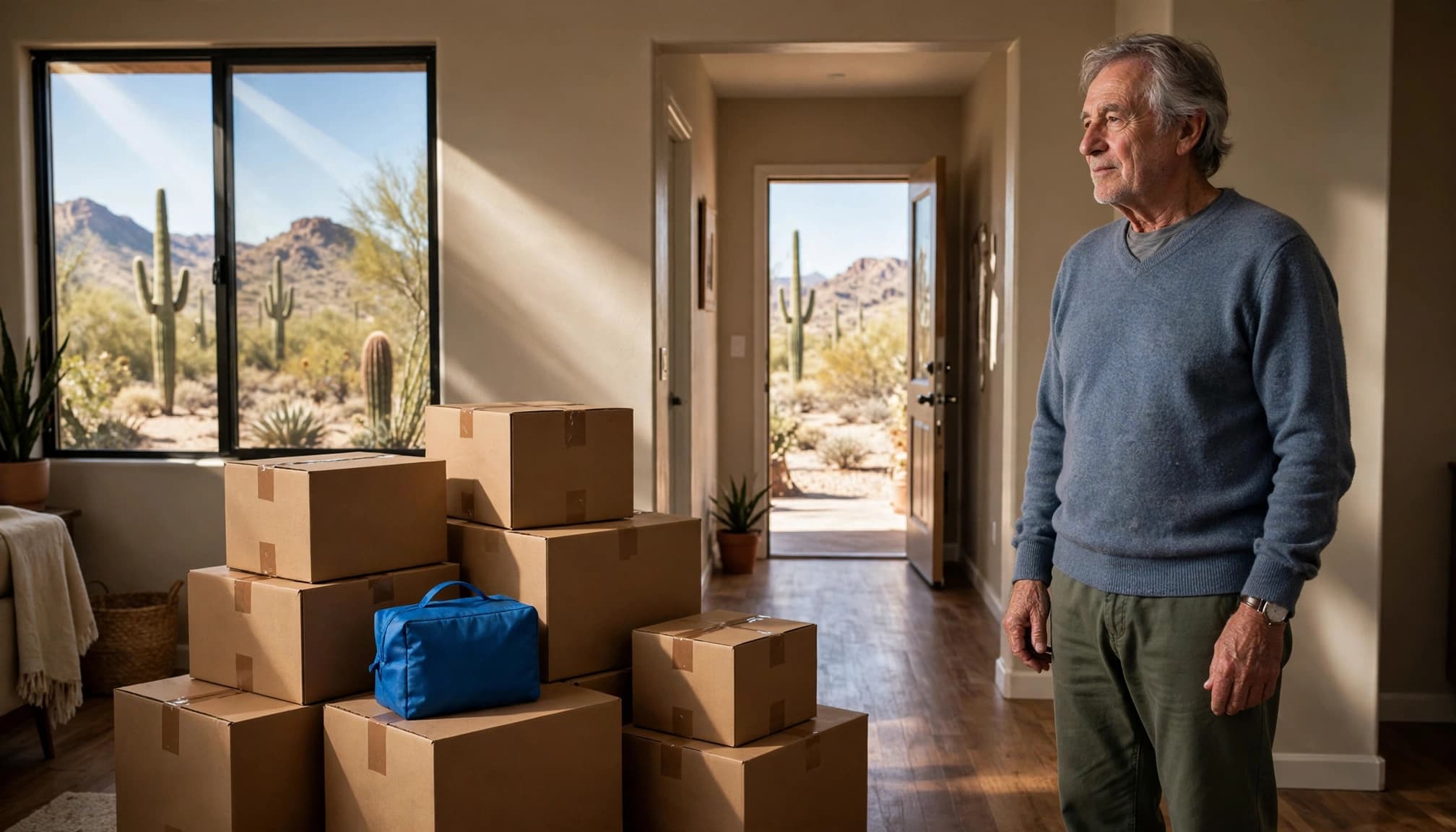
For a home purchase, moving, packing, storage, temporary housing, utility deposits, and repairs are additional costs, not settlement charges. For a downsize, that might mean movers, packing, storage, estate-sale help, new window coverings, or a handyman. For a relocation, it can include temporary housing, travel, utility deposits, and the cost of getting your old home ready to sell.
Protect a reserve after closing
I like buyers to keep a cash reserve after closing whenever possible. Prepaid expenses collected at closing don’t cover post-closing household or relocation expenses. The exact amount depends on the house and your comfort level, but draining every dollar to buy the home is rarely a peaceful way to move in.
This is especially important if you are selling and buying around the same time. The question of whether to sell or buy first when downsizing in Phoenix affects your available cash, timing, and stress level.
Remember to account for Phoenix closing costs when planning your budget.
There is also a tax question. A real estate transaction may include costs that are deductible, added to the home’s basis, or not deductible. Qualifying mortgage interest and certain property taxes may be deductible, but treatment depends on the cost and your individual return. Read IRS Publication 530 and talk with your tax professional.
Frequently Asked Questions
Many buyers overlook Phoenix closing costs, leading to financial stress.
How much are closing costs in Phoenix?
Most buyers should plan for closing costs of roughly 2% to 5% of the purchase price, separate from the down payment. The final amount depends on your loan, insurance, tax timing, title work, HOA, inspections, and contract terms.
Who pays closing costs in an Arizona home purchase?
Understanding who pays for Phoenix closing costs can streamline negotiations.
The purchase contract controls who pays each item, while local customs may influence the negotiation. Buyers commonly pay financing costs, appraisals, inspections, and many prepaids, while sellers often pay the owner’s title policy and seller-side charges.
Be aware that Phoenix closing costs depend on local customs and agreements.
Can a seller pay my closing costs?
A seller may offer a credit toward eligible buyer closing costs, a rate buydown, or certain other expenses allowed by the loan program and lender. The credit must be documented in the contract, and it is separate from lender credits and buyer-agent compensation.
Clarifying how credits apply to Phoenix closing costs is essential.
When will I know my final closing costs?
Your lender’s Loan Estimate provides an early planning number, but the Closing Disclosure is more authoritative. Federal rules generally require you to receive the Closing Disclosure at least three business days before scheduled closing, giving you time to compare the figures and ask about discrepancies.
A calmer way to reach closing day
Phoenix closing costs are easier to manage when you plan throughout your home purchase, not after the inspection period ends. A closing cost calculator offers a useful first pass, but your lender’s Loan Estimate and Closing Disclosure are more authoritative.
I have watched buyers feel overwhelmed by a two-page estimate, then settle right down once we sort each line into a bucket. Clarity beats guesswork every time.
Understanding Phoenix closing costs can help avoid last-minute surprises.
The contract and Closing Disclosure determine which party pays each item, including seller closing costs. You do not have to rush this. A good plan gives you room to buy the home and still sleep well after you own it.
Ultimately, a good understanding of Phoenix closing costs will lead to a smoother transaction.