Phoenix Home Inspection Red Flags in Older Central Homes
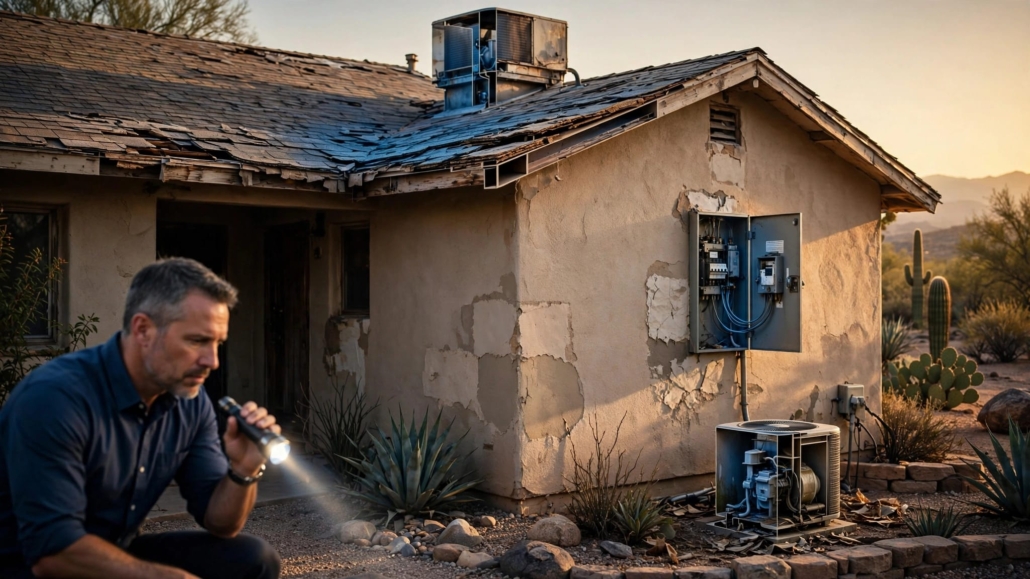
Phoenix home inspection red flags aren’t always obvious from the curb. A clean remodel, fresh paint, and pretty landscaping can sit over an old sewer line, aging HVAC equipment, or roof underlayment that’s reached the end of its life. Remember to look for Phoenix home inspection red flags throughout the home.

I’ve helped plenty of buyers look at homes in Arcadia, Biltmore, North Central, The Sheaborhood, Paradise Valley, and the Magic Zip Code. Older homes can be fantastic. You just need to know what you’re buying before the moving truck pulls up.
As you explore these areas, keep an eye out for common Phoenix home inspection red flags that could save you from costly repairs later.
Key takeaways
- Put the roof, HVAC system, electrical panel, sewer line, plumbing, and pool equipment at the top of your inspection list.
- A general home inspection starts with a home inspector’s initial review, not always the final answer. Specialty inspections fill in the expensive unknowns.
- Be mindful of potential Phoenix home inspection red flags during your walkthrough.
- Don’t ignore small clues like ceiling stains, patched stucco, slow drains, or a breaker panel with an unfamiliar name.
- Arizona contracts often give buyers a 10-day inspection period, unless the contract says otherwise.
- A repair request should focus on safety, function, and large upcoming repair costs. Don’t burn energy fighting over a scratched baseboard.
Why Older Central Phoenix Homes Need a Local Inspection Lens
Identifying Phoenix home inspection red flags early can help you make informed decisions.
Older central Phoenix homes have character that newer neighborhoods can’t copy. You may get a larger lot, mature trees, block construction, and a single-level floor plan that works well for downsizers.
You may also get systems that have been baking in Arizona heat for decades.
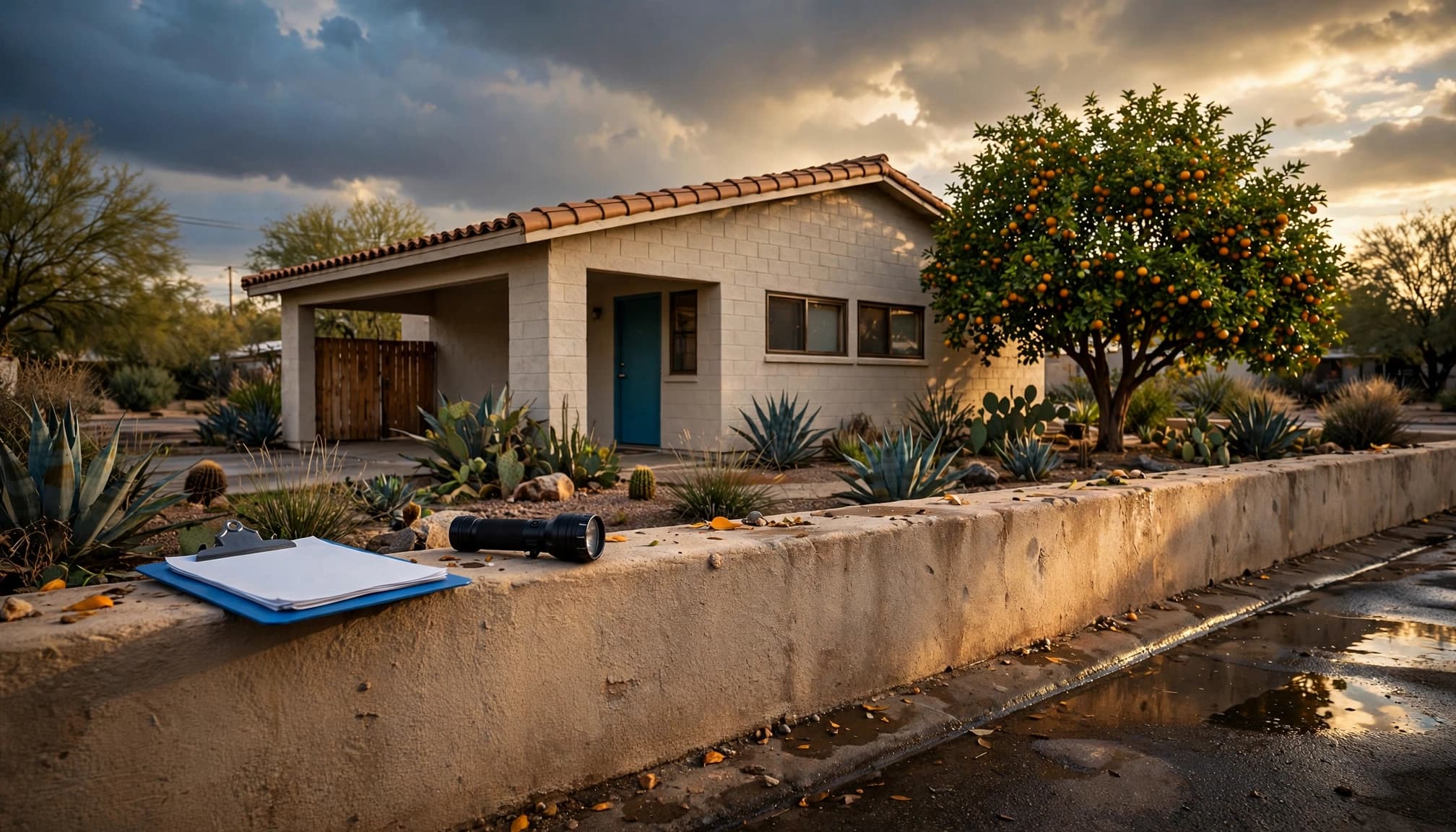
Desert heat puts systems under pressure
A Phoenix air conditioner doesn’t get much of an offseason. Tile roofs face strong sun, monsoon rain, wind, and big temperature swings. Exterior caulk dries out, while attic insulation and ventilation affect comfort, energy use, and future costs. Older plumbing materials age.
Look for specific Phoenix home inspection red flags in the HVAC system, such as unusual noises or uneven temperatures.
Even a well-cared-for house can have several expensive items nearing replacement at once. That doesn’t make the house a bad purchase. It means the price, inspection findings, and your first few years of ownership need to make sense together.
Mature neighborhoods need closer attention
In 85028, many homes date to the 1960s and 1970s. The lots and established streets are part of the appeal. So are the practical trade-offs that come with older homes in 85028, including original sewer lines, older HVAC systems, and windows that may not match today’s efficiency standards.
A house in the right ZIP code can still have the wrong maintenance story. Ask for the home’s maintenance history, prior replacements, and available records before treating a kitchen remodel as proof of good care.
HVAC and electrical issues to investigate early
It’s crucial to address any Phoenix home inspection red flags related to electrical issues promptly.
The air conditioner and electrical panel belong near the top of any Phoenix home inspection report. Both affect safety, comfort, insurance questions, and the size of your repair budget.
An aging HVAC system can change the deal
Ask the inspector for the manufacture date, visible condition, temperature split, and notes on the ductwork. Then ask whether the system is cooling properly during the inspection. If the unit is old, a licensed HVAC contractor should provide a separate opinion before you make a big decision.
Current Phoenix planning estimates for full replacement range from roughly $5,400 to $14,200. Costs vary with system size, efficiency, ductwork, and installation conditions. These figures aren’t quotes, but they show why a struggling unit deserves a closer look.
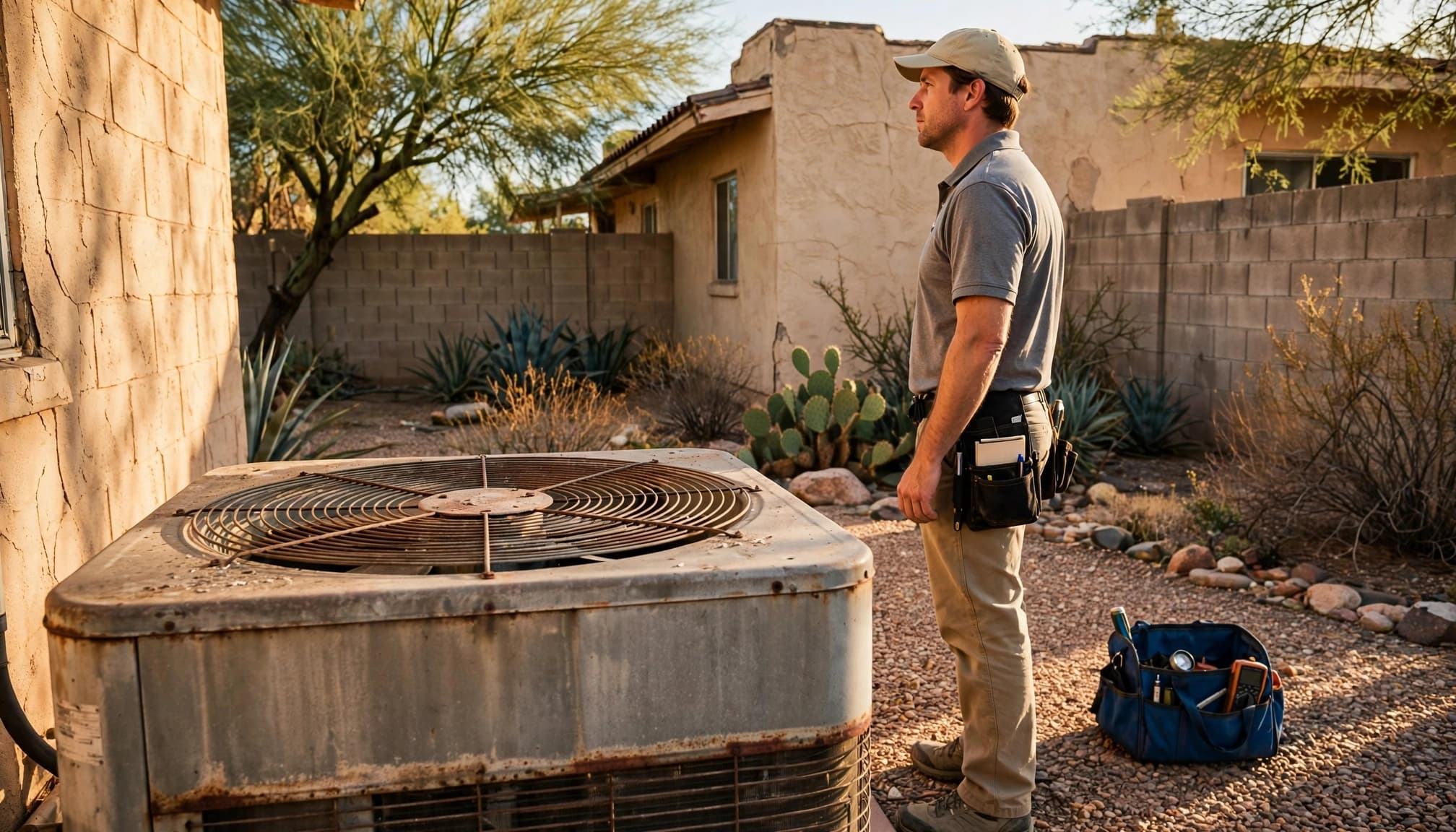
Old electrical panels need a real answer
Federal Pacific Electric Stab-Lok and Zinsco panels should get your attention if they appear in an older home. Don’t try to diagnose one yourself from a listing photo. Have a licensed electrician evaluate the panel, electrical wiring, connections, and overall condition.
Thermal imaging can help identify abnormal heat at the panel or connections. It is a supplemental diagnostic, not a replacement for a licensed electrician’s evaluation.
You should also call your insurer before the end of the inspection period. Ask whether the panel affects your ability to bind coverage or requires an upgrade. Electrical equipment can create real safety concerns, which is why the Consumer Product Safety Commission tracks electrical-panel recalls.
If you notice any of these Phoenix home inspection red flags, consult an expert for advice.
A panel replacement is easier to plan for before closing than after your insurer asks a question you weren’t expecting.
Roof, stucco, plumbing, and sewer scope checks
Make sure to check for Phoenix home inspection red flags when evaluating the roof and plumbing.
A standard inspection can spot visible trouble, but it can’t see under tile, inside a sewer line, or behind every finished wall. That is where specialty inspections earn their keep.
Tile roofs hide the part that matters most
Tile can last a long time. The roof underlayment below it does not last forever. Look for broken or slipped tiles, exposed underlayment, patched areas, debris buildup, and water stains inside the home.
If the inspector sees concerns, bring in a roofer who works with tile roofs. Extensive underlayment failure may lead to a roof replacement discussion, but replacement isn’t automatic. Current online estimates for tile underlayment work in Phoenix often fall around $4,500 to $12,000, depending on roof size, pitch, access, and repair needs. Treat those figures as planning information, not a formal quote. Don’t accept a vague comment like “roof appears older.” Ask what is old, what is failing, and what needs attention now.
The underlayment condition is one of the significant Phoenix home inspection red flags you should consider.
A sewer scope is cheap compared with a sewer repair
For homes with an older plumbing system, I strongly recommend a sewer scope. A camera inspection can show roots, cracks, bellies, offsets, or heavy buildup before you own the problem.
General inspection costs in Phoenix often run about $300 to $600. A sewer scope commonly adds roughly $175 to $300. Full sewer replacement estimates can land much higher, often in the $5,250 to $15,750 range, depending on access and how much line needs replacement. Use these costs as planning information and confirm current pricing with local providers.
Keep an eye out for Phoenix home inspection red flags that could indicate deeper plumbing issues.
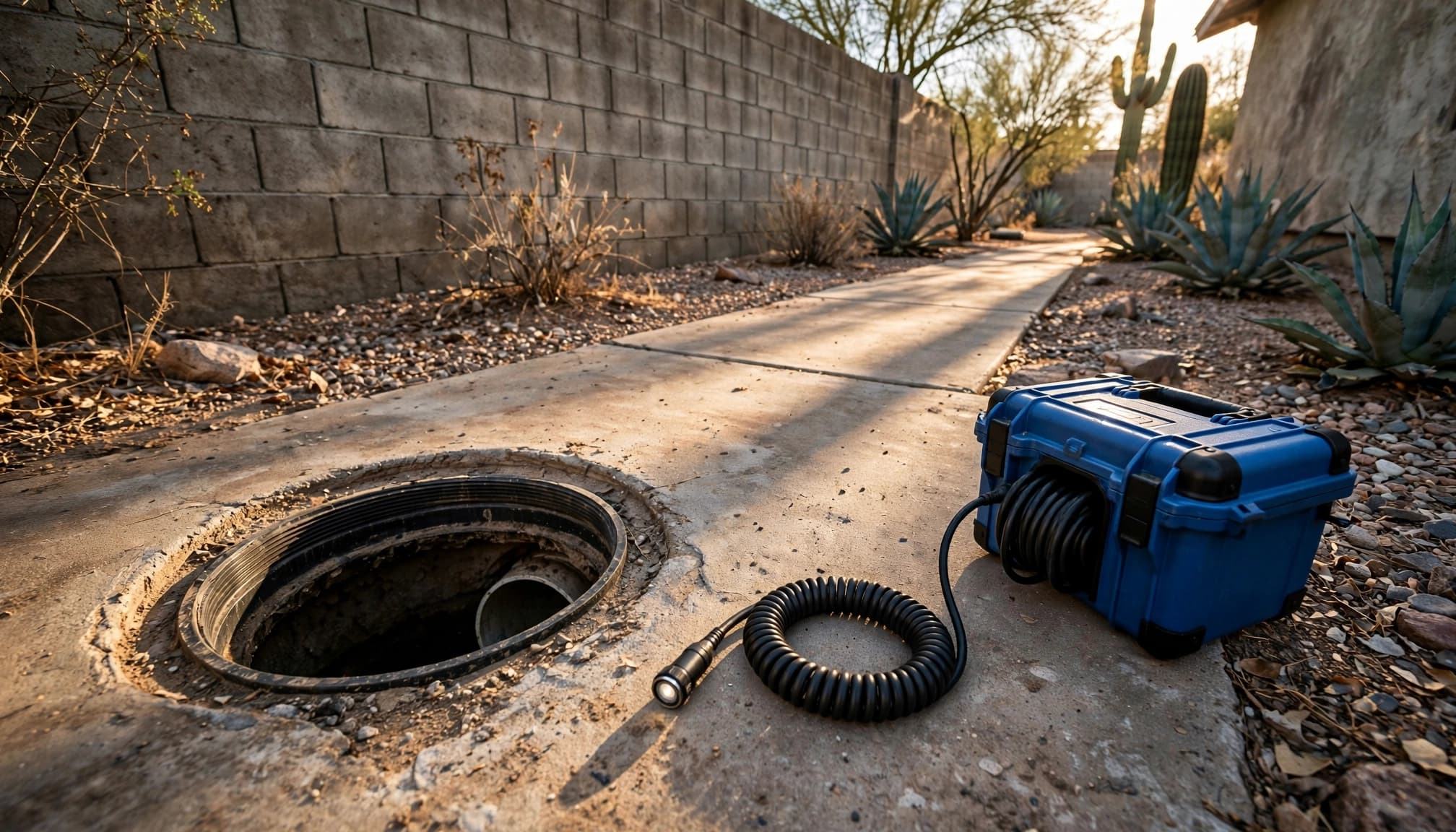
Slow drains, a sewer smell, damp patches, or a giant tree near the line are reasons to ask more questions. A brand-new-looking bathroom doesn’t tell you much about the pipe beneath the yard.
Don’t panic over every crack or stain
Don’t overlook minor issues, but do prioritize significant Phoenix home inspection red flags that could indicate serious problems.
This is where buyers can get rattled. An inspection report can be 60 pages long, full of photos and language that sounds scarier than it is. Most houses have cracks, minor repairs, and maintenance items.
Stucco and foundation clues need context
Hairline stucco cracks can be normal in Arizona. Wider cracks, repeating cracks, gaps around doors, or cracks paired with interior drywall movement deserve a closer look. The same goes for foundation cracks.
I don’t want you assuming every crack means structural issues. I also don’t want you dismissing a pattern because the home has a nice backsplash. Ask the inspector what they observed and whether a structural engineer is warranted.
Water stains deserve follow-up
Water stains and their implications should be carefully assessed for any Phoenix home inspection red flags.
A ceiling stain could reflect current or past water damage from a roof, plumbing, or HVAC condensate problem. Unresolved moisture can contribute to mold and mildew, but a stain alone doesn’t prove either condition.
Thermal imaging may identify temperature or moisture patterns that warrant further investigation, but it isn’t conclusive and may need confirmation by a qualified contractor.
Review the seller’s disclosure statement next to the inspection report. If the seller disclosed a past repair, get invoices if available. If the report finds something different, request more information and bring in the right contractor.
Termites and pools aren’t side issues
Both termites and pools can reveal critical Phoenix home inspection red flags that need immediate attention.
Termites are common in Arizona, and a pool can be a major operating expense. Both deserve their own inspection when they are part of the property.
Look for termite activity around the perimeter
Identifying signs of termites is one of the first steps in spotting Phoenix home inspection red flags.
During your walkthrough, watch for mud tubes along the foundation, damaged wood, discarded wings, or suspicious repairs near doors, patios, and garages. Subterranean termites often travel in shelter tubes. Drywood termites leave different clues.
The EPA’s guide to termite signs and control{target=”_blank”} is a good primer, but a professional inspection is needed to determine whether those clues indicate a termite infestation. A termite inspection often costs around $75 to $125, though Phoenix providers can confirm current pricing.
If a termite infestation is confirmed, request treatment records, warranties, and details about what was repaired. That’s a small amount of documentation compared with guessing wrong.
Get a pool specialist for older equipment
Older pool equipment can also signal important Phoenix home inspection red flags that you cannot ignore.
If the home has a pool or spa, ask for a pool inspection. Look at the pump, filter, heater, plaster, drainage, safety features, and visible leaks. A general inspector may note obvious issues, but a pool company can tell you what the equipment has left in it.
For a downsizer, this question matters even more. A pool may be worth it. It may also become one more thing asking for attention every Saturday morning.
Add-ons that make sense for older Phoenix homes
The inspections you choose can help you uncover Phoenix home inspection red flags that are specific to older homes.
You don’t need to order every inspection available. You do need the ones that match the home’s age, condition, and features.
| Inspection | Typical planning range, not a quote | When I would order it |
|---|---|---|
| Sewer scope | $175 to $300 | Older homes, mature trees, slow drains, or unknown line history |
| Termite inspection | $75 to $125 | Nearly every resale purchase |
| Roof inspection | $150 to $250 | Older tile roof, repairs, stains, or unclear roof age |
| HVAC inspection | $100 to $200 | Older unit, weak cooling, or a system near replacement age |
| Pool inspection | $150 to $250 | Any home with a pool or spa |
These planning ranges help you decide which specialists fit the property. The right specialty inspections reduce uncertainty in an older home rather than adding an unnecessary expense. They also help you estimate repair costs and budget for likely work before closing.
A home with an old roof, older AC, and original sewer line may need three specialists. That’s not overkill. It’s how you avoid treating a six-figure purchase like a scratch-off ticket.
For buyers considering established homes around Shea Boulevard, my Sheaborhood 85028 FAQs can help with the neighborhood side of the decision too.
Using the inspection period and BINSR well
Utilizing the inspection period effectively can help uncover any Phoenix home inspection red flags.
Arizona buyers may have an inspection period after contract acceptance, with the length set by the purchase contract. Read your dates carefully. Missing a deadline is a frustrating way to lose options.
The Arizona Department of Real Estate provides Arizona real estate forms, but a real estate agent should review the active contract and key dates with you.
Let the report guide the next calls
Once your home inspector finishes the general home inspection, move quickly on specialist evaluations. Don’t wait until the last day to call a roofer or sewer company. Good contractors get booked, especially during busy seasons.
Specialist evaluations should focus on any Phoenix home inspection red flags noted in the general report.
Keep the inspection report, specialist findings, seller disclosure, and repair estimates in one place. It makes the next conversation much calmer.
Use the BINSR for real issues
The Buyer’s Inspection Notice and Seller’s Response, commonly called the BINSR, is where you state what you want addressed. You may ask for repairs, a credit, a price reduction, or decide the home’s condition isn’t a fit.
You don’t have to request every minor fix. Focus on safety hazards, failed systems, active water damage, and big-ticket repairs that weren’t obvious when you made the offer.
You want to address Phoenix home inspection red flags that indicate significant safety concerns or repairs.
Negotiate without losing the plot
A seller isn’t required to turn an older house into a new house. Buyers aren’t required to accept surprises they didn’t price into the deal. A major unresolved system may affect the home’s property value, so there is room for a reasonable conversation.
Know when a credit is better than a repair
Be sure to negotiate based on any critical Phoenix home inspection red flags identified during the process.
I often prefer seller concessions in the form of a credit when the work is specialized or when you want to choose the contractor yourself. A rushed repair before closing can create more questions than it solves.
A credit only works if your lender allows it and the amount fits within the contract and loan rules. Talk with your lender before you agree to anything.
Keep your contingencies when you can
A home inspection contingency, appraisal contingency, and financing contingency help protect your home purchase while facts are being verified. Waiving every protection can feel bold in the moment. It can feel awful later.
Your contingencies should protect you from the financial impact of hidden Phoenix home inspection red flags.
You don’t have to rush this. A home with good bones and a clear repair plan can be a smart buy. A home with unanswered questions is a different conversation.
Frequently asked questions
What are the biggest Phoenix home inspection red flags?
Many buyers fail to recognize common Phoenix home inspection red flags, leading to costly repairs later.
The major Phoenix home inspection red flags include aging HVAC equipment, roof underlayment issues, outdated electrical panels, sewer problems, water damage, termite activity or a termite infestation, and serious foundation or stucco concerns. The right follow-up depends on what the inspector finds.
Why is AC such a big deal in Phoenix?
Because you depend on it for much of the year. A weak or old system can become an expensive replacement soon after closing. Get a licensed HVAC opinion if the unit is older or not cooling well.
Should every older home get a sewer scope?
I would strongly consider it, especially in Arcadia, Biltmore, North Central Phoenix, The Sheaborhood, and Paradise Valley homes with mature landscaping or unknown plumbing history.
I would suggest looking for specific Phoenix home inspection red flags as you consider your options.
Does a Federal Pacific or Zinsco panel kill the deal?
Not automatically. It does mean you should get a licensed electrician’s written evaluation and ask your insurer what it requires. Then you can make a decision with real numbers.
Can I ask the seller to replace the roof or AC?
You can ask. The seller may agree, offer a credit, reduce the price, or decline. Your leverage depends on the inspection findings, market conditions, and what the contract allows.
What if the seller disclosure conflicts with the inspection report?
Addressing conflicting information can help clarify any Phoenix home inspection red flags that arise.
Ask for clarification, records, and specialist evaluations. A disclosure tells you what the seller says they know. An inspection report tells you what was observed on the inspection day. Both matter.
A clear inspection plan beats a perfect-looking listing

The goal isn’t to find a home with zero issues. That house probably doesn’t exist, especially in an established Phoenix neighborhood. The goal is to understand the issues, price them honestly, and decide whether the home still fits your life.
Recognizing Phoenix home inspection red flags is essential in evaluating the overall property condition.
Those warning signs should slow you down, not scare you off. Ask the extra question before closing. Your future self will be glad you did.