
Phoenix Solar Homes: What Buyers Need to Verify
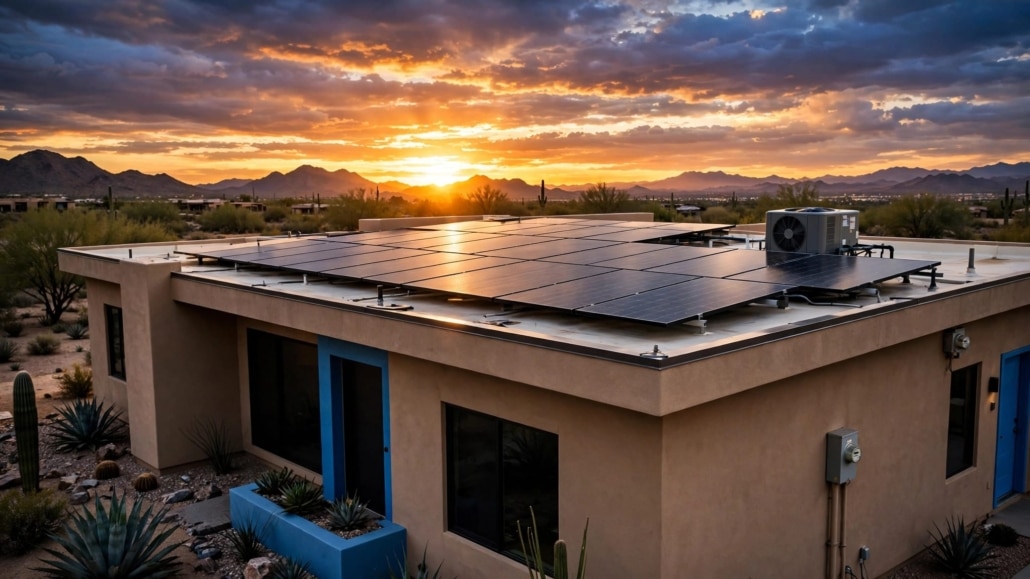
Phoenix solar homes can seem like a smart way to manage summer electric bills. Before counting on solar power to save money, find out who owns the panels, what condition the roof is in, and what the utility actually charges.
Many buyers are attracted to Phoenix solar homes for their potential energy savings.
For those considering Phoenix solar homes, it’s essential to understand the nuances of solar technology and ownership.
I’ve seen buyers focus on the shiny equipment and miss the paperwork. That’s understandable, especially if you’re moving here soon or helping a parent find a smaller home. Let’s walk through the checks that tell you what you’re taking on.
Understanding Phoenix solar homes can be the key to a successful purchase.
Key takeaways
- Find out whether the panels are owned, financed, leased, or covered by a power purchase agreement.
- Ask for a full year of electric bills and solar production records. A low bill in March won’t tell you much about August.
- Inspect the roof, HVAC, electrical work, and solar equipment together. In Phoenix, those systems affect one another.
- Confirm the permit history, utility arrangement, and any contract transfer requirements before your inspection period ends.
How to evaluate Phoenix solar homes before an offer
Evaluating Phoenix solar homes requires careful research and consideration of various factors.
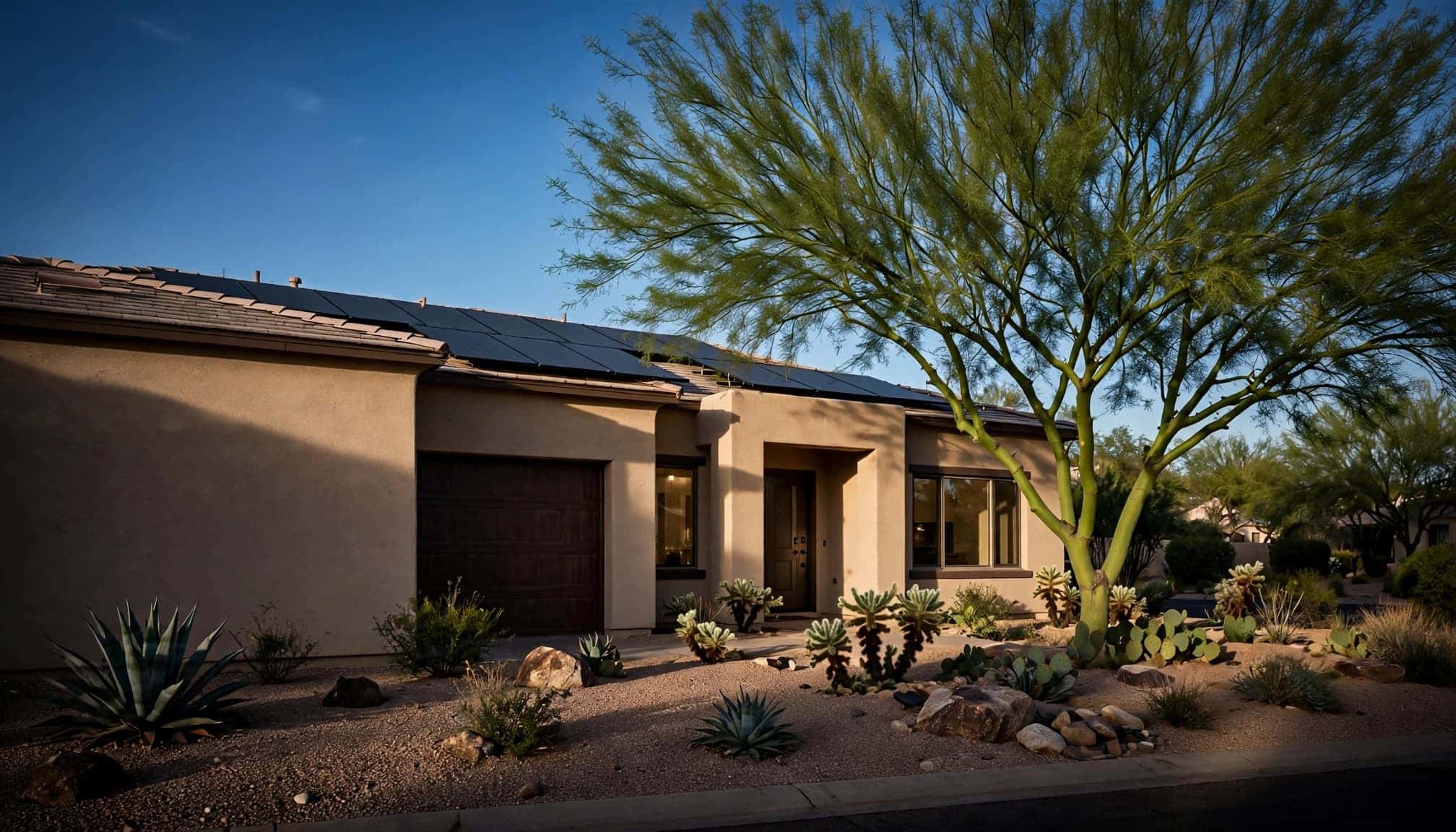
The first question I ask is simple: What exactly comes with the house? A listing that says “solar” hasn’t answered it. Get the seller’s documentation before you assign value to the system or assume it will lower your monthly costs.
Understanding how Phoenix solar homes operate will give you a better perspective on their value.
Establish who owns the panels
Owned solar panels are usually the simplest situation, but ask for the purchase agreement and proof of payment. If the seller financed them, find out whether a balance remains and how it will be handled at closing.
Many Phoenix solar homes come with warranties, which is a plus for buyers.
A lease or power purchase agreement (PPA) is different. The solar company may own the equipment, while the homeowner pays a monthly amount or buys the electricity it produces. The U.S. Department of Energy’s solar homeowner guide explains these arrangements. Ask for the entire contract, including its term, payment changes, maintenance terms, and transfer instructions.
Researching Phoenix solar homes will help buyers avoid pitfalls.
Don’t guess what happens at closing
Have your title and closing professionals review any payoff or transfer requirements. Request payoff details, and ask them to check whether the ownership and financing documents call for a lien, UCC filing, or release. Requirements depend on those documents, so don’t assume one applies. Ask the solar company what it needs from the buyer and seller, and get that answer in writing. If you’re financing the purchase, share the agreement with your lender early.
Closing on Phoenix solar homes often involves intricate details.
This matters for downsizers. A smaller house in The Sheaborhood (85028) may be a good fit, but an unexpected solar payment can change the monthly budget. There are several housing styles in the area, including smaller single-level options described in my Sheaborhood 85028 neighborhood guide. Evaluate the payment along with the house, not after you’ve fallen in love with it.
Inspect the roof and solar equipment as one system
Inspecting Phoenix solar homes should include a focus on roof integrity.
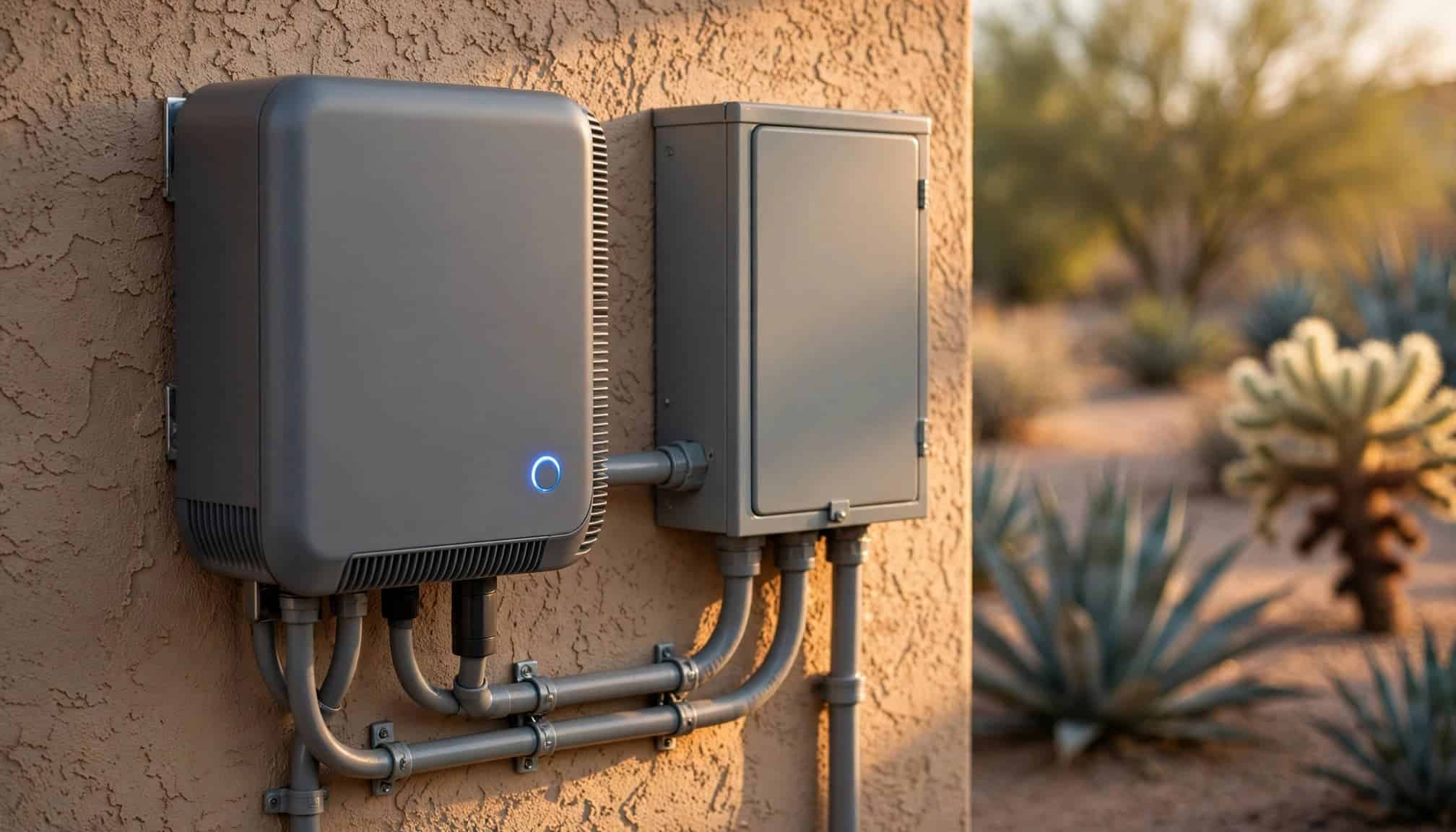
Panels don’t make an older roof younger. If the roof needs work, the solar equipment may have to come off and go back on. I’d want to understand that job before closing, especially on an established home in Arcadia (85018), North Central Phoenix (85021), or The Sheaborhood.
Homebuyers should be aware that not all Phoenix solar homes are the same.
Bring in the right inspectors
Start with a general home inspection and the seller’s disclosure. Then ask a roofer to assess the roof’s condition, visible mounting points, prior repairs, and any areas your inspector flags. A qualified solar contractor can evaluate the photovoltaic array, inverter, wiring, and monitoring system.
Choosing the right professionals is crucial when evaluating Phoenix solar homes.
Request the installation date, equipment specifications, service records, and warranty documents. Ask who receives warranty coverage after a sale and who handles a roof leak around a mounting point. Get answers from the relevant companies rather than assuming every warranty follows the house.
Check what the system has produced
Understanding the energy production of Phoenix solar homes can inform buyer decisions.
A panel rating, usually stated in kilowatts, describes the system’s capacity. Production records show actual power generation in kilowatt-hours and document its renewable generation. You need both.
Ask for recent monthly monitoring reports and any history of outages or inverter replacements. A system with a strong original design can underperform because of equipment trouble or shade. Mature trees are part of the appeal in many established neighborhoods, but branches near panels deserve a closer look.
Factors affecting Phoenix solar homes’ performance include location and maintenance.
Make the electric bills tell the whole story
Each month’s electric bill for Phoenix solar homes can reveal trends and insights.

For Phoenix solar homes, I’d request 12 consecutive months of utility statements, along with any solar payment statements. Review summer usage, total charges, credits, and fees. Then ask how many people lived there and whether they used a pool or charged an electric vehicle.
Buyers should analyze utility statements carefully when reviewing Phoenix solar homes.
Your household won’t use power exactly like the seller’s. Still, those records offer a much better starting point than hearing that “the electric bill is practically nothing.”
Confirm whether the property uses APS or SRP
Understanding utility providers is crucial for buyers of Phoenix solar homes.
Don’t assume every address in Phoenix, Scottsdale, or Paradise Valley has the same utility. Check the property’s actual account.
APS explains its residential solar billing and export arrangements in its rooftop solar guidance. Credits for renewable generation exported to the utility grid depend on the applicable plan, rider, and system arrangement. SRP has distinct arrangements; its Renewable Export Program describes hourly market-priced credits for qualifying exported electricity.
Different utility plans can significantly impact Phoenix solar homes’ economics.
Ask the utility which terms apply to the system and what, if anything, changes when service moves into your name. I wouldn’t include the seller’s credit amount in your budget without checking.
Add up every monthly obligation
Understanding all costs associated with Phoenix solar homes helps in budgeting.
Compare the electric bill with any lease, PPA, or loan payment. If there’s a battery, ask whether it’s part of the same agreement. Focus on expensive summer months instead of averaging away the season you’re concerned about.
This is where people get stuck: they see a low utility bill and overlook a separate payment. My discussion of 85028 housing costs and utilities covers the broader monthly expenses to consider alongside solar.
The financial dynamics of Phoenix solar homes can be complex.
Check whether the house stays comfortable in summer
Many buyers are drawn to Phoenix solar homes for their energy efficiency.
Solar panels can help with electricity costs. They can’t fix an air conditioner that struggles in July, leaky ducts, or rooms that bake in the afternoon sun.
Put the HVAC and building envelope under the microscope
A thorough examination of HVAC systems is vital for Phoenix solar homes.
Ask an HVAC technician about equipment condition, service history, and HVAC efficiency. Confirm the system cools the whole house evenly. A southwest-facing Biltmore (85016) room may feel different in late afternoon, especially in Phoenix’s desert climate. Check attic thermal insulation, ductwork, windows, and signs of past water damage, which can affect the home’s cooling load.
Energy efficiency claims need context, too. A variable-speed air conditioner may manage cooling differently from older equipment, but I still want maintenance records and a real inspection. If a listing mentions spray polyurethane foam or other upgrades, ask where they were installed and when.
Energy claims for Phoenix solar homes should always be verified.
Know what a battery will do
A battery storage system can store energy for later use, including after solar production stops. It may help with evening cooling costs, depending on the utility plan and system settings. Battery size alone won’t tell you how long it can run an air conditioner.
Understanding battery function is key for buyers of Phoenix solar homes.
If outage backup matters to you, ask which circuits are backed up and have the installer demonstrate or document how the system works. Don’t assume a solar home keeps running during a grid outage. Many systems without suitable backup equipment shut down for safety.
Verify permits and approvals
Documentation for Phoenix solar homes should be thorough and complete.
The solar installation should have a paper trail. Ask the seller for the permit, final inspection approval, and utility interconnection documentation. Compare the equipment listed in the records with the installed photovoltaic array.
Search the correct jurisdiction
Understanding local regulations is vital for owners of Phoenix solar homes.
For a property within Phoenix city limits, start with the City of Phoenix permit search. A Scottsdale or Paradise Valley property may require records from its own jurisdiction. Confirm which jurisdiction covers the property rather than relying on its mailing address.
If records are missing or don’t match the system, ask for an explanation during your inspection period. A solar contractor and your real estate professionals can help you determine what needs follow-up.
Buyers must ensure due diligence for Phoenix solar homes.
Look beyond the panels
Inspecting beyond the panels is crucial for Phoenix solar homes.
Review the seller disclosure and full inspection report for roof, electrical panel, HVAC, and water issues. On an older home, you may also want a sewer scope. If there’s a pool or spa, have that equipment checked as well. Solar savings won’t soften the surprise of an expensive repair right after moving in.
A general inspector can spot concerns, but a roofer or specialist may need to answer the next question. That’s normal. Asking before closing is cheaper than guessing.
Protect your offer while you investigate
Protecting your investment in Phoenix solar homes requires thorough research.
You don’t have to solve every solar question before writing an offer. You do need enough time and access to get answers. Arizona purchase contracts commonly provide an inspection period, often 10 days unless the parties agree otherwise. Read your signed contract carefully; its deadlines control.
I’d try to keep appropriate inspection, financing, and appraisal protections when possible, particularly if you’re buying from out of state. If you’re also selling a longtime family home, coordinate those timelines before taking on a solar agreement. My guide to selling or buying first when downsizing walks through that decision.
Timing can be tricky when purchasing Phoenix solar homes.
Before the inspection deadline, gather key records in one folder, including the solar contract, ownership proof, payment records, utility bills, production records, permits, warranty terms, and specialist findings. Ask the relevant professionals to confirm in writing whether any payoff, lien, UCC filing, release, or contract-transfer requirements apply. Leave room for questions; you don’t have to rush this.
Frequently asked questions
Frequent questions arise regarding Phoenix solar homes.
Does solar automatically increase a Phoenix home’s value?
Understanding value appraisal for Phoenix solar homes is essential.
I wouldn’t assign a fixed premium. Ownership, system condition, remaining roof life, and any payment obligation all matter. Your appraiser and local comparable sales are better guides than a seller’s estimate of what the panels cost to install.
Can the seller’s solar lease or PPA transfer to a buyer?
Transferability of solar arrangements is a common concern for Phoenix solar homes.
It may be transferable under its contract terms. Request the agreement and have the solar company explain its process in writing, including any required payoff or transfer steps. Your lender and closing professionals should review related requirements before closing.
Could the solar equipment have a lien or UCC filing?
Liens related to solar systems can affect Phoenix solar homes.
It could, depending on the arrangement. Request the relevant records and ask your title or closing professionals to confirm what applies.
Do buyers get a tax credit for panels already on the home?
Tax implications for Phoenix solar homes should be understood before purchase.
Don’t build a tax credit into your purchase math without tax advice. Credits depend on the taxpayer and transaction. The Arizona Department of Revenue’s solar credit publication says leased devices and PPA systems don’t qualify for its residential solar energy credit.
How large should the solar array or battery be?
Evaluating size requirements is important for prospective Phoenix solar homes buyers.
There’s no standard size for a Phoenix home. Square footage alone won’t answer it. Cooling equipment, insulation, shade, household usage, and your goals all affect the calculation. For a house you’re buying, start with its actual production and usage records.
A good solar purchase starts with good questions

Knowledge about solar investments can lead to better choices in Phoenix solar homes.
A Phoenix home with solar deserves the same careful look as any other home, plus a close reading of the equipment and agreements. The roof, bills, and contract will tell you more than the listing headline.
If you’re sorting through a solar-equipped home in The Sheaborhood or another neighborhood I cover, I’m happy to talk it through with you. No pressure. I’d rather you understand the purchase before the moving truck arrives.