
Phoenix home offer contingencies families should keep

Phoenix home offer contingencies can turn a smart purchase into a protected one. A real estate contingency gives your family time to address risks before your money is fully exposed. Understanding Phoenix home offer contingencies is crucial for every buyer.
A pretty kitchen is nice, but it won’t help much if the air conditioner quits in August or the appraisal comes in short.
I’ve helped plenty of families moving into Phoenix, Scottsdale, and Paradise Valley. Most don’t need more pressure. They need a clear plan for protecting their money while still writing an offer a seller can take seriously.
When considering buying a home, knowing the Phoenix home offer contingencies will help you make informed decisions.
Let’s walk through the safeguards I’d want my own family to understand before signing a purchase contract.
Key takeaways
- Keep inspection, financing, and appraisal protections unless you fully understand the financial risk of removing one.
- A common Arizona resale contract uses a 10-day inspection period, but your signed contract controls the actual deadline.
- Earnest money isn’t a casual deposit. Miss a contingency deadline, and you can put it at risk.
- A home-sale contingency can work, but sellers often want a kick-out clause and a short response window.
- For condos and HOA neighborhoods, read the resale package. Rules, fees, and financial documents can change the whole picture.

The Phoenix home offer contingencies families should keep
Always keep in mind the various Phoenix home offer contingencies that can protect your investment.
A contingency is a contractual off-ramp. It gives you a defined window to investigate, get financing in place, or deal with a low appraisal before your earnest money is exposed.
The Arizona Association of Realtors forms include common protections, but nothing replaces reading your actual contract. The dates, notice requirements, and remedies in your signed paperwork control this real estate transaction.
Understanding Phoenix home offer contingencies can save you from potential financial pitfalls.
Keep a real inspection period
For most Arizona resale deals, a 10-day inspection period is common. Buyers and sellers can agree to different terms, so don’t assume you have 10 days because a friend did.
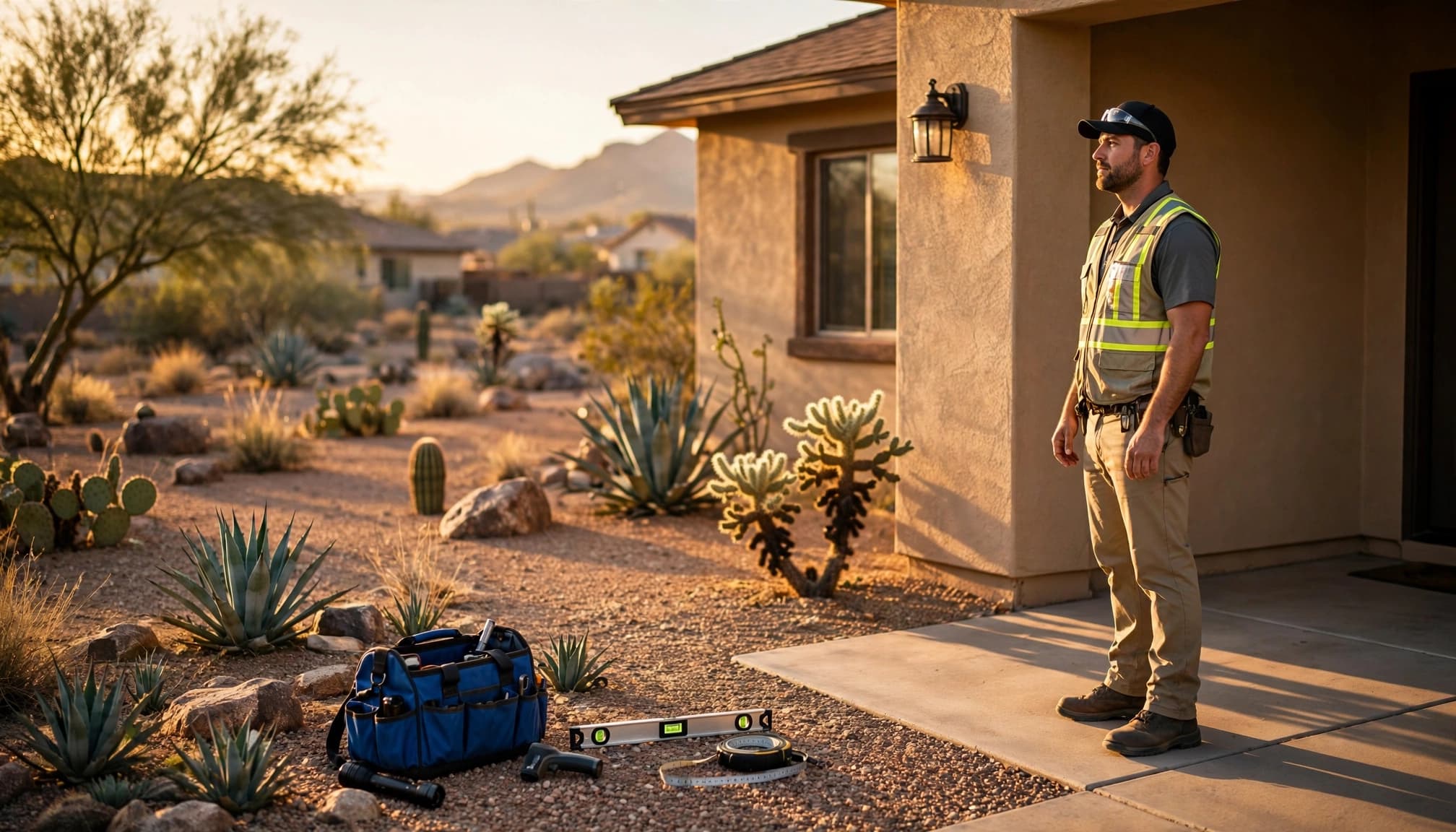
In older parts of Arcadia, North Central Phoenix, the Shea neighborhood, Biltmore, and Paradise Valley, I want buyers looking past fresh paint. Check the roof, HVAC, electrical panel, sewer line, drainage, and signs of previous water damage.
If there is a pool, inspect the pool equipment. If the house has an older air conditioner, have an HVAC professional look at it. Phoenix summers are not gentle on mechanical systems.
Read the disclosures and inspect the street
The Seller’s Property Disclosure Statement, usually called the SPDS, is important. Read it with the inspection report beside you. One tells you what the seller knows. The other tells you what a licensed inspector found.
I also want you to see the whole block. A house can be in the right ZIP code and still sit on a street that doesn’t fit your life. Listen for traffic. Look at nearby rooflines, alleys, power lines, drainage paths, and the condition of neighboring yards.
Listing photos are built to make you notice the good parts. Your due diligence is where you look for the expensive parts.
Financing and appraisal protections work together
Having clear Phoenix home offer contingencies is essential for peace of mind during transactions.
These two protections are often discussed together. They address different risks.
Financing focuses on whether your lender approves the loan. Appraisal focuses on whether the property supports the agreed price in the lender’s eyes.
Financing is more than a pre-approval letter
A pre-approval letter gets a seller’s attention. It doesn’t guarantee loan approval. Underwriting still isn’t finished. Your lender reviews income, assets, credit, the appraisal, and the property.
A financing contingency addresses the risk that your lender won’t approve the loan. If financing falls apart, earnest money isn’t automatically returned. It depends on the contract language, deadline, notice, and required steps.
Get your paperwork to the lender quickly. Don’t open new credit accounts. Don’t move large sums of money without asking first. Keep proof of funds ready if needed. Those steps can prevent delays at the worst possible moment.
Be proactive in discussing Phoenix home offer contingencies with your agent to ensure all bases are covered.
An appraisal gap needs a dollar limit
When a Paradise Valley home appraises below the purchase price, you have a few paths. You can ask the seller to reduce the price, bring in more cash, challenge the appraisal through your lender, or cancel if your contract allows it.
An appraisal contingency may allow cancellation, but only when the contract provides that right and you meet the required deadlines. Review the appraisal and follow the contract’s notice requirements before choosing a remedy.
A promise to cover the difference can make an offer stronger. It can also become an expensive surprise.
If you agree to cover a gap, put a clear cap on it. “Buyer will cover up to $15,000 above appraised value” is a real number. “Buyer will cover any gap” is a blank check. I don’t like blank checks.
Home-sale and HOA contingencies need a closer look
These protections matter most for downsizers, relocating families, and buyers who are trying to buy before their current home sells. A home-sale contingency can be reasonable when you need the sale proceeds for your down payment.
In a competitive market, knowing your Phoenix home offer contingencies can give you an edge.
They can work. They simply need more planning than a standard offer. For the seller, this home-sale contingency also creates more timing risk.
A home-sale contingency is a timing problem
A home-sale contingency says your purchase depends on selling your current home. That may be the right call if you need the sale proceeds for the down payment.
Sellers may accept it if your home is already listed, under contract, or priced realistically. If it isn’t on the market yet, the seller is taking on more uncertainty. The seller may also continue considering backup offers while your contingency remains in place.
It’s important to weigh the benefits of Phoenix home offer contingencies against potential risks.
A kick-out clause lets the seller keep marketing the home. If another acceptable offer appears, you may get a short contract-defined period to remove your home-sale contingency or let the seller move on. It is often 24 to 72 hours, but that timeframe is negotiated, not automatic.
That kick-out clause should identify the response period, notice method, and your choice to remove the contingency or proceed. For families moving on a tight schedule, my Phoenix relocation timeline can help you line up the sale, purchase, moving truck, and school calendar without creating a last-minute mess.
HOA documents are not bedtime reading, but read them anyway
A condo, patio home, or planned-community property may come with an HOA resale package. Set a deadline for HOA review so you can read the rules, financial information, current fees, pending assessments, insurance details, and governing documents.
Reviewing Phoenix home offer contingencies carefully can lead to a smoother transaction.
For planned communities, A.R.S. Section 33-1806 covers resale disclosures. Condo buyers should also review the requirements in A.R.S. Section 33-1260.
Ask practical questions. Can you rent the property later? Are there pet limits? Is the association discussing a major repair? Can you park your vehicle where you need to?
For a downsizer considering a condo or planned community in Paradise Valley, HOA rules can matter as much as the floor plan. A one-level home with low upkeep is great. A restrictive association or a surprise assessment is not.
Earnest money is tied to your deadlines
Earnest money shows the seller you intend to follow through. After acceptance, it is usually deposited with the title or escrow company and credited toward your closing costs or down payment at closing.
The amount is negotiated. Some offers use a flat amount. Others use a percentage of the purchase price. A larger deposit can help an offer look stronger, but it should never be money you can afford to lose because nobody tracked a date.
The Arizona Association of Realtors provides contract forms, while the Arizona Department of Real Estate’s Property Buyer’s Checklist is worth reading before you commit. It is plain language, which is a nice break from contract paperwork.
Remember that Phoenix home offer contingencies are not just formalities; they are vital protections.
Put every deadline on one shared calendar: earnest-money delivery, inspection response, loan approval, appraisal notice, HOA review, and closing date. Give yourself reminders before the deadline, not on it.
This part matters more than people think.
Make a protected offer competitive
You don’t have to waive every safeguard to write a strong offer. A clean offer is often more persuasive than a risky one.
When crafting your offer, integrate Phoenix home offer contingencies that align with your needs.
Reduce uncertainty before you write
Ask for more than a basic pre-approval letter. Ideally, your lender has reviewed your income, assets, debts, and credit. Have proof of funds ready. Know how much cash you could bring if the appraisal comes in low.
Then decide your real limits before you find the house. How much repair work is acceptable? What is the highest appraisal gap you can cover? Can you buy before your current home sells, or will you need a home-sale contingency?
If you need that contingency, understand that the seller may continue evaluating backup offers. I tell buyers to separate deal-breakers from things they can change later. A busy arterial street, a steep staircase for an aging parent, or a bad commute are hard to fix. Cabinet hardware is not.
Shorten time, not common sense
A shorter inspection period can make sense if you can schedule inspectors immediately. That is different from waiving inspections.
Always discuss the implications of your Phoenix home offer contingencies with your real estate agent.
For a well-maintained property in 85254 or Paradise Valley, you might shorten the window if your inspector and specialists are lined up. For an older home in 85028, 85021, or 85018 with original systems, ZIP code alone isn’t enough. I would rather protect enough time to get real answers.

What sellers should review in a contingent offer
If you’re selling and receive a contingent offer, look beyond the purchase price. A higher price isn’t always the stronger deal.
Sellers should be aware of how Phoenix home offer contingencies can impact their decisions.
Ask how far along the buyer’s financing is. If there is a home-sale contingency, ask whether that property is listed, under contract, and priced in line with its market.
Review the earnest-money amount, inspection period, appraisal-gap terms, closing date, and kick-out clause. Before accepting, understand the response window and what happens if the buyer doesn’t meet it.
Backup offers may also make sense if the first buyer has a sale contingency. They give the seller another option if the first contract stalls.
The goal isn’t to punish the buyer. It’s to know what happens if the first deal stalls.
Understanding the implications of Phoenix home offer contingencies can enhance negotiation strategies.
Frequently asked questions
Can buyers get earnest money back if financing fails?
Sometimes. The answer depends on the signed financing terms, whether the buyer met the deadlines, and whether proper notice was delivered. Don’t assume a lender denial alone settles the question.
What is the usual Phoenix inspection period?
Ten days is a common default in Arizona resale contracts. The buyer and seller can negotiate another timeframe, so read the accepted purchase contract.
Does a low appraisal let a buyer cancel?
It can provide options if the appraisal contingency is still in place and the buyer follows its deadline and notice requirements. If that protection was waived, the options may be more limited.
What should be in an HOA resale package?
Review the association’s rules, fees, budget or financial materials, insurance information, pending assessments, meeting information, and any rental or use restrictions. Read it before the review deadline passes.
How does a home-sale contingency affect an offer?
It makes the buyer’s purchase depend on selling their current home. The parties may also negotiate a response window if the seller receives another offer.
What is a kick-out clause?
Buyers should clearly communicate their Phoenix home offer contingencies to avoid misunderstandings.
A kick-out clause lets the seller continue marketing the property while the offer remains contingent. The buyer then gets a contract-defined time to respond.
Can sellers accept backup offers?
Yes. Sellers may consider backup offers while a contingent offer is pending. Any backup agreement should clearly explain when it becomes effective.
The calm way to protect your purchase

Ultimately, knowing your Phoenix home offer contingencies can empower you during the home buying process.
The right offer is not the one with the fewest contingencies. It is the one where the protections match your real risks, your cash position, and your timeline.
If you’re downsizing, relocating, or buying for an aging parent, you have enough on your plate already. Keep the contingencies that protect your purchase and the life you are building after closing, whether you’re buying in Phoenix or Paradise Valley.