Phoenix Cooling Costs: Home Features That Keep Bills Manageable
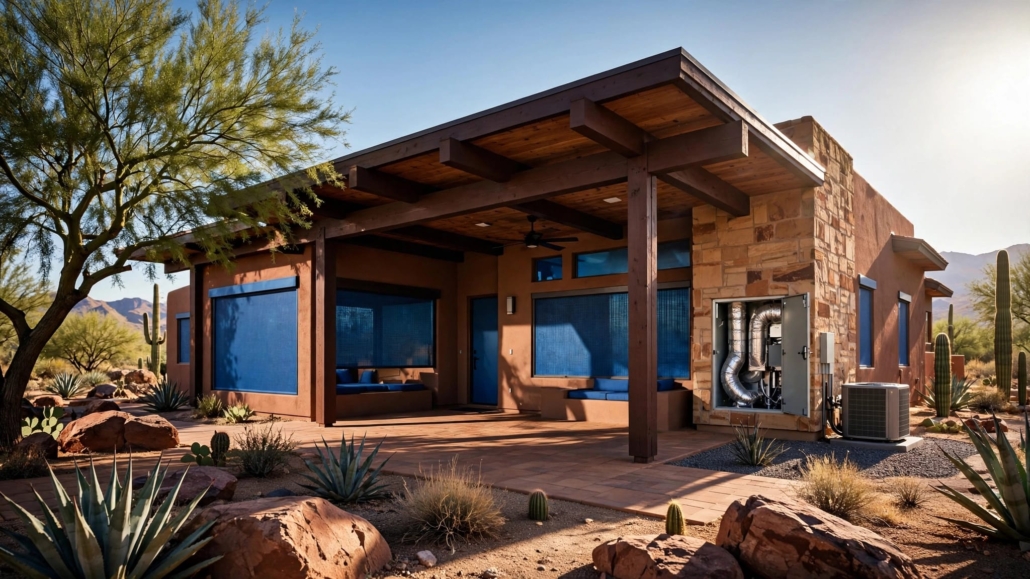
Phoenix cooling costs can surprise even people who have lived here for years. Electricity prices matter, but the house itself usually matters more when air conditioning runs through a long stretch of 110-degree afternoons. Understanding Phoenix cooling costs is essential for any homeowner in the area.
If you’re moving to Phoenix, Scottsdale, Paradise Valley, or an approved ZIP-code area, don’t get distracted by pretty counters and fresh paint. Look at the features that decide whether July feels comfortable or expensive.
A smart purchase starts with home features that keep heat out before your air conditioner has to fight it.
When considering a home, it’s important to analyze how it can impact your Phoenix cooling costs. Features that enhance cooling efficiency can lead to significant savings on your monthly bills related to Phoenix cooling costs.
Key takeaways
- A shaded home with solid home insulation, duct sealing, and regular AC maintenance can help you evaluate HVAC system efficiency and comfort.
- Your utility plan matters. Compare peak hours with your thermostat settings, since APS and SRP schedules aren’t the same.
- Exterior shade is a big deal here. Mature trees, shade screens, roof overhangs, and covered patios reduce heat before it reaches the glass.
- A smaller single-level home can be easier to cool during summer cooling, especially during extreme temperatures, and easier to maintain as needs change.
- Before you buy, inspect the roof, windows, ducts, HVAC age, and electrical panel. Those aren’t small details in Phoenix.
Why Phoenix cooling costs climb so fast
In conversations about Phoenix cooling costs, it’s crucial to recognize how various factors contribute to the overall expenses associated with maintaining a comfortable home in this hot climate.
A Phoenix house does not get a break in summer. Desert heat builds across the property all day. By late afternoon, the roof, walls, attic, driveway, and windows have been soaking up high temperatures for hours. During extreme temperatures, your air conditioning system is not only cooling the air. It is pulling stored heat out of the building and adding to the home’s total energy consumption.
Long compressor run time adds up
The long run time of your air conditioning system directly correlates with your monthly Phoenix cooling costs. The more your system runs, the higher your bills will be.
The dry heat is easier on some people than humidity. Your air conditioner doesn’t care. When outside temperatures stay high well into the evening, the compressor can run for long stretches.
A house with poor attic insulation, leaky ducts, sun-facing glass, or an aging system starts every afternoon behind. These features increase energy usage and make daily summer cooling more demanding.
For homes with features that increase heating, the impact on Phoenix cooling costs can be significant. It’s important to examine each aspect of the home that affects comfort and energy consumption.
Long run times can be normal during extreme heat. Uneven comfort or constant operation, however, warrants an inspection.
That is why I do not judge a home by the thermostat setting alone when estimating cooling costs. I ask what is above the ceiling, behind the walls, and outside the windows.
Estimating your Phoenix cooling costs requires looking beyond just the thermostat. Investigate the home’s overall energy efficiency.
Square footage is only part of the story
A 2,000-square-foot ranch home can cost less to cool than a smaller two-story home with lots of west-facing windows. Ceiling height, window placement, tree cover, pool equipment, attic access, and HVAC condition all affect energy usage.
When analyzing square footage, remember that larger homes may incur higher Phoenix cooling costs, especially if they lack certain energy-saving features.
In Arcadia and Paradise Valley, bigger lots and older homes can bring beautiful mature trees. They can also come with original ductwork, older windows, and additions that were not built with summer cooling in mind.
A home can look updated and still have a 20-year-old problem hiding in the attic.
Utility peak hours change the math
Before changing your routine, pull out your electric bill and find the exact plan name. Time-of-use rates vary by plan, so electricity rates aren’t the same for every Phoenix household.
Understanding your utility plan is another essential factor in predicting your Phoenix cooling costs. Each plan has unique pricing structures that can affect your overall expenses.
They don’t.
Confirm your own peak hours before changing your schedule. Electricity prices and plan rules can differ by utility and enrollment date.
APS has a 4 to 7 p.m. weekday peak window
Arizona Public Service offers a 4 to 7 p.m. weekday time-of-use plan. Its summer billing season runs from May through October, which covers much of Phoenix’s cooling season.
Awareness of your peak usage hours can help mitigate high Phoenix cooling costs during the hottest months. Adjusting habits can lead to significant savings.
If you are on that plan, pre-cooling in the early afternoon may help. Lower the thermostat settings a little before 4 p.m., then allow a modest rise during the higher-priced period. You are shifting some energy usage, not eliminating it or asking the house to become a sauna.
SRP plans use different peak periods
Salt River Project has several plans, and the hours vary. Its active Conserve 6 to 9 p.m. plan places the higher-priced window on weekdays from 6 to 9 p.m.
The gap between on-peak and off-peak electricity prices can make evening dishwasher loads, laundry, pool pumps, and thermostat habits worth a second look.
Consider how differences in utility plans might affect your monthly Phoenix cooling costs. Researching options can lead to more budget-friendly choices.
SRP’s older Time-of-Use plan still appears in some online searches, but it is discontinued for new enrollments. Check the current plan options before making decisions based on an old article.
Phoenix home features that lower cooling demand
There are simple ways to reduce Phoenix cooling costs by improving the home’s energy efficiency. These strategies can lead to greater comfort and lower bills.
You cannot control the forecast. You can control how much of that heat gets into the house.
Start with exterior shade
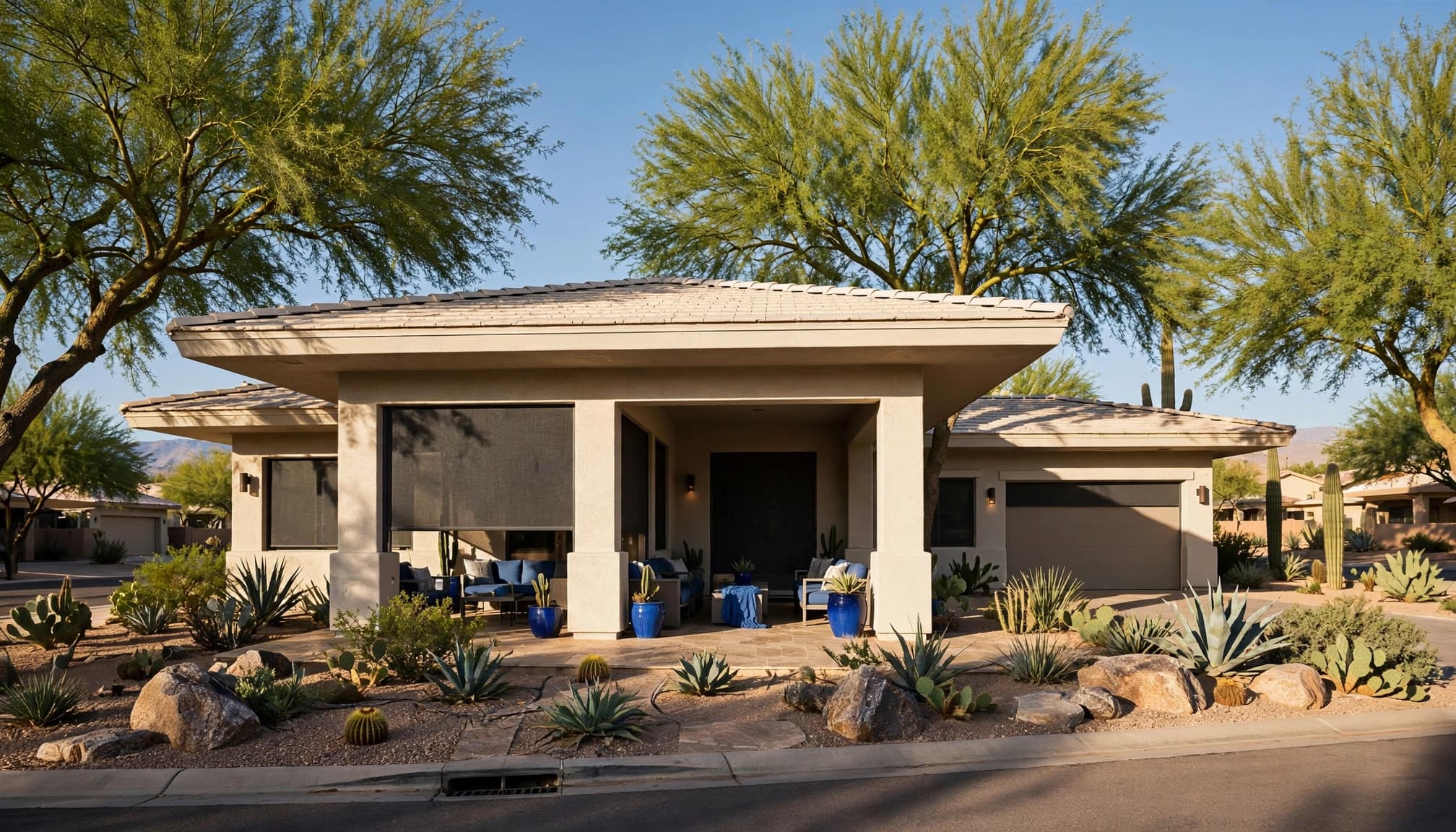
A covered patio does more than give you a place to sit with a cold drink. When it shades south- and west-facing glass, it reduces solar heat gain before the heat enters the room.
Exterior shade options significantly reduce Phoenix cooling costs by minimizing solar heat gain. Every little bit helps in keeping bills lower.
Shade screens, window awnings, deep roof overhangs, and healthy mature trees can all help. In the Sheaborhood, many older ranch homes have the right bones for this, including long rooflines and patios that face the backyard. Some need their shade screens or landscaping brought back to life.
If you are comparing homes, spend a few minutes in the backyard around 4 or 5 p.m. Stand near the big windows. You will learn more than you will from a listing photo taken in February. Homes with mature shade trees often make the outdoor space more usable, too.
Inspect the roof, insulation, and ductwork
A light-colored roof can reduce heat absorbed at the top of the house. Under that roof, home insulation needs to be even, dry, and sufficient. Check for thin, disturbed, damp, or missing material, especially around old wiring and duct runs.
By ensuring insulation and ductwork are in good condition, you can help control Phoenix cooling costs effectively.
Duct leaks are sneaky. They can dump cooled air into a hot attic or pull hot attic air into the system. Ask an HVAC contractor about duct condition if rooms feel uneven or the system seems to run constantly. Duct sealing may improve system efficiency when the equipment itself still has useful life.
Solar panels and solar heat gain are separate questions. Panels may change how a household produces electricity, but they won’t fix a hot attic, leaky ducts, poor insulation, or west-facing glass. Ask about roof age, remaining roof life, panel ownership or lease terms, electrical-panel capacity, and production history before treating solar as a solution for summer bills.
Buyers should ask for attic and duct documentation during due diligence. Current owners can prioritize air sealing and duct sealing after an inspection, especially around attic penetrations, exterior doors, recessed lights, and aging windows. None of it is glamorous. Neither is writing a giant electric check every August.
Layout and windows affect daily comfort
Designing a home layout that maximizes natural cooling will help reduce Phoenix cooling costs and improve overall livability.
Home design does not have to be new to be practical. It does need to work with the sun.
Single-level ranch homes are often easier to cool evenly than tall homes with a hot upstairs. That does not make every one-story house cheap to run, but it removes one common headache. For downsizers, fewer stairs and less square footage can also mean less maintenance later.
Windows deserve a close look. Double-pane glass, low-e coatings, sound seals, intact weatherstripping, and shades can improve comfort. Look for energy-efficient windows, but verify their actual condition instead of relying on a listing label. Better window performance can also support system efficiency by reducing how hard the equipment must work.
In my experience, buyers sometimes fall for a wall of glass facing west because it looks great at a 10 a.m. showing. Visit later. Close the blinds. Feel the room. Test the space during an ordinary hot afternoon to judge summer cooling. Window awnings may also help on harsh exposures. A home should work on an ordinary July Tuesday, not only during an open house.
Choosing energy-efficient windows can significantly affect your Phoenix cooling costs. The right choices can lead to long-term savings.
If a smaller footprint sounds appealing, look at single-story homes with updated HVAC. The right house is not always the biggest house you can buy.
Keep the air conditioner honest
An air conditioner is a major appliance with a hard job. Air conditioning keeps a Phoenix home livable, but treating the equipment like an invisible box is an expensive tradition I’d happily retire.
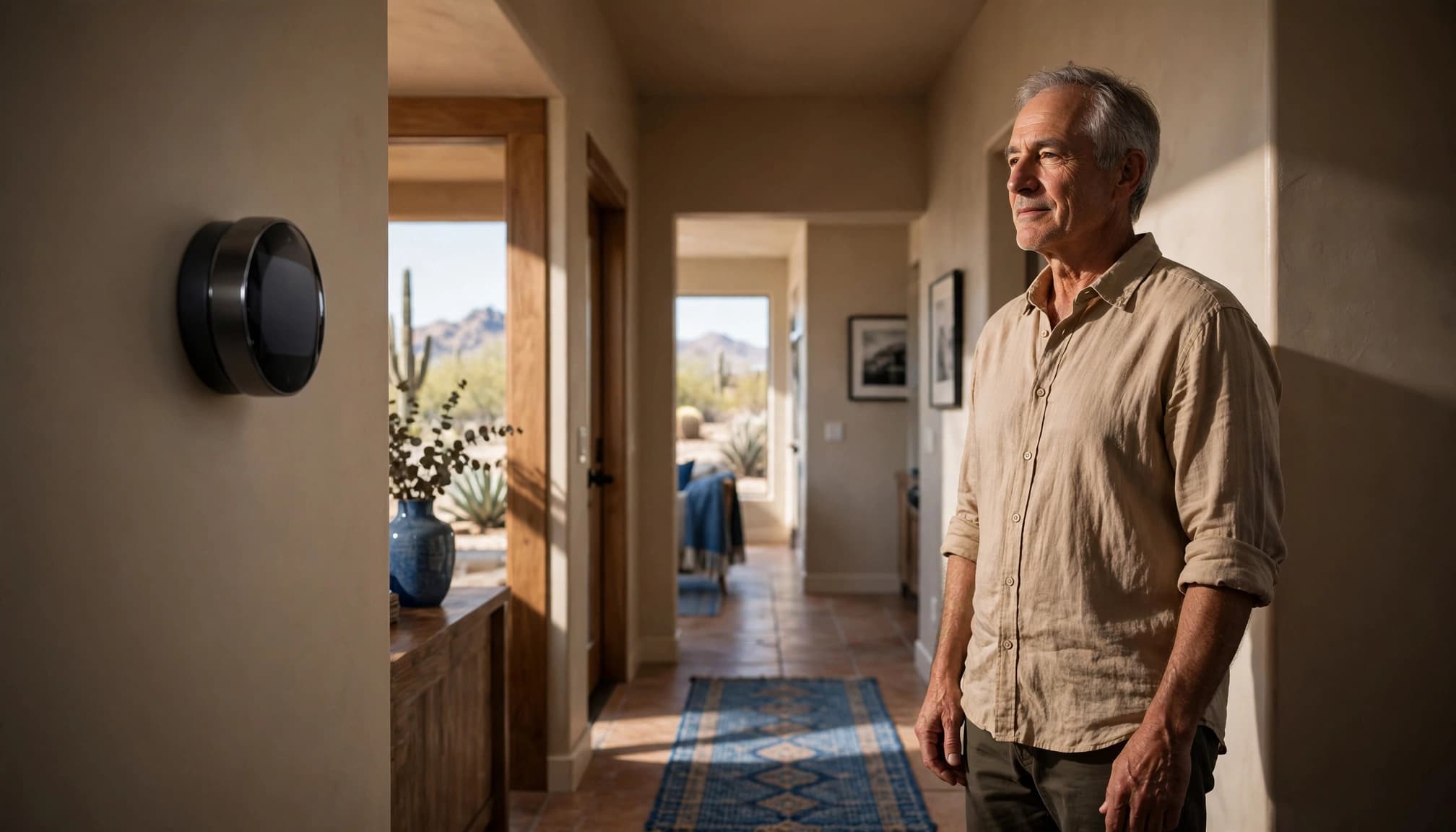
Regular maintenance can have a positive impact on Phoenix cooling costs. Keeping your air conditioning system in good working order will help maintain efficiency.
Handle the simple maintenance first
Change filters on schedule. A clogged filter restricts airflow and makes the system work harder. This basic AC maintenance also includes keeping the outdoor condenser clear of leaves, stored items, and dense shrubs.
Have the system checked before the cooling season if you can. A technician can inspect electrical connections, refrigerant performance, drain lines, airflow, and the blower. Extreme temperatures often reveal a system’s condition in July. If a bedroom is always warmer than the rest of the house, say so. That detail may point to a duct, return-air, or insulation issue.
For thermostat settings, I like a practical approach. Keep the house comfortable when you’re home. When it’s empty for several hours, raise the temperature around 7 to 10 degrees if that works for pets, people, and the house. Smart thermostats can help with scheduling, but they can’t fix poor insulation, leaking ducts, undersized returns, or equipment problems. Don’t turn the system off entirely in July and expect an easy recovery. Compare your actual energy usage over time, not just the thermostat display.
Monitoring your energy usage is essential for understanding and managing your Phoenix cooling costs effectively.
Know when repairs are becoming a habit
There’s no magic age when every unit must be replaced. With an aging HVAC system, consider its sizing, load calculations, efficiency ratings, duct condition, comfort problems, and repair history.
If repairs are small and occasional, keep maintaining it. If the unit breaks down repeatedly, struggles to hold temperature, or needs a major repair, compare the next repair’s cost with the replacement cost before committing more money.
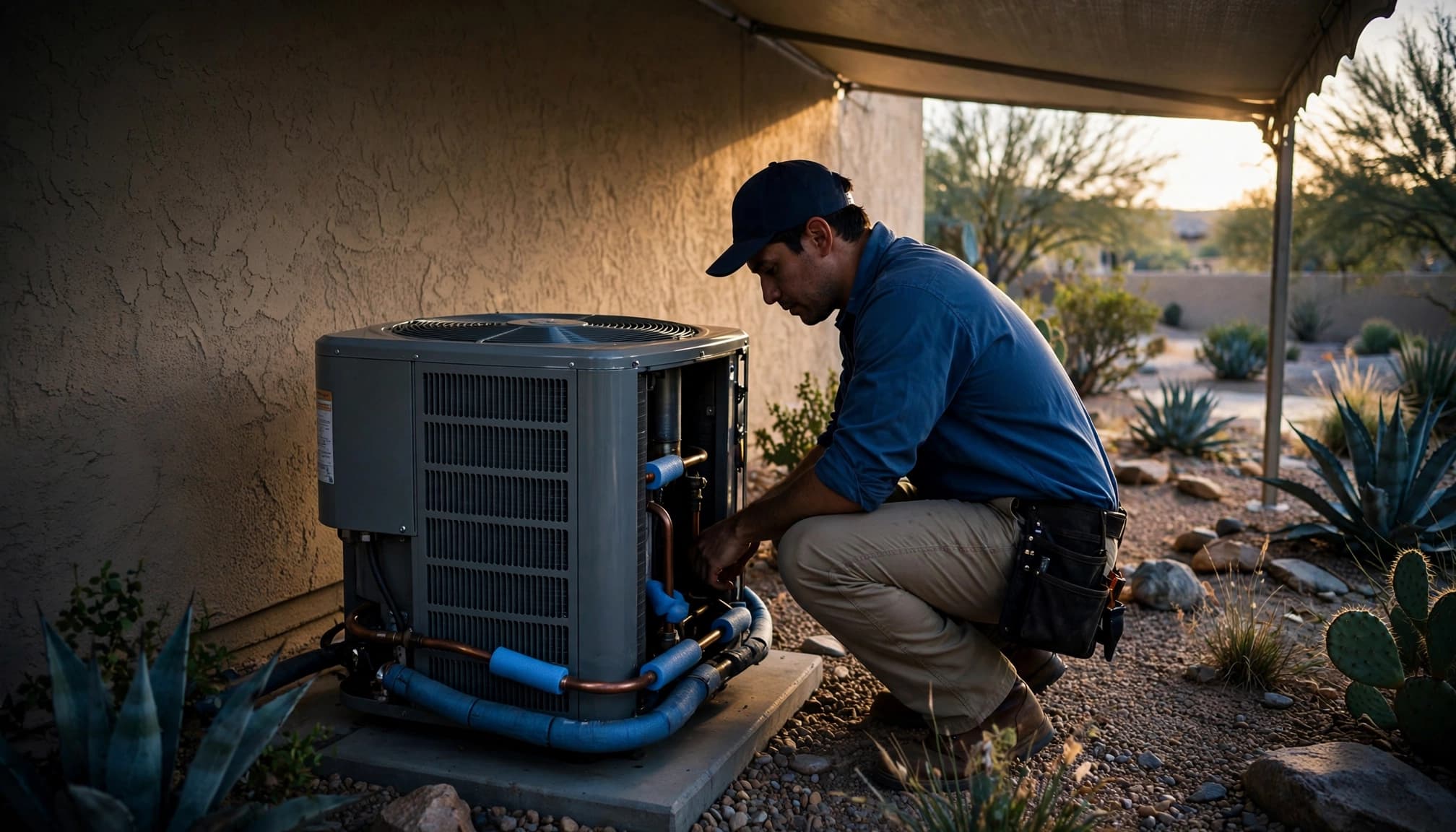
Getting multiple quotes can help you secure the best deal for your HVAC needs, ultimately affecting your Phoenix cooling costs.
Ask each contractor to explain the sizing, projected system efficiency, warranty, duct recommendations, and total installed cost. Compare real numbers, including likely performance under normal conditions. Don’t buy the biggest system because somebody says bigger is better. An oversized unit can create comfort problems of its own.
Use a summer-ready inspection checklist
When you are under contract, the inspection period is the time to ask direct questions. It is cheaper to ask before closing than after the moving truck leaves.
I’d want answers on these items:
Knowing the home’s energy history can provide insight into potential future Phoenix cooling costs.
- The HVAC system’s age, service records, current performance, and remaining useful life.
- An inspector’s findings on the roof, insulation, visible envelope issues, and any attic moisture concerns.
- Window seals, exterior shading, weatherstripping, and rooms with uneven temperatures.
- An HVAC contractor’s assessment of airflow, duct condition, system sizing, and likely repair needs.
- Electrical panel capacity, pool equipment, and the last 12 months of utility bills, if the home has a pool and the seller will provide them.
That history can help you build a realistic monthly bill budget, but it isn’t a promise. The seller may have used different thermostat settings, worked from home, left town for summer, or had a house full of teenagers who apparently needed to run every appliance at once. Those habits make the home’s energy usage difficult to compare.
Every detail influences the forecast of your Phoenix cooling costs, from peak usage to energy-efficient upgrades.
For retirees, adult children helping a parent, and anyone trying to simplify, energy-efficient homes for Phoenix retirees can make the monthly budget easier to manage without giving up the neighborhood you enjoy.
Questions buyers ask about Phoenix cooling costs
What is a typical Phoenix summer cooling bill?
There is no honest one-size-fits-all number. Cooling costs depend on home size, equipment condition, shade, occupancy, pool equipment, and the utility plan. Ask for the seller’s actual utility bills, then budget for your own routine.
Understanding the variables that contribute to Phoenix cooling costs will help you plan better for the summer months.
Why does my AC run so much in dry heat?
The home absorbs heat all day, and outdoor temperatures can remain high after sunset. If insulation, ducts, windows, or shade are weak, the system has more heat to remove. Long run times are common, but constant discomfort deserves a closer inspection.
Are window awnings and shade screens worth it?
They can be a sensible first move when exterior shading protects glass from direct afternoon sun. Start with the west and south sides of the home, then see how the room feels before tackling bigger projects.
Investing in window awnings and shade screens can reduce your Phoenix cooling costs, making them a worthy consideration.
What should I ask before buying an older Phoenix home?
Ask about insulation, ducts, windows, the roof, electrical capacity, and recent service records. In older pockets of 85018, 85021, 85028, and 85032, a solid inspection can separate a good house with manageable updates from one that keeps reaching into your wallet.
Older homes may have hidden factors that can heavily influence Phoenix cooling costs, so thorough inspections are essential.
A comfortable house is the better bargain

Your cooling costs aren’t only about the thermostat or the utility company. They come down to how the house handles the sun, how well the equipment runs, and whether the layout fits your real life.
Ultimately, understanding how to manage Phoenix cooling costs will help you enjoy your home even more.
I’d rather see you buy a well-shaded, well-maintained home that feels calm in August than stretch for a larger place with expensive surprises waiting overhead. Comfort is part of affordability, especially in Phoenix.
Grasping the intricacies of Phoenix cooling costs is crucial for anyone looking to thrive in the Arizona heat.