Phoenix HOA documents to review before you make an offer

Phoenix HOA documents can tell you more about a home than a polished listing ever will. A place may look perfect in Biltmore, Arcadia, The Sheaborhood, Paradise Valley, or the 85254 corridor, then the Phoenix HOA documents packet reveals a rental restriction, a looming special assessment, or rules that don’t fit your life.
I’ve helped plenty of buyers get excited about the house first and read the paperwork later. That order can get expensive. You don’t have to rush this. Get the documents, ask plain questions, and make the offer with your eyes open.
Key takeaways
- Read the governing Phoenix HOA documents, budget, insurance summary, reserve information, meeting minutes, and resale disclosure before your inspection period gets away from you.
- Confirm every association tied to the property. A condo or patio home may have a master HOA and a separate community association with its own Phoenix HOA documents.
- Look for future costs, not only the current monthly fee. Special assessments, weak reserves, insurance issues, and deferred maintenance matter in the Phoenix HOA documents.
- HOA paperwork, including Phoenix HOA documents, doesn’t replace a home inspection, seller disclosure, appraisal, or financing contingency.
Start with the Phoenix HOA documents that control daily life
The first question is simple: what can the association tell you to do, or stop you from doing, after you own the home?
The answer usually starts with the declaration, formally called the Covenants, Conditions, and Restrictions (CC&Rs). That document runs with the property. Along with the bylaws and rules, it forms the governing documents. You don’t need a law degree or a pot of coffee the size of a swimming pool. You need to find the parts that affect your plans.
The Phoenix HOA documents contain vital information that can help you make an informed decision. Make sure to review them thoroughly to understand any obligations you may have as a homeowner.

Read the CC&Rs before falling in love with the floor plan
CC&Rs usually cover exterior changes, parking, pets, leasing, signage, home businesses, and assessments. These property restrictions can affect your plans. If you plan to rent the home later, park a truck in the driveway, add solar, or build a patio cover, search those terms first.
In older areas, HOA rules can vary block by block. A property near the Biltmore may be part of a condo association with tight exterior control. A house in parts of Arcadia, North Central Phoenix, or The Sheaborhood may have no association at all.
If HOA living doesn’t fit your plans, my guide to Phoenix neighborhoods without HOA fees gives you a starting point in established parts of town.
Bylaws and rules show how the board operates
The Phoenix HOA documents are essential for understanding how community rules may impact your lifestyle and financial obligations.
The bylaws explain how the board of directors is elected, how meetings work, and what powers the board has. Rules and regulations are the day-to-day playbook. They can be easier to change than CC&Rs, which is why I read both.
You can also ask whether articles of incorporation are available when reviewing how the association was formed. Look for requirements about guest parking, trash containers, short-term rentals, pets, holiday decor, and architectural approval.
If a rule is disputed, the board of directors is usually the group responsible for enforcing it. A buyer who needs a lock-and-leave home may like firm rules. Another buyer may feel like they are being grounded at age 63. Neither answer is wrong. It just needs to fit.
Order the resale disclosure package early
Arizona Revised Statutes treat planned community associations and condominiums a little differently. Planned-community resales fall under A.R.S. 33-1806, while condominium resales fall under A.R.S. 33-1260, the condominium act.
Those statutes require a resale disclosure statement after a written sale-related request. The association has 10 days to provide it. A management company may coordinate the request, so don’t wait until closing is near to get the process moving.
The HOA packet answers questions about future ownership. Your home inspection answers questions about the house itself. You need both.
Know what should be in the package
The packet should include the governing documents, current assessment information, the association’s operating budget, recent financial information, insurance details, reserve information when applicable, and disclosures about known litigation or special assessments.
Ask the seller or association for the newest resale disclosure statement. A three-year-old budget tells you almost nothing about today’s insurance bill, landscaping contract, or reserve balance.
New buyers should prioritize obtaining the Phoenix HOA documents as soon as possible, as they contain key information about your future responsibilities in the community.
Also ask if the seller has received notices not yet reflected in the packet. Board notices, repair updates, and assessment discussions can move faster than formal documents.
Watch the fees and timing
Arizona law limits the combined charge for the resale disclosure package, lien estoppel, and related transfer services to $400. A rush request within 72 hours can add up to $100. If 30 days have passed, an updated package can cost up to $50.
Fees should not be collected before escrow closes, and they can only be charged once per transaction between the parties. Recent changes to disclosure rules are covered in this Arizona HOA legislative update, but confirm current amounts and deadlines with the applicable Arizona statute or official source.
Title teams should order early. Buyers shouldn’t assume a portal login means the correct, current resale package is already there.
Read the financial story, not only the monthly HOA fee
Monthly HOA fees of $175 can be perfectly reasonable. They can also signal a bigger bill if repairs are underfunded, insurance costs are rising, or a roof project is coming.
I’ve watched downsizers focus on a low monthly payment and miss a special assessment discussion buried in the records. That is where people get stuck.

Check the budget, reserves, and special assessments
Start with the current budget. Compare assessment income with regular expenses. Check whether assessment collection problems could affect the community association’s finances.
Ask the management company for the current master insurance policy, financial statements, reserve information, and meeting minutes. Then compare the current financial statements with the approved budget.
Find the reserve balance and any reserve study. The reserve fund helps pay for large shared items such as roofs, exterior paint, private streets, gates, pools, elevators, and irrigation systems.
A reserve study is not a promise. It is a planning tool. Still, it gives you a better read on whether the association has been saving for known work.
The Phoenix HOA documents are often the first source of information regarding community finances and potential future costs.
Review the meeting minutes for the plain-English version. Look for repeated discussions about water damage, roof leaks, insurance renewals, contractor disputes, or delayed maintenance.
Ask about insurance and litigation
For a condo, insurance details matter a lot. Confirm what the master policy covers versus what the owner’s individual policy must cover. Your lender and insurance agent will need that information, too.
Pending litigation doesn’t automatically mean you should walk away. Sometimes an association is pursuing a contractor over bad work. Sometimes it is defending a serious claim. Ask what the case involves, what it may cost, and whether the insurer is involved.
For people right-sizing into a condo or patio home, this fits into the bigger decision of downsizing a home in Phoenix. Less upkeep is nice. Shared costs still need a close look.
Check restrictions that could change your plans
A home may fit today and become a poor fit next year if the rules block your next move. This matters for buyers helping an older parent, adult children planning for caregiving, pet owners, and anyone who may rent the home later.
Look at rentals, occupants, and age rules
Read leasing rules word for word. Some associations cap rentals, require lease approval, set a minimum lease term, or limit the number of homes that can be rented at one time. Real estate investors should pay close attention to these limits, but they matter for any buyer who may rent later.
If you’re considering an age-restricted community, review the occupancy rules and ask how the association verifies compliance. Don’t assume that one resident over a certain age makes every arrangement acceptable.
A document alone may not show whether an age or occupancy rule complies with the Fair Housing Act. Get qualified legal guidance if you have a specific concern.
Also confirm guest, caregiver, and pet rules. A parent moving in with adult children, a caregiver staying overnight, or a new pet can change how you use the home.
Review architectural and parking rules
Architectural guidelines matter even if the home looks move-in ready. In some master-planned communities, the community association may require approval before you add a ramp, shade structure, new windows, solar panels, or a different front door.
Parking regulations can be a bigger issue than people expect. Check limits on commercial vehicles, overnight street parking, trailers, guest parking, and garage use. Drive through in the evening, too. A quiet street at 11 a.m. can tell a different story after work.
Confirm whether there is more than one HOA
This is common in master-planned communities across Phoenix, Scottsdale, Paradise Valley, and the 85254 area. You may have a master association plus a sub-association, each with its own board, rules, maintenance duties, billing schedule, and enforcement powers.
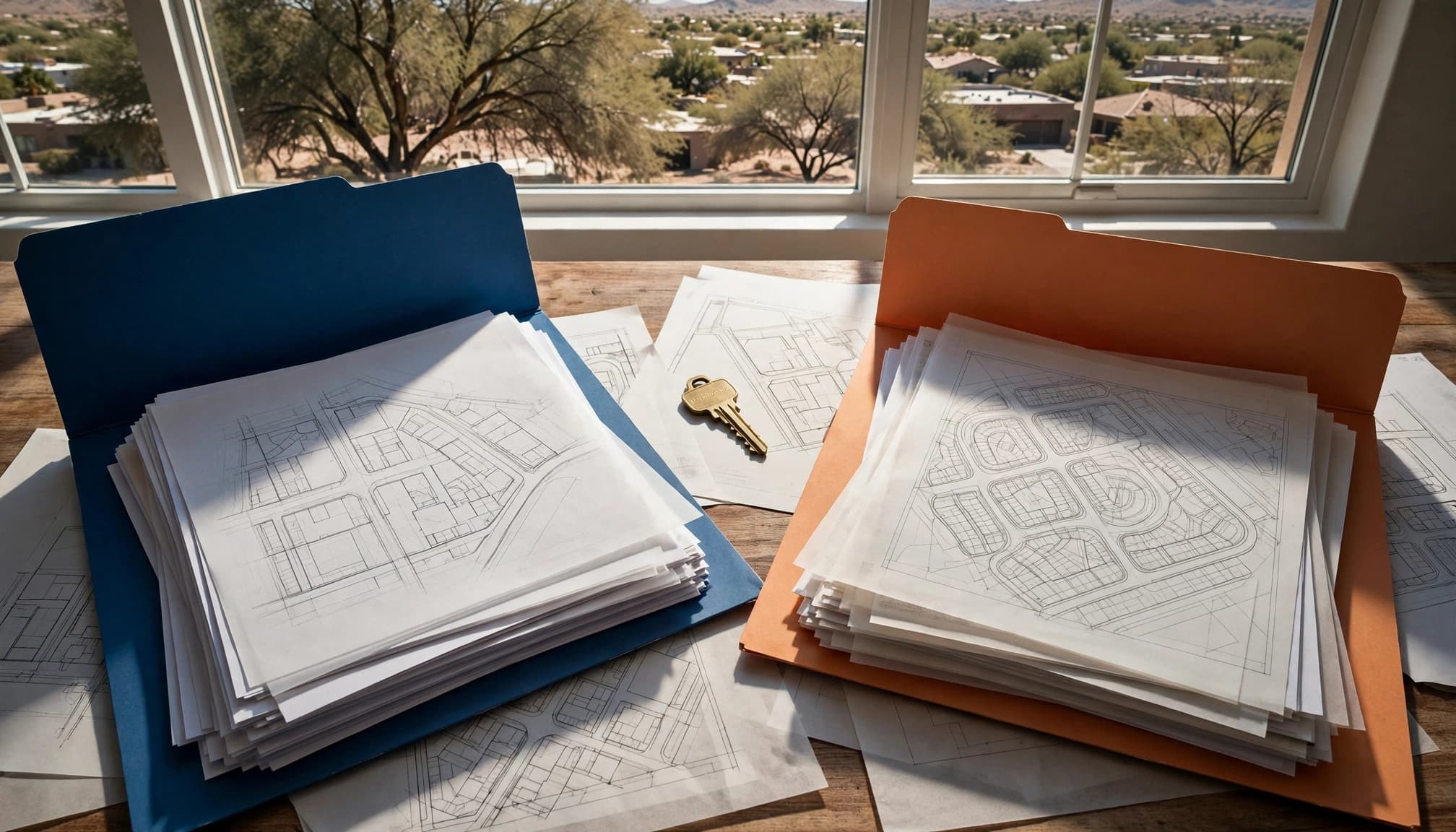
Don’t accept “the HOA fee is $___” as a complete answer. Ask for a written schedule of all HOA fees, including monthly, quarterly, transfer, and potential special-assessment amounts. Collect separate governing documents and records from each community association.
Separate master fees from neighborhood fees
Make sure to ask for the complete set of Phoenix HOA documents from both the master and sub-associations to avoid any financial surprises.
The master association may maintain an entrance, common landscaping, or a community recreation area. The sub-association may handle your streets, gates, building exterior, or neighborhood pool.
One fee may be paid quarterly while another is monthly. One may be stable while the other is due for an increase. A shared portal or management company may handle billing, but get every amount in writing.
Match each restriction to the right association
A master association may control your backyard wall or neighborhood signage. Your condo association may control windows, balconies, and exterior paint. If a rule matters to you, find out which board enforces it.
This is especially important when one management company administers several separate associations. One login or administrative contact doesn’t mean one set of rules.
Keep HOA due diligence inside your offer timeline
The best Phoenix HOA documents won’t protect you if they arrive late and your deadlines pass. Once your offer is accepted, order the resale materials early and coordinate with your agent, title teams, lender, and insurance agent.
Some Arizona purchase contracts use a 10-day inspection period, but terms vary. Rely on the actual executed contract for every deadline. Keep your inspection, appraisal, financing, and HOA-document review timelines distinct.
The HOA review should run alongside the property inspection. Review the seller disclosure statement, then inspect the roof, HVAC, electrical panel, pool equipment, sewer line, and signs of prior water damage. Your review list should cover unpaid assessments, liens, account balances, and assessment collection status. Ask the seller or title team to verify any balance, including late fees, and the association’s current collection policy.
Our summer heat is tough on air conditioners. It is cheaper to ask the HVAC technician before closing than after the moving truck leaves.
If the association portal is incomplete or delayed, ask the seller to request the records in writing from the management company. Under Arizona’s association-records law, a planned-community association has 10 business days to fulfill a member’s written request to examine financial and other records.
Frequently asked questions
What documents should I review before buying in a Phoenix HOA?
Why are Phoenix HOA documents important?
Read the CC&Rs, bylaws, rules, resale disclosure statement, current budget, recent financial statements, insurance information, reserve information, meeting minutes, and notices about litigation or special assessments. Ask the management company for current records and the correct association packet. Condominium requirements may differ under Arizona’s condominium act. If there are two associations, get documents from both.
Can an HOA charge any late fees it wants?
No. For Arizona planned communities, late fees are capped at the greater of $15 or 10% of the unpaid assessment, after required notice. Review the current planned-community late-fee rule and the association’s collection policy before assuming a balance or late fees are correct.
Can an HOA foreclose over a rule-violation fine?
A rule-violation fine is different from an unpaid assessment. Arizona’s assessment-lien foreclosure rules do not treat a fine the same way, and assessment collection concerns may involve different facts. If a fine, lien, or collection notice could lead to foreclosure proceedings, have a qualified Arizona real estate attorney or title professional review the current facts before you proceed.
Make the offer with fewer surprises

A good HOA can protect common areas, maintain shared property, and make a lock-and-leave home easier to own. Read the Phoenix HOA documents before you’re emotionally committed to the house.
A poorly understood HOA, especially the Phoenix HOA documents, can become a monthly frustration with a price tag attached. The right home should work on an ordinary Tuesday, not only during a great showing.
Ultimately, reviewing the Phoenix HOA documents can help you avoid costly mistakes and ensure a smooth transition into your new home.